Why the Starter Set Matters
“Plant kit” hit an all-time search high in 2026, and I think the reason is partly cultural and partly practical. New gardeners want a curated entry point. They don’t want to walk into a nursery and choose between three hundred unfamiliar species. They want someone to tell them: start with these seven, in this order, and you’ll know what you’re doing in a year.
This is that list. Seven plants. All nearly impossible to kill. All genuinely useful — edible, medicinal, or pollinator-supporting. If you plant only these seven and nothing else, you’ll have a small working solarpunk garden in two seasons.
The Selection Rules
Every plant in this kit had to meet four criteria:
1. Forgiving. Survives common beginner mistakes — overwatering, underwatering, occasional neglect.
2. Productive. Yields something useful by the end of the first season.
3. Educational. Teaches a transferable skill or principle that helps with everything else you’ll grow later.
4. Pollinator-positive. If it doesn’t feed humans, it should feed something.
1. Yarrow (Achillea millefolium)
Drought-tolerant, beautiful, and one of the most useful medicinal plants in temperate North America. The flat white flower clusters bloom from June through September and attract a remarkable diversity of beneficial insects — parasitic wasps that prey on garden pests, lacewings, hoverflies.
Medicinally, yarrow is a classic immune-supportive herb — it’s a styptic (stops bleeding on minor wounds), a diaphoretic (promotes sweating to break fevers), and a gentle digestive bitter. We cover the tincture method in our tinctures guide.
Care: full sun, any soil that drains, no fertilizer, no irrigation once established. Cut back in early spring.
2. Mint (Mentha spp.)
Mint is famously hard to control in the ground, which is exactly why it’s impossible for a beginner to kill. Put it in a 1-gallon container and water it occasionally. It will produce leaves for tea, mojitos, digestive bitters, and dried winter teas for years.
Spearmint is the most useful all-purpose mint. Peppermint is stronger and better for digestion. Chocolate mint exists.
Care: partial shade preferred but full sun works. Keep moist. Always plant in a container, not in the ground.
3. Calendula (Calendula officinalis)
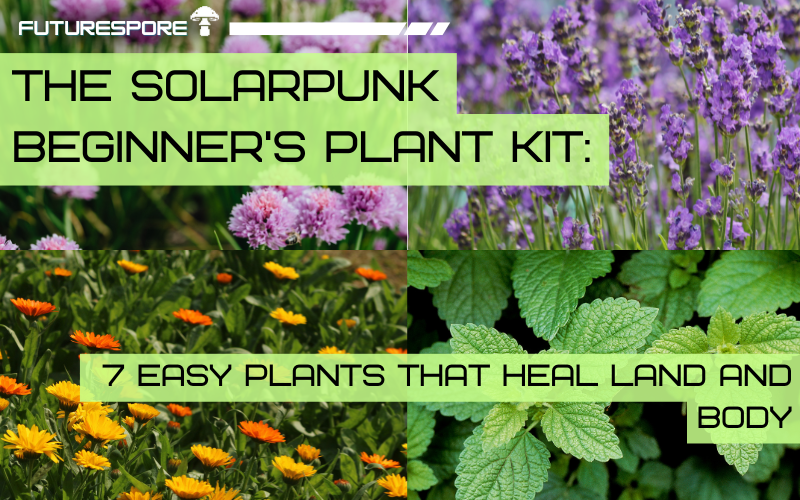
The most useful flower for a beginner garden. Blooms orange and yellow continuously from June through frost, repels several pests, attracts beneficial insects, and the petals are edible (mild peppery flavor in salads) and medicinal (anti-inflammatory and antimicrobial when used in salves and tinctures).
Calendula self-seeds prolifically. Plant once, have calendula forever.
Care: full sun, average soil, water occasionally during dry spells. Deadhead spent flowers (or let them self-seed).
4. Chives (Allium schoenoprasum)
Perennial allium. Wakes up first in spring, blooms purple pom-poms in May (edible and beautiful), and produces snippable hollow green stems all season. Once you plant chives, they come back every year for as long as you live there.
Also deter aphids from nearby plants — an invisible benefit until you notice your neighbor’s tomatoes covered in aphids and yours fine.
Care: full sun, average soil. Snip back to two inches when they get straggly; they regrow within two weeks.
5. Lavender (Lavandula angustifolia)
Drought-tolerant Mediterranean shrub. Silvery aromatic foliage, purple flower spikes in midsummer, attracts every pollinator within walking distance. The flowers dry beautifully for sachets, tea, and tinctures.
Lavender wants poor, well-drained, alkaline soil. Don’t fertilize. Don’t mulch heavily. Prune by a third in early spring to keep it from getting woody.
Care: full sun, well-drained soil, minimal water once established. Hardy to zone 5 if you choose English lavender (L. angustifolia).
6. Oregano (Origanum vulgare)
Greek oregano is the most flavorful culinary species. Tough, drought-tolerant, perennial. Forms a low spreading mat that doubles as a ground cover in herb-garden contexts.
Bees love the small white-pink summer flowers. The dried leaves are the same oregano you put on pizza, but vastly better-tasting than anything in a supermarket jar.
Care: full sun, lean soil, minimal water. Cut back hard in late spring; flowering branches harvested for drying.
7. Lemon Balm (Melissa officinalis)
The mint family’s gentler cousin. Grows like mint — vigorously — but with a lovely lemon scent. The leaves make a calming tea (one of the classic nervine herbs), and the plant is a steady bee magnet (the genus name Melissa is Greek for honeybee).
Like mint, plant it in a container if you don’t want it everywhere. Like mint, it’s nearly impossible to kill.
Care: partial shade or full sun, moderate water, container-plant unless you have space to spare.
What to Do With These Seven
In year one: water them in, watch them grow, harvest the calendula and chives constantly, snip mint and lemon balm for tea, let the lavender and yarrow establish.
In year two: the perennials hit their stride. Make calendula salve. Tincture the yarrow. Dry the oregano. Start handing surplus chives to your neighbor.
In year three: you’ll have a working herbalist’s kit growing in your yard. The plants will be larger, more productive, and your knowledge of them deeper. You’ll start adding species. You’ll start thinking like a gardener.
The Solarpunk Frame
A starter kit isn’t a complete garden. It’s a doorway. These seven plants teach you the basics — sun, soil, water, harvest, propagation — with low stakes. You’ll kill very few of them. You’ll learn what you actually like growing. The garden grows from there.
The next ten plants you choose will be specific to your climate, your sun, your cooking, your medicine cabinet. Those are the ones we cover in our easy plants for first-time growers follow-up.
Start with seven. Plant them. The rest takes care of itself.
Written by E. Silkweaver