What Pollinators Actually Need
A pollinator garden isn’t just “flowers.” A wall of pansies and petunias from a big-box garden center provides almost nothing nutritionally; many ornamental hybrids have been bred for showy blooms and lose their pollen or nectar in the process. A real pollinator garden provides four things:
Nectar. The fuel pollinators run on. Different species prefer different flower shapes — tubular for hummingbirds and long-tongued bees, flat clusters for short-tongued bees, single open flowers for everyone else.
Pollen. The protein source. Bees feed pollen to their developing young. Without it, no next generation.
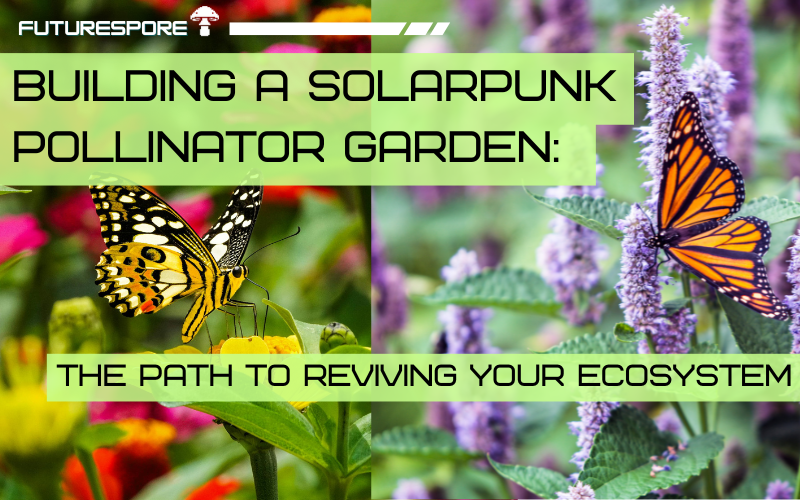
Host plants. The specific plants where butterflies and moths lay eggs and where their caterpillars feed. Monarchs need milkweed. Black swallowtails need dill, fennel, parsley. Hummingbird moths need honeysuckle. Without host plants, a garden full of nectar still produces no butterflies.
Shelter and water. Bare patches of soil for ground-nesting bees (seventy percent of native bees nest in the ground). A small shallow dish of water with stones to land on. Stems left standing through winter for overwintering insects.
The Three-Season Bloom Plan
The single most useful design rule: have something in bloom every week from early spring to late fall. Pollinators emerge at different times. A garden that’s spectacular in June and empty in April or September is missing the long shoulders of the season when food is scarcest.
Early spring (March–April): serviceberry, pussy willow, native columbine, wild geranium, golden alexander. The first emerging queen bumblebees depend on these.
Late spring (May–June): wild lupine, baptisia, beardtongue, ninebark, native viburnums, blue flag iris.
Early summer (June–July): milkweed (multiple species), bee balm, purple coneflower, wild bergamot, black-eyed Susan, butterfly weed.
Late summer (July–August): joe-pye weed, ironweed, mountain mint, anise hyssop, liatris, native sunflowers.
Fall (September–October): goldenrod, asters (a dozen species), native witch hazel. This is the most important and most overlooked window — the season when migrating monarchs need fuel.
For more on which natives belong in which bioregion, see our native garden guide.
The No-Pesticide Protocol
A pollinator garden sprayed with insecticide is a contradiction in terms. Neonicotinoids — even at “safe” levels — impair bee navigation and immune function. Glyphosate kills the milkweed that monarchs need. Even “organic” pyrethrin sprays are broad-spectrum killers that don’t distinguish friend from pest.
Three things instead:
Tolerate chewed leaves. Caterpillars are baby butterflies. A leaf with holes is a leaf doing its job in the food web. If you can’t look at it, plant the host plants behind something showier.
Encourage predators. Lacewings, parasitic wasps, ground beetles, and birds keep pest populations in check. Diverse plantings invite them. Monocultures don’t.
Hand-pick when needed. A few minutes of picking Japanese beetles off your roses is more effective than any spray, and it doesn’t collateral-damage the bees.
Shelter: The Part People Forget
Pollinators need places to live, not just places to eat. The two biggest factors:
Bare ground. Seventy percent of native bees are solitary ground-nesters. They need patches of sunny, exposed soil — not lawn, not mulch, not gravel. Leave a few square feet of dirt unmulched at the sunny edge of your garden.
Stems left standing. Many native bees overwinter inside hollow stems. The annual fall cleanup that strips a garden bare also evicts next year’s bees. Wait until late spring to cut back perennials. Most can stand all winter without harm; the dead stems also feed birds and add winter texture. Our fall cleanup guide goes deeper on what to leave and what to compost.
Skip the bee hotel kit you saw at the garden center unless you’re willing to clean it annually. Most poorly-maintained bee hotels become breeding grounds for parasites that hurt the populations they were meant to support. A patch of bare dirt and some standing stems is better than any plastic structure.
What to Tell People Who Notice
A pollinator garden eventually attracts attention — from neighbors, from passersby, sometimes from city inspectors. A few things that help:
Get certified. The Xerces Society’s Pollinator Habitat program, the National Wildlife Federation’s Wildlife Habitat program, and several state Audubon chapters offer free or low-cost certification with a small sign you can post. This single act reframes the space from “weeds” to “deliberate habitat” in a neighbor’s eyes.
Edge it. A two-foot mowed border or a low stone edge around a wild planting signals intent. Wildness inside a clear frame reads differently from wildness without one.
Plant something obviously beautiful. Bee balm, cardinal flower, native sunflowers, and asters all read as flower garden plants even to people who don’t know natives. Use them where the garden faces the street.
The Solarpunk Frame
A pollinator garden is a contract between you and a piece of land. You agree to host the species that evolved to live here. They agree to do the work of pollinating the broader food system — the apple trees down the street, the squash vines in the community garden, the wild blueberries at the forest edge.
It’s a small contract. But contracts add up. The math is real: a 2019 study found that yards converted to native pollinator plantings, even when scattered through suburbia, function as effective ecological corridors when there are enough of them. Yours could be one node in a continent-scale rewiring.
Start with three drifts. Milkweed. Bee balm. Aster. Spring, summer, fall.
The bees will find you.
Written by E. Silkweaver