Throw the Seeds
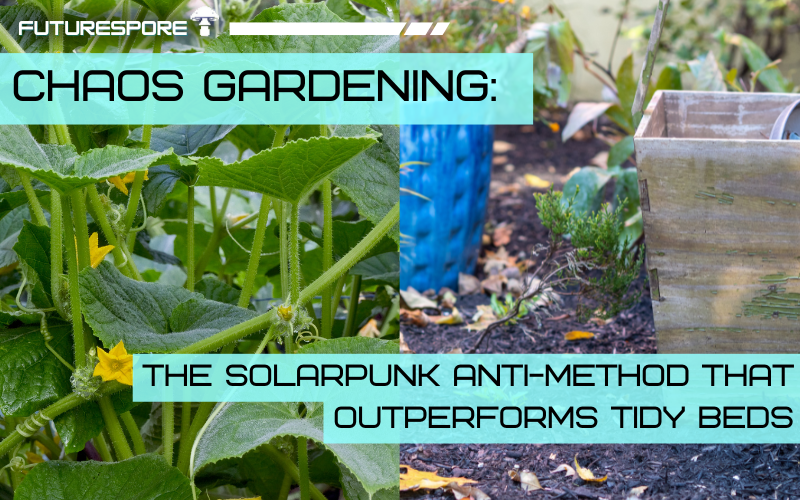
“Chaos gardening” broke into mainstream gardening searches in 2026. The basic recipe sounds like a joke. Gather every old, half-used, expired-three-years-ago seed packet you have. Mix the contents in a bowl. Walk into a prepared bed and scatter the entire bowl at random. Rake lightly. Water. Walk away.
And it works. Often better than a meticulously planned bed.
It works because it’s closer to how plants evolved to grow than the tidy rows we’ve been taught are the right answer. The reason is worth understanding even if you never sow a chaos bed.
Why Tidy Rows Are an Industrial Habit
The neat row is a machine-friendly pattern. Plant tomatoes thirty inches apart in straight rows and a tractor or cultivator can pass between them. The row exists because mechanized agriculture demanded it. It has nothing to do with what plants want.
What plants want is diversity. A monoculture row of tomatoes is a buffet for every tomato-specific pest that finds it. A bed of tomatoes mixed with basil, calendula, lettuce, dill, nasturtium, and beans is a moving target. Pests have to work harder. Predators have more habitat. Pollinators have more reasons to visit. Soil microbes have a more varied root community to partner with.
The plants help each other in ways industrial agriculture spent a century trying to ignore and is now slowly rediscovering. The mechanism — root chemistry, mycorrhizal sharing, chemical signaling — is covered in detail in our companion planting article.
The Ecological Argument
A meadow doesn’t grow in rows. A forest understory doesn’t grow in rows. Nothing in nature, except occasionally where wind sorts dunes or water sorts deltas, grows in rows. The default ecological pattern is mixed, irregular, layered.
Diversity in a planting bed produces three measurable effects:
Pest dilution. The same pest moving through a mixed bed encounters fewer of its preferred host plants per square foot. Many pests rely on chemical cues to find their target; nearby non-host plants disrupt the cues.
Resource partitioning. Deep-rooted and shallow-rooted plants reach different soil layers. Sun-lovers and shade-tolerant species occupy different vertical zones. Spring crops and summer crops trade the same space across the season. Total productivity per square foot rises.
Soil community resilience. A diverse aboveground planting supports a more diverse belowground microbial community, which buffers against extremes — drought, flood, pest pressure, nutrient imbalances.
How to Actually Do It
Three flavors of chaos gardening, in increasing degrees of structure.
True Chaos
Mix everything. Sow everywhere. Whatever comes up, comes up. Best in a prepared bed with no specific yield expectations — a meadow-style cutting garden, a pollinator strip, the corner where you usually let the weeds win. Surprisingly productive but unpredictable.
Structured Chaos
Pick three to seven species that you actually want and broadcast them together in a single bed. They’ll sort themselves by light, moisture, and germination timing. The pattern looks wild but the inputs are deliberate. This is what I do in most of my own beds.
Example mix for a sunny 4×8 bed:
- Bush beans
- Lettuce (cool-weather, fades as the beans take over)
- Basil
- Dill
- Calendula
- Nasturtium
Broadcast all six. The lettuce comes up first. The beans take over by midsummer. The basil fills gaps. Calendula and nasturtium bring pollinators and trap aphids. Dill goes to seed and self-sows for next year.
Chaos with Anchors
Place a few large plants (tomatoes, peppers, eggplant) in deliberate spots, then broadcast a mix of smaller species around them. The anchors give the bed structure; the chaos fills the rest. The most productive approach for vegetable gardens, in my experience.
Good Seed Mixes for Chaos Beds
Some combinations work especially well. Three I trust:
The pollinator chaos: bee balm, calendula, cosmos, zinnia, dill, cilantro (let it bolt), borage, sunflower. Sow at one ounce per 100 square feet, broadcast and rake in lightly.
The salad chaos: mixed loose-leaf lettuces, arugula, mizuna, kale, spinach, radish, scallions. Sow thickly in spring or fall; cut as a baby-greens mix every two weeks.
The pollinator+vegetable chaos: bush beans, dill, basil, nasturtium, calendula, marigold, radish. Best in early summer; lasts through frost.
The Failure Modes
Chaos gardening is not magic. It fails in predictable ways:
Crowding. Sow too dense and everything stunts. If you’re scattering seed, err on the lighter side — you can always sow more, but you can’t un-sow.
Aggressive volunteers. Mint, fennel, and a few others will dominate any chaos mix. Either keep them in containers or accept that they’ll be the dominant feature.
Difficult germination. Some seeds need very specific conditions (cold stratification, light, scarification). They won’t come up in a casual chaos mix. Stick to easy-germinating species for your first chaos sowing.
Mismatched seasons. Sowing winter and summer crops in the same chaos mix at the same time means half won’t germinate when conditions are right. Group by season.
The Aesthetic
A chaos bed looks messy by conventional standards. Lettuce sprawls under bean leaves. Calendula tilts over from one side. Nasturtium spills out the front. This is the same aesthetic question that comes up around native gardens — how do you let things look wild without being read as “neglected”?
Three things help:
Frame it. A clean wooden edge, a stone border, or a mowed path around a chaos bed signals “deliberate.”
Edit the edges. Cut back anything that sprawls onto a path or out of the bed. The interior can be wild; the perimeter should be clean.
Include showy bloomers. A chaos bed with zinnias, calendula, and sunflowers reads as a flower garden even when half the plants are vegetables.
The Solarpunk Frame
Chaos gardening is, mechanically, polyculture — the same agricultural pattern that pre-industrial societies used for ten thousand years and that industrial agriculture spent a century replacing with monocultures. We’re rediscovering polyculture under a different name because the previous name (“the way everyone gardened before tractors”) wasn’t marketable. Chaos gardening sounds new. It is, in fact, the old way coming back through the front door.
That’s mostly fine. The point is the practice. Throw the seeds. Watch what wants to grow with what. Adjust next year. Garden the way ecosystems garden themselves.
Written by E. Silkweaver