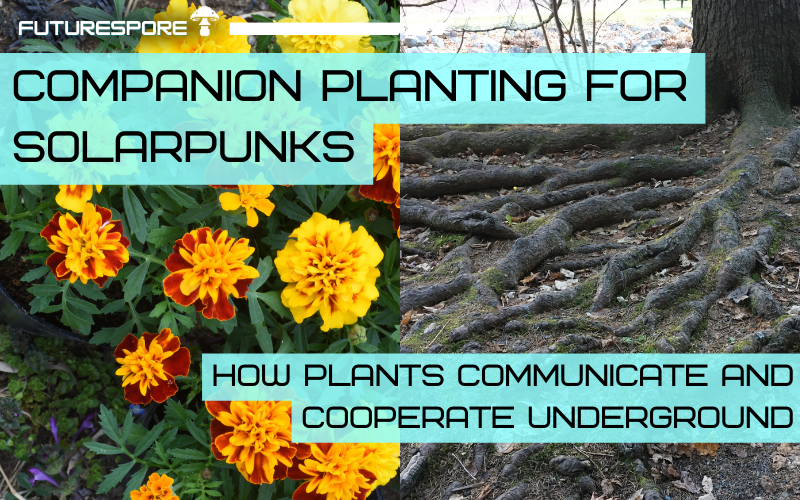
The Myth of the Silent Garden
Stand in the middle of a garden on a still afternoon and you might think that nothing much is happening. The tomatoes are doing their patient vertical work while the basil sits compactly beside them. A row of carrots sends up feathery tops into the light. It looks peaceful; it is peaceful. It looks passive, like the plants are simply growing and nothing more. It looks, above all, to the untrained eye, to be quiet.
And yet, it is none of these things.
Beneath your feet and in the air around you, an invisible symphony of chemical communication is unfolding at a pace and complexity that would stagger most human social networks. Plants are warning their neighbors about approaching herbivores coming to devour them. Root systems are busy negotiating the exchange of sugars for phosphorus through fungal intermediaries, mycelial networks that weave just beneath the mulchy surface. Volatile compounds are drifting between species, triggering defensive responses in plants that have never been touched, letting them know danger is on its way. Somewhere in the soil, a marigold is releasing thiophene compounds that are quietly dissolving nematode eggs, all the while repelling aphids from taking an interest in the tomato plant.
The idea of the plant as a passive and solitary organism that’s simply rooted in place and without the ability to respond to its environment is one of the most persistent and damaging myths in Western botany and most peoples understanding of the Kingdom Plantae. Increasingly confirmed by plant science research over the past three decades, the reality is that plants are intensely social organisms that have the ability to communicate, cooperate, and compete within an ecosystem.
Companion planting, also known as the practice of growing certain plants together for mutual benefit, is the gardener’s practical application of this science. It is also, when you step back far enough to see the pattern, a blueprint for how cooperative societies might be designed.
How Do Plants Communicate? The Science of Green Conversation
Plant communication operates through at least three primary channels, each of which has been the subject of extensive botanical research.
Volatile Organic Compounds (VOCs): Messages on the Wind
When a tomato plant is attacked by a caterpillar, the damaged leaf cells release a burst of volatile organic compounds — airborne chemical signals that drift to neighboring plants. Those neighbors, even if they are a different species entirely, detect these VOCs through their leaf surfaces and begin mounting their own defenses before the caterpillar ever reaches them. They may increase the production of protease inhibitors (proteins that interfere with insect digestion), ramp up the synthesis of toxic alkaloids, or release their own VOCs that attract the caterpillar’s natural predators — parasitoid wasps, predatory beetles, and other beneficial insects.
A landmark 1983 study by David Rhoades, and subsequent work by researchers including Martin Heil, Ian Baldwin, and Richard Karban, has established beyond reasonable doubt that plants eavesdrop on their neighbors’ chemical distress signals and respond with anticipatory defense. Karban’s 2014 work with sagebrush (Artemisia tridentata) demonstrated that plants sharing air with damaged relatives suffered significantly less herbivore damage than isolated controls, and that genetic relatedness mattered. Plants responded more strongly to signals from closely related individuals, a phenomenon which researchers have called “plant kin recognition.”
Root Exudates: The Underground Internet
Below the soil surface, plants communicate through their roots. Root exudates, which are a complex cocktail of sugars, amino acids, organic acids, and signaling molecules secreted from root tips, serve as a chemical language that influences everything from nutrient cycling to neighbor recognition.
Plants can identify the root exudates of their own species versus those of competitors, and they adjust their root growth accordingly. Some species exhibit “root segregation”, which is a polite direction of their roots away from kin to avoid competition. Others release allelopathic compounds that suppress the growth of competing species (more on this later). The rhizosphere, which is the thin zone of soil immediately surrounding roots, is one of the most biologically active and chemically complex environments on Earth, hosting a density of microbial life comparable to the human gut. This is the same living soil ecosystem we explored in depth in The Quiet Work of Winter.
Mycorrhizal Networks: The Wood Wide Web
Perhaps the most extraordinary channel of plant communication runs through fungi. Mycorrhizal fungi — which form symbiotic associations with the roots of roughly 90% of all plant species — create vast underground networks that physically connect individual plants to one another. A single mycorrhizal network in a forest can link dozens of trees across hundreds of meters.
Through these fungal networks, plants can transfer nutrients, water, and chemical signals to their neighbors. Ecologist Suzanne Simard’s pioneering research in British Columbia’s forests revealed that mature “mother trees” use mycorrhizal connections to send carbon and nutrients to struggling seedlings — particularly their own offspring. Simard’s work showed that Douglas fir and paper birch, two species that were long thought to be competitors, were in fact sharing carbon through a common mycorrhizal network, with the direction of flow shifting seasonally depending on which species was under the most stress. This same network architecture has inspired biomimetic approaches to distributed computing and resilient system design.
In a garden context, mycorrhizal networks help explain why polycultures (diverse plantings) often outperform monocultures: a diverse root community supports a more diverse and resilient fungal network, which in turn facilitates greater nutrient exchange and communication among plants.
Why Plants Warn Each Other About Pests
From an evolutionary perspective and to those privy to a more competitively-based worldview, plants that warn their neighbors about pest attacks might seem to be making a costly mistake — why help the competition? Several hypotheses explain this apparently altruistic behavior.
Kin selection: Many of a plant’s immediate neighbors are likely to be close genetic relatives (seeds tend to fall near their parent). Warning kin makes evolutionary sense for the same reason it does in animal behavior, as shared genes benefit from shared survival.
Self-signaling: Some researchers argue that VOCs released by a damaged leaf primarily serve to warn the plant’s own undamaged leaves, and that neighbor eavesdropping is a secondary effect. The signal was never “intended” for other plants; they simply evolved the ability to intercept it.
Mutualistic defense: In a polyculture, the survival of neighboring plants helps maintain the broader ecosystem that supports everyone — including the signaler. If your neighbor’s parasitoid wasp population thrives because they responded to your warning signal, those wasps also protect you.
Whatever the evolutionary explanation, the practical result is the same: diverse plantings where multiple species share airspace and soil create a web of mutual defense that is far more resilient than any monoculture. This is the scientific foundation of companion planting.
Classic Companion Planting Combinations (and Why They Actually Work)
Many traditional companion planting recommendations have been passed down through generations of gardeners with little explanation beyond “it works.” Modern plant science is beginning to reveal the mechanisms behind these time-tested pairings.
The Three Sisters: Corn, Beans, and Squash
The most famous companion planting system in the world originated with Indigenous peoples of the Americas and has been cultivated for at least a thousand years. Its genius is in the complementary architecture of three plants that, together, solve each other’s problems.
Corn provides a tall, sturdy structure for the beans to climb, eliminating the need for trellises. The beans, as legumes, host nitrogen-fixing bacteria (Rhizobium spp.) in their root nodules, converting atmospheric nitrogen into plant-available ammonium — effectively fertilizing the corn and squash. The squash sprawls across the ground at the base, its broad leaves shading the soil to suppress weeds and retain moisture, while its prickly stems deter animal pests.
This is a designed system where each organism provides something the others need. The corn takes nitrogen from the soil; the beans replace it. The squash prevents moisture loss; the corn creates the structural framework. It is agriculture as mutualism — the same principle that drives food forests and other layered growing systems.
Tomatoes and Basil: The Classic Mediterranean Pair
Gardeners have grown tomatoes and basil together for centuries, and not just because they taste good on the same plate. Basil releases volatile organic compounds — primarily linalool and estragole — that repel several common tomato pests, including aphids, whiteflies, and tomato hornworms. Some research also suggests that basil’s VOCs may improve the flavor of neighboring tomatoes, though this is more anecdotal than rigorously proven.
The mechanism is straightforward: basil’s strong aromatic profile creates a chemical “screen” in the immediate airspace that confuses and deters pest insects relying on scent to locate host plants. This is sometimes called the “olfactory camouflage” hypothesis, and it applies broadly to many aromatic-herb-plus-vegetable combinations.
Carrots and Onions: Mutual Pest Confusion
The carrot fly (Psila rosae) locates carrots by scent. The onion fly (Delia antiqua) locates onions by scent. When you interplant carrots and onions, each crop’s strong aromatics interfere with the other pest’s ability to find its host. Neither pest is eliminated, but the incidence of damage is significantly reduced compared to monoculture plantings of either crop.
This “pest confusion” principle extends to many combinations: leeks with celery, cabbage with dill, beans with rosemary. The general rule is that diverse, aromatic plantings create a complex olfactory environment that makes life difficult for specialist pest insects that depend on finding specific scent signatures.
Marigolds: The Garden’s Chemical Warfare Specialist
French marigolds (Tagetes patula) are one of the most scientifically validated companion plants in existence. Their roots produce alpha-terthienyl and other thiophene compounds that are toxic to root-knot nematodes (Meloidogyne spp.) — microscopic roundworms that devastate the roots of tomatoes, peppers, carrots, and many other crops. Interplanting marigolds, or growing them as a rotation crop, has been shown in multiple peer-reviewed studies to reduce nematode populations in the soil.
Above ground, marigolds serve as a “trap crop” for aphids and whiteflies, drawing these pests away from more valuable crops. They also attract hoverflies and parasitoid wasps — beneficial insects whose larvae are voracious aphid predators. A border of marigolds around a vegetable garden is one of the most effective, lowest-cost pest management strategies available.
Allelopathy: When Plants Suppress Their Neighbors
Not all plant interactions are cooperative. Some species engage in chemical warfare against their neighbors through a process called allelopathy — the release of biochemical compounds that inhibit the germination or growth of nearby plants.
Black walnut (Juglans nigra) is the most notorious allelopathic tree in North America. Its roots, leaves, and hulls produce juglone, a naphthoquinone compound that is toxic to many common garden plants, including tomatoes, peppers, eggplant, potatoes, and many ornamentals. The “walnut zone”, or the area beneath and around a walnut tree’s canopy where juglone concentration is highest, can extend 50–60 feet from the trunk. However, due to its function as overstory canopy, it can provide shade to plants native to the Northeast such as the Paw Paw (Asimina triloba), which provides a delicious, mango-banana-like fruit that’s delectable to both humans and wildlife when ripened, and also happens to be juglone-resistant.
Sunflowers (Helianthus annuus) release allelopathic compounds from their leaves, roots, and seed hulls that can inhibit the germination of lettuce, wheat, and some other crops. After harvesting sunflowers, it is advisable to remove the stalks rather than tilling them in, and to allow a few weeks before planting sensitive crops in the same spot.
Cruciferous crops (broccoli, cabbage, kale) release glucosinolates during decomposition that can suppress weed germination, which is actually useful as a form of natural weed control when managed intentionally through cover-cropping. This is one of many strategies explored in eco-friendly yard management.
Understanding allelopathy is essential for companion planting. Knowing what not to plant together is just as important as knowing what works well side by side.
Guild Planting: Designing Plant Communities in Permaculture
Permaculture takes companion planting a step further through the concept of the guild, or a designed community of plants (and sometimes animals) where each member fills a specific ecological role. A guild is modeled on the structure of a natural ecosystem, where biodiversity and mutual support create emergent resilience.
A classic permaculture fruit tree guild might include:
- Canopy layer: A fruit tree (apple, pear, plum) providing the structural center
- Nitrogen fixer: Comfrey, clover, or a nitrogen-fixing shrub like autumn olive planted nearby to feed the soil
- Dynamic accumulator: Deep-rooted plants like comfrey or dandelion that mine minerals from subsoil and make them available to the tree through leaf mulch
- Pest deterrent: Aromatic herbs (garlic chives, tansy, yarrow) planted around the base to repel pests
- Ground cover: Low-growing plants (white clover, creeping thyme) that suppress weeds, retain moisture, and feed pollinators
- Pollinator attractor: Flowering plants that ensure the tree is well-pollinated
A well-designed guild requires almost no external inputs, and therefore it needs no synthetic fertilizer, pesticide, nor irrigation beyond what the mulch layer retains. Each plant feeds, protects, or serves the others. The system as a whole produces more than any of its members could alone. This guild approach is the foundation of food forest design and represents one of the most powerful applications of reclaiming suburban land for productive use.
Polyculture vs. Monoculture: Why Diversity Equals Resilience
Industrial agriculture is dominated by monoculture — vast fields of a single crop. This approach maximizes mechanical efficiency but creates enormous ecological vulnerabilities. A monoculture is an all-you-can-eat buffet for specialist pests and diseases. It depletes specific nutrients from the soil while leaving others unused, supports almost no biodiversity above or below ground, and is entirely dependent on external inputs — synthetic fertilizer, pesticides, fungicides, irrigation — to compensate for the ecological functions that a diverse system would provide for free.
Polyculture, which is the practice of growing multiple species together, reverses every one of these vulnerabilities. Research consistently shows that diversified plantings experience less pest damage, maintain healthier soil biology, use water more efficiently, and produce greater total yield per unit of land than monocultures (a phenomenon called “overyielding”). The Jena Experiment, one of the longest-running biodiversity experiments in the world, has demonstrated that plant communities with higher species diversity are more productive, more stable across years, and more resistant to drought, disease, and invasion by weedy species.
The lesson is straightforward: diversity is not only aesthetically preferable, but functionally superior, as ecosystems have evolved toward diversity because diversity works. This is the same principle driving the hyperlocal farming movement and the broader shift away from industrial agriculture.
A Practical Companion Planting Guide for Beginners
Here is a reference chart of well-supported companion planting relationships to help you design your first diversified garden bed.
Tomato
Why basil: repels whitefly & tomato hornworm; said to improve fruit flavor.
Pepper
Note: identical needs to tomato — plant them together for easier watering & mulching.
Basil
Repels mosquitoes & flies; pinch flower buds for tender leaves all season.
Cilantro
When allowed to flower, attracts predatory wasps that hunt cabbage worms & aphids.
Parsley
Host plant for black swallowtail butterfly caterpillars — sacrifice some leaves for the pollinator.
Dill
Magnet for ladybugs & lacewings; cross-pollinates with carrot — keep them apart.
Cucumber
Trellis vertically to save 75% of garden space; beans fix nitrogen for cucumber's heavy feeding.
Beans
Fix atmospheric nitrogen into soil — feed heavy feeders like corn & cucumber when planted nearby.
Potato
Plant horseradish at bed corners — protects from Colorado potato beetle.
Carrot
Onion & leek scent masks carrots from carrot rust fly — interplant in alternating rows.
Marigold
Roots release alpha-terthienyl, which deters root-knot nematodes; flowers deter aphids & whitefly.
Nasturtium
Trap crop for aphids — they swarm nasturtium and ignore your vegetables.
Good Companions
- Tomatoes with: basil, marigolds, carrots, parsley, garlic, nasturtiums
- Peppers with: basil, carrots, onions, marigolds, spinach
- Beans with: corn, squash, carrots, beets, cucumbers, marigolds
- Carrots with: onions, leeks, lettuce, rosemary, sage, tomatoes
- Lettuce with: carrots, radishes, strawberries, chives, beans
- Cucumbers with: beans, corn, peas, radishes, sunflowers, dill
- Brassicas (cabbage, broccoli, kale) with: dill, chamomile, onions, garlic, beets, celery
- Squash with: corn, beans, nasturtiums, marigolds, radishes
Plants to Keep Apart
- Tomatoes away from: fennel, brassicas, mature dill, black walnut
- Beans away from: onions, garlic, chives (alliums can inhibit bean growth)
- Carrots away from: dill (can cross-pollinate and produce off-flavor), fennel
- Brassicas away from: strawberries, tomatoes, pole beans
- Fennel away from: almost everything (fennel is allelopathic to most garden crops — plant it in its own area)
- Potatoes away from: tomatoes, squash, sunflowers (shared pest and disease vulnerability)
Specific Pairings: A Plant-by-Plant Guide
Some of the most-asked questions in companion planting come down to specific pairings. Here is a deeper look at seven combinations gardeners ask about most often.
Parsley Companion Plants
Parsley (Petroselinum crispum) is one of the most underrated companion plants in the vegetable garden. Pair it with tomato, asparagus, carrot, and chives. Parsley flowers attract hoverflies and tiny parasitic wasps that prey on aphids and cabbage worms, so let some bolt in late summer rather than continuously cutting it back. It is also a host plant for black swallowtail butterfly caterpillars — if you find striped caterpillars devouring leaves, leave them; the butterflies are worth the parsley.
Keep parsley away from mint (mint is allelopathic and will outcompete it) and lettuce (when parsley bolts, it can shade and stunt nearby lettuce). Parsley pairs especially well with tomatoes because the two have complementary root depths and water needs — parsley shallows the surface, tomatoes mine the subsoil.
Potato Companion Plants
Potatoes (Solanum tuberosum) pair best with beans, cabbage family crops, corn, horseradish, and marigold. Horseradish is the surprise champion here — planted at the four corners of a potato bed, its compounds appear to deter the Colorado potato beetle, the most damaging pest in temperate potato growing. Marigold roots release alpha-terthienyl, which suppresses root-knot nematodes that attack potato tubers.
Avoid planting potatoes near tomato, cucumber, squash, sunflower, and raspberry. The first four share late blight (Phytophthora infestans) and other fungal diseases — planting them together amplifies infection risk. Raspberry roots produce compounds that compete with potato roots. Pole beans are also better than bush beans here, since bush beans can shade out potato foliage early in the season.
Dill Companion Plants
Dill (Anethum graveolens) is a beneficial-insect magnet. Pair it with cucumber (the classic combo — dill flowers attract pollinators that fertilize cucumber blooms), onion, lettuce, and brassicas (cabbage, broccoli, kale). The umbrella-shaped flowers attract ladybugs, lacewings, hoverflies, and parasitic wasps that hunt cabbage worms and aphids.
Keep dill away from carrot (they cross-pollinate, producing off-flavor seeds and stunted carrots) and fennel (same family, will cross). Mature dill near tomatoes can also stunt tomato growth once the dill flowers, so use immature dill near tomatoes or plant a sacrificial dill row 10+ feet away to draw beneficials in.
Beans and Cucumber Companion Planting
Beans and cucumbers are one of the most productive pairings in the garden. Beans fix atmospheric nitrogen into the soil through symbiosis with Rhizobium bacteria in their root nodules. Cucumbers are heavy nitrogen feeders — the bean roots quite literally fertilize the cucumber. Plant bush beans alongside cucumbers, or use pole beans on a shared trellis with cucumbers climbing the same supports.
The spatial efficiency is also significant: cucumbers vine outward and trail along the ground without support, while pole beans climb vertically. Run beans up a teepee or trellis, and let cucumbers sprawl below — you get two crops in roughly the footprint of one. Add a few radishes between them as a fast-growing intercrop and you have a three-tier productive bed in 4 square feet.
Cilantro Companion Plants
Cilantro (Coriandrum sativum) pairs beautifully with tomato, pepper, beans, and spinach. When allowed to bolt and flower, cilantro is one of the most powerful predatory-wasp attractors in the garden — the tiny white umbel flowers are perfectly sized for parasitic wasps that hunt aphids, hornworm caterpillars, and cabbage worms.
Keep cilantro away from fennel (same family, will cross and bolt early). Cilantro is also notoriously short-lived in heat — succession plant every 3 weeks for continuous fresh leaves, or let half your plants bolt to draw beneficials and provide coriander seed. Pro tip: plant a row of cilantro between your tomatoes and peppers in mid-spring; by the time the heat-loving crops are producing, the cilantro will be flowering and shielding them from aphid waves.
Bush Beans Companion Plants
Bush beans (Phaseolus vulgaris) are easier to companion-plant than pole beans because they stay compact and do not shade neighbors. They pair well with carrot, cucumber, corn, radish, strawberry, celery, and brassicas. Like all legumes, bush beans fix nitrogen in their root nodules — interplant them between heavy feeders for free fertility.
Avoid alliums: onion, garlic, leek, and chive. Alliums produce sulfur compounds that inhibit the rhizobia bacteria living in bean root nodules, suppressing nitrogen fixation and stunting bean growth. Fennel also causes problems — allelopathic to almost everything in the garden. A simple high-yield bush bean polyculture: alternate rows of bush beans with rows of carrots, edge with marigolds, and you have pest control, soil fertility, and three crops in the same bed.
Amaranth Companion Plants
Amaranth (Amaranthus spp.) is an ancient grain and leaf vegetable that pairs surprisingly well with corn, cucumber, onion, potato, and tomato. The deep taproot mines minerals from subsoil — making it an excellent "dynamic accumulator" companion that brings nutrients back to the surface for shallow-rooted neighbors. Some studies show amaranth can act as a trap crop for cucumber beetles, drawing them away from cucumbers and squash.
Avoid planting amaranth too close to leafy greens like lettuce — mature amaranth can grow 6 feet tall and shade out lower crops. Keep some distance or plant amaranth on the north edge of the bed (in northern hemisphere) so its shadow falls outside the growing space. Amaranth seed heads are also a magnet for finches and other songbirds — a bonus if you want to support biodiversity, a problem if you want to harvest the grain for yourself.
How to Design Your First Companion Garden Bed
If you are new to companion planting, start simple. You do not need to design a complex permaculture guild on your first attempt. Here is a practical approach for a single raised bed or in-ground plot. For a broader introduction to getting started with growing your own food, see our guide on how to grow food where you live.
Step 1: Choose your anchor crop. What do you most want to eat? Tomatoes, lettuce, beans? This is the center of your design.
Step 2: Add a companion for pest management. If your anchor is tomatoes, add basil and marigolds. If beans, add savory or rosemary. Choose companions known to deter the primary pests of your anchor crop.
Step 3: Include a nitrogen fixer if possible. If your anchor crop is a heavy feeder (tomatoes, corn, squash), try to include a legume (beans, peas, clover) nearby to help replenish soil nitrogen.
Step 4: Fill gaps with quick-growing allies. Lettuce, radishes, and spinach grow fast, occupy otherwise empty space, shade the soil, and are harvested before larger crops need the room. These are called “catch crops” or “intercrops.”
Step 5: Add a border of flowers. A ring of marigolds, nasturtiums, or calendula around the bed attracts beneficial insects, deters pests, and transforms a vegetable bed into something genuinely beautiful.
Step 6: Observe and adjust. Companion planting is as much art as science. Watch what happens. Notice where pests concentrate, which combinations seem to thrive, and where plants seem stressed by their neighbors. Every garden is different, and local conditions — soil type, microclimate, regional pest pressure — will shape your experience in ways no chart can fully predict.
Gardens as Models of Cooperative Society
There is a reason solarpunk thinkers keep returning to gardens as metaphors, and it is not merely out of sentimentality. A companion-planted garden is a working demonstration of principles that our society desperately needs to internalize.
In a healthy garden, no single species dominates. Each organism contributes something: nitrogen, pest deterrence, structural support, pollinator habitat, ground cover, mineral accumulation. The system produces more collectively than any member could alone. Waste from one organism becomes food for another. Competition exists, but it is modulated by cooperation, mutual benefit, and the stabilizing influence of diversity.
This is not utopian fantasy projected onto plants. It is observable, measurable ecology. And it stands in stark contrast to the monoculture model — both agricultural and social — that defines so much of contemporary life. Monocultures are efficient in the short term and catastrophically fragile in the long term. They require constant external inputs to function. They collapse when a single variable shifts.
The companion garden offers a different model: resilience through diversity, productivity through cooperation, stability through interdependence. The corn holds up the beans. The beans feed the corn. The squash protects them both. Nobody signed a contract. Nobody filed a patent. The system simply works because each organism does what it does best, in proximity to others doing what they do best.
If that is not a blueprint for the kind of world solarpunk asks us to build, then language has failed us entirely.
Start with a single bed. Plant tomatoes next to basil. Ring them with marigolds. Tuck lettuce into the gaps. Watch what happens when you stop trying to control a garden and start trying to design a community.
The plants already know how to do this. They have been doing it for 450 million years. We just need to pay attention.
Frequently Asked Questions
What is companion planting?
Companion planting is the practice of growing certain plants near each other because they help one another — through pest control, nutrient exchange, shade, or pollinator attraction. The classic example is the Three Sisters: corn provides a trellis for beans, beans fix nitrogen for corn, and squash shades the soil and deters pests.
Do plants actually communicate underground?
Yes. Plants exchange chemical signals and nutrients through mycorrhizal fungal networks — the Wood Wide Web — and through root exudates. Studies have shown that injured plants warn their neighbors of pest attacks, that mother trees share carbon with their saplings, and that some plants will preferentially feed their own offspring. Plants are profoundly social organisms.
What are the best companion plants for tomatoes?
Basil (repels hornworms and improves flavor), marigold (deters nematodes), borage (attracts pollinators), nasturtium (trap crop for aphids), and chives or garlic (deter many tomato pests). Avoid planting tomatoes near brassicas, fennel, or potatoes — they compete for nutrients or share diseases.
What is the Three Sisters method?
The Three Sisters is an Indigenous polyculture from North America that interplants corn, beans, and squash. Corn provides a vertical trellis for climbing beans; beans fix atmospheric nitrogen that feeds the corn; squash sprawls along the ground, shading the soil, retaining moisture, and deterring raccoons with prickly leaves. The three plants together yield more than any of them alone.
Does companion planting really work or is it folklore?
Both. Some claims (basil repels mosquitoes, marigolds deter nematodes) are backed by peer-reviewed studies. Others (Mel Bartholomew's specific square-foot pairings) are mostly anecdotal. The strongest evidence supports interplanting flowering herbs to attract beneficial insects and using legumes to fix nitrogen for heavy feeders. The folklore that works tends to share an ecological mechanism.
Written by E. Silkweaver, founder of Futurespore.