Why the Starter Set Matters
When I started, in the spring of 2020, I had a balcony, a flat of produce seedlings, and almost no idea what I was doing. The squirrels — fed all winter by neighbors near the highway — took most of it before I understood what was happening. But what I remember most clearly is the paralysis that came before the squirrels: standing in front of a rack of seed packets and a wall of unfamiliar nursery starts, unable to choose, because I did not yet know enough to know what mattered.
The appeal of a plant kit — a small, pre-chosen set someone else has already vouched for — comes from that paralysis. New gardeners do not want to stand in a nursery and choose between three hundred unfamiliar species on their first day. They want someone who has already made the mistakes to say: start with these, in roughly this order, and a year from now you will understand what you are doing.
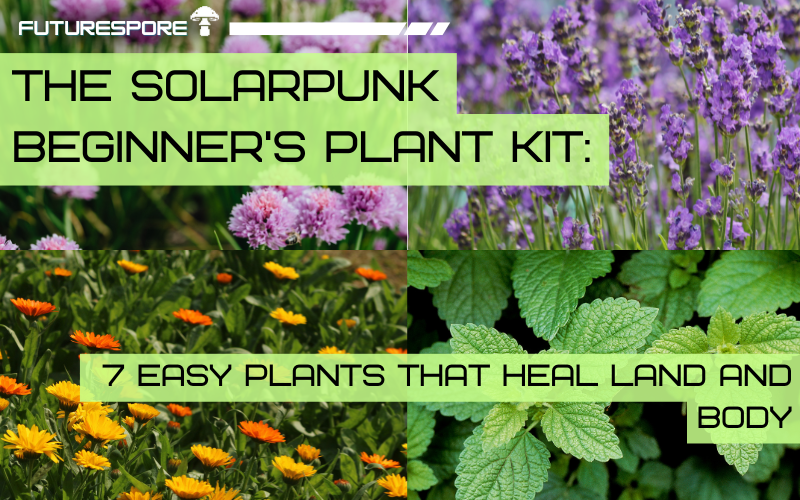
This is that list. Seven plants. Each one is hard to kill, and each one earns its place by being useful — food, medicine, or forage for something with wings. Plant only these and nothing else, and within two seasons you will have a small working garden that gives back more than it asks.
The Selection Rules
Every plant here had to clear four tests. It had to be forgiving — the kind of plant that shrugs off the beginner’s twin sins of overwatering and forgetting to water at all. It had to be productive inside the first season, because nothing drains a new gardener’s nerve faster than a year of waiting on nothing. It had to teach something — a transferable habit or principle that carries over to whatever you grow after it. And if it did not feed a person, it had to feed something else: a bee, a hoverfly, a parasitic wasp earning its keep.
1. Yarrow (Achillea millefolium)
Drought-tolerant, quietly beautiful, and one of the most useful medicinal plants in temperate North America. The flat white flower heads bloom from June into September and pull in a startling range of beneficial insects — lacewings, hoverflies, and the small parasitic wasps that hunt the pests already eyeing your other plants.
The medicine is old and well documented. Yarrow is a styptic, which is to say it slows the bleeding of a minor cut; a diaphoretic, which breaks a fever by encouraging a sweat; and a bitter that nudges sluggish digestion. It is among the herbs I reach for when tincture season comes around, and the method is in our tinctures guide.
Care: full sun, any soil that drains, no fertilizer, no irrigation once it is rooted in. Cut it back in early spring.
2. Mint (Mentha spp.)
Mint is famously impossible to control in open ground, which is the precise reason a beginner cannot kill it. Sink it in a 1-gallon container, water it when you remember, and it will hand you leaves for tea, for cocktails, for digestive bitters and dried winter blends, year after year.
Spearmint is the workhorse. Peppermint is sharper and better for digestion. Chocolate mint exists, and I will not talk you out of it.
Care: partial shade is ideal, full sun is fine, keep it moist. Plant it in a container — always — unless you want it everywhere forever.
3. Calendula (Calendula officinalis)
If I had to name the single most useful flower for a first garden, it would be this one. Calendula blooms orange and yellow without pause from June until frost, turns away a few pests, feeds the beneficial insects, and gives you petals that are both edible — a mild peppery note in a salad — and medicinal, anti-inflammatory and antimicrobial once they are worked into a salve or a tincture.
It also self-seeds with abandon. Plant calendula once and, short of paving over the bed, you will have calendula for good. Give it full sun and average soil, water it through a dry spell, and deadhead the spent blooms — or do not, and let it sow next year’s crop for you.
4. Chives (Allium schoenoprasum)
A perennial allium, and the first thing in the bed to wake up in spring. It throws purple pom-poms in May — edible, and prettier than they have any right to be — and offers snippable hollow stems straight through the season. Plant chives once and they return every year for as long as you keep the address.
They also quietly turn aphids away from their neighbors, a benefit you never see until the season your neighbor’s tomatoes are furred with them and yours are clean.
Care: full sun, average soil. When they go straggly, shear them back to a couple of inches; they return within two weeks.
5. Lavender (Lavandula angustifolia)
A drought-tolerant Mediterranean shrub with silver aromatic foliage and purple spikes in midsummer that draw in every pollinator within walking distance. The flowers dry beautifully for sachets, for tea, for tincture.
Lavender is the one plant on this list that fails from kindness. It wants poor, sharp-draining, faintly alkaline soil, and it resents nearly everything we instinctively do to help — do not feed it, do not bury it in mulch, do not overwater it. Prune it back by a third in early spring so it does not go woody and hollow at the center. Choose English lavender (L. angustifolia) and it will take a zone 5 winter.
6. Oregano (Origanum vulgare)
Greek oregano carries the most flavor of the culinary types — tough, drought-tolerant, perennial, spreading into a low mat that doubles as a ground cover in a herb bed. The bees work its small white-pink summer flowers, and the dried leaf is the same oregano you scatter over a pizza, except that it tastes like something, which the supermarket jar does not.
Care: full sun, lean soil, very little water. Cut it back hard in late spring, and take the flowering branches for drying.
7. Lemon Balm (Melissa officinalis)
The mint family’s gentler cousin — it grows the way mint does, which is to say vigorously, but carries a soft lemon scent in place of the menthol bite. The leaves make a calming tea, one of the old nervine herbs, and the plant is a steady draw for bees. Its genus name, Melissa, is Greek for honeybee; the plant has been understood as theirs for a very long time.
Treat it as you would mint. Container it unless you have room to lose, and rest assured you will not manage to kill it.
What to Do With These Seven
The first year asks very little of you. Water them in, watch them take hold, cut calendula and chives as fast as they offer themselves, pinch mint and lemon balm for tea, and let the lavender and yarrow spend the season settling their roots.
By the second year the perennials have found their footing, and the work turns from tending toward making. This is the season you render calendula into salve, set the yarrow into tincture, dry the oregano for the cupboard, and start carrying surplus chives across the fence to a neighbor.
Somewhere in the third year you look up and realize a working herbalist’s shelf is growing in your own yard. The plants are larger and more generous, and your sense of them runs deeper than any label could teach. You begin adding species. You begin, without quite noticing the turn, to think like a gardener.
The Solarpunk Frame
A starter kit is not the garden. It is the threshold you cross to reach one. These seven plants teach the fundamentals — sun, soil, water, harvest, the small magic of propagation — and they teach it at low stakes, because you will lose almost none of them. Along the way you learn the thing no list can hand you: what you actually like to grow.
The next ten plants you bring in will be yours specifically — shaped by your climate, your light, what you like to cook, what you want in the medicine cabinet. Those are the ones we take up in the easy plants for first-time growers follow-up.
Seven plants. Get them rooted, and let the first season do the teaching. What comes after follows from what these have shown you — it usually does.
Frequently Asked Questions
What is a solarpunk plant kit?
A solarpunk plant kit is a curated set of low-maintenance, high-utility plants — typically 5–10 species — that produce food or medicine, support pollinators, and tolerate beginner mistakes. Interest in starter plant kits has grown as more people take up gardening but want a vetted starting set rather than the choice paralysis of a seed catalog.
What plants are in a good beginner kit?
Seven robust starters: yarrow (first aid herb, pollinator), mint (tea and digestive — keep it potted), calendula (medicinal flower, edible petals), chives (perennial allium, pest deterrent), lavender (pollinator magnet, dried flowers), oregano (culinary perennial, ground cover), and lemon balm (calming tea, bee plant). All thrive on neglect; all earn their space.
Are starter plant kits worth buying?
Often yes, especially for new gardeners overwhelmed by options. A good kit pre-selects compatible plants suited to a region, which avoids the most common mistake — buying random plants from a big-box store that don't work together. Avoid kits that include invasive species or non-natives marketed as 'pollinator-friendly.'
What's the difference between a solarpunk plant kit and a regular garden starter set?
Solarpunk kits emphasize ecological function alongside aesthetics — pollinator value, nitrogen fixation, perennials, and dual-use food/medicine plants. Conventional starter sets often focus on a single category (e.g., 'salsa garden') or on aesthetically pleasing but ecologically inert plants. The solarpunk version asks every plant to do at least two jobs.
Can I make a solarpunk plant kit from seeds I already have?
Yes. Choose plants that overlap food + pollinator + medicine functions. A simple home kit from the same seven: calendula (medicinal + edible petals), chives (food + pollinator), yarrow (medicine + beneficial insects), oregano (food + pollinator), lemon balm (tea + bees), and mint in a pot (tea + digestive). Buying isn't required; selection is.
Written by E. Silkweaver