The Kids Who Don’t Know Dirt
Two trends crossed in 2026 searches: “mud kitchen” hit an all-time high, and so did “plant kit” and several other searches related to outdoor play for children. The pattern is unmistakable. Parents are seeing what the cognitive psychologists have been documenting for two decades — that contemporary childhood has been increasingly indoors, increasingly mediated, increasingly distant from soil — and they’re trying to reverse it.
Richard Louv coined “nature deficit disorder” for this in 2005. The medical literature on its consequences is now extensive: increased rates of anxiety and depression in children, reduced executive function, dramatic drops in time spent in unstructured outdoor play. The solution isn’t complicated, but it does require deliberate adult choice.
A family garden is one of the best forms that deliberate choice takes. It gives kids dirt, plants, water, tools, autonomy, and a stake in something living that responds to their care. None of that is automatic from a yard. You have to build it.
The Mud Kitchen
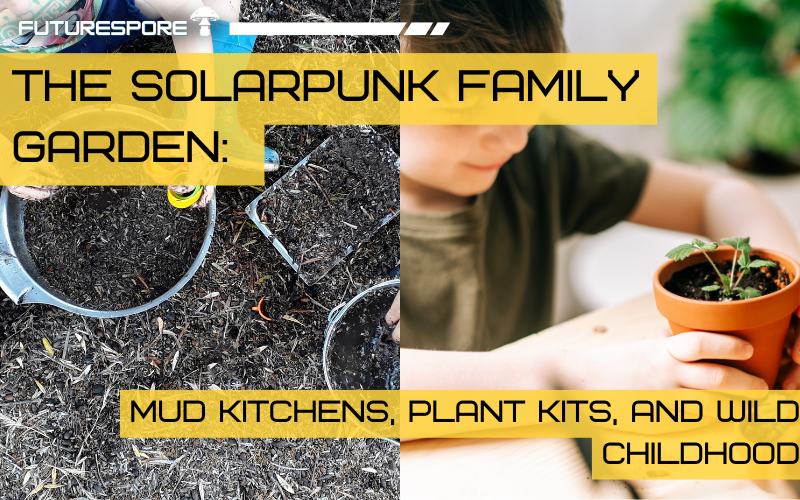
Start here. A mud kitchen is a play structure designed specifically for messy, sensory, outdoor play with dirt, water, and plants. The basic version is a workbench-height counter with a basin (a salvaged kitchen sink, a metal dish tub, or a wooden box), set up near a water source, with a collection of pots, pans, wooden spoons, and small containers stored on shelves below.
Kids will use it for two purposes: making mud pies, and pretending to cook real meals using plant matter from the garden. Both are valuable. Both, repeatedly observed in early childhood research, do specific cognitive work that screen-based play doesn’t.
A workable mud kitchen requires almost no investment:
- A waist-high (for a child) wooden structure with a flat top — an old workbench, a salvaged kitchen counter, or four pallets stacked.
- A basin set into a cutout, or simply placed on top.
- A water source — a hose, a watering can, a bucket the kids can fill themselves.
- A drawer or shelf of utensils: wooden spoons, old pots, measuring cups, sieves.
- A nearby pile of dirt, sand, or compost.
The setup matters less than the access. Kids need to be able to use it freely, get muddy, and know that the mud is the point.
A Child-Owned Garden Bed
Beyond the mud kitchen, give each kid a small dedicated garden bed. The size doesn’t matter — 2×3 feet is plenty. What matters is ownership. This is your bed. You decide what to plant. You take care of it. The plants here are yours.
For kids under five, plant easy quick-reward crops:
- Radishes (3 to 4 weeks from seed)
- Cherry tomatoes (a snack the kids harvest themselves)
- Sunflowers (visual drama)
- Nasturtiums (edible flowers in bright colors)
- Strawberries (rewards for patience)
For older kids, expand into anything they want. The list from our easy plants guide all works.
Resist the urge to over-correct. If your six-year-old wants to plant five varieties of carrot in a single row, let them. They’ll learn what works.
Tools That Fit Small Hands
Real tools, sized for kids. Not plastic toys. The Japanese-style hori-hori knife in a child-size version (Hisada makes one), small steel trowels, wooden-handled hand cultivators, child-size watering cans that actually hold water. The closer the kids’ tools are to functional adult tools, the more seriously they take the work.
Boots. Garden gloves that fit. A small wheelbarrow if you can find one — both Radio Flyer and Stanley make kid-scaled wheelbarrows. The Google Trends data for 2026 showed wheelbarrows, watering cans, boots, and gloves as the top trending gardening items for kids; the kids are right.
The Pollinator Patch
Plant a small patch of pollinator flowers specifically for the kids to observe. Bee balm, calendula, zinnias, sunflowers, native milkweed. Let it get loud and colorful.
Then teach them to identify what visits. Bumblebees vs. honeybees. The four common butterflies in your area. Hoverflies (which look like bees but aren’t). A child who can identify a monarch butterfly in their own backyard is a child building a real ecological literacy. The skill scales for life.
Our pollinator garden guide has the broader design context.
Letting Them Fail
The hardest part of family gardening is letting the kids fail at small things. They’ll forget to water. The radishes will bolt. The tomato cage will fall over. The watering can will get left out and rust.
Don’t rescue every plant. Don’t fix every mistake. The small consequences of small failures are how kids learn that real systems — biological, mechanical, social — respond to care or lack of care. The garden is a low-stakes simulator for the much higher-stakes systems they’ll inherit.
That said: harvest the successes loudly. Pick the first ripe cherry tomato together. Take pictures. Cook a meal that uses something they grew. Make a big deal of it. The dopamine has to be there or they won’t come back.
Seasonal Rhythm
Tie the garden to the seasons. Spring planting, summer harvest, fall cleanup, winter seed-catalog dreaming. Kids respond to ritual, and seasonal rhythm gives the year structure that screen-time doesn’t.
Specific moments worth marking:
- First radish harvest (April or May, depending on zone)
- Tomato vine pruning ceremony (early summer)
- Sunflower height measurements (weekly through summer)
- Pumpkin or winter squash harvest (October)
- Garlic planting on Halloween, harvested for next year
- Seed-catalog selection in January
The Solarpunk Frame
A kid raised in a family garden grows up with a particular kind of literacy that’s hard to teach any other way. They know what a strawberry plant looks like before it produces fruit. They know what a bumblebee’s landing pattern looks like. They’ve had dirt under their fingernails so often it stops being interesting.
That literacy is what the next generation will need. Not as a hobby. As basic equipment for living in a world that is fundamentally a living system. The kids who grow up gardening will spend the rest of their lives knowing that food comes from soil and care, that pollinators are not optional, that the seasons matter.
Build the mud kitchen first. The rest follows.
Written by E. Silkweaver