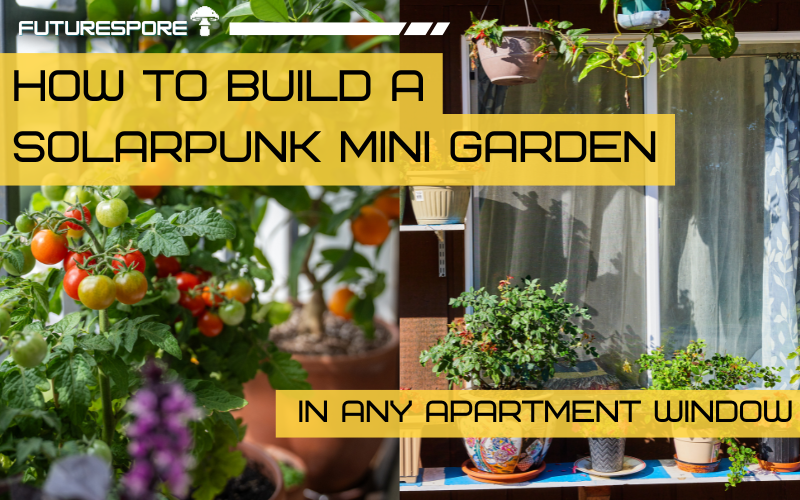
Four Square Feet Is Enough
My first garden was a single south-facing windowsill in a third-floor walk-up. Eighteen inches deep, four feet wide. From that strip of light I pulled basil through three summers, kept a mother mint plant alive for a decade, and once grew a tomato plant tall enough to brush the ceiling. It wasn’t much. It was also enough.
Search interest in “mini garden” hit an all-time high in 2026, and the reason is structural, not aesthetic. More people are renting. More people are renting smaller spaces. More people are realizing that the gap between “I’d like to garden” and “I have a quarter acre to garden on” is wide enough to swallow a lifetime of waiting.
You don’t need to wait. A four-square-foot window can grow food, medicine, and flowers. This is a guide to doing it well.
Reading Your Window
Before you buy anything, sit by your window for a day. Track when direct sunlight hits the glass and how long it stays. The plants you choose — everything that follows in this guide — depends on this single measurement.
Six or more hours of direct sun means a south-facing window in the northern hemisphere, usually. You can grow almost anything: tomatoes, peppers, basil, full-flower herbs.
Three to six hours means east or west exposure. Stick to leafy greens, most herbs, and shade-tolerant flowers. No fruiting plants — they’ll set blossoms and drop them without ripening.
Less than three hours means north exposure or an obstructed view. You can still grow microgreens, mint, parsley, and a handful of houseplants that double as air-cleaners. Or supplement with a small grow light, which I’ll cover in our guide to full-spectrum grow lights.
Don’t guess. A window that “feels bright” in human terms can be far too dim for a tomato plant. If you want to be precise, hold your phone up to the window mid-day and check the lux reading with any free light meter app. Most edibles need at least 10,000 lux for several hours.
The Container Tier
The single most common mistake in mini gardening is containers that are too small. A plant’s root system is roughly equal in mass to its leaves. A six-inch basil plant in a four-inch pot will look great for two weeks, then start dropping leaves and bolting. Give it eight inches of soil depth and it will run all summer.
Minimum container sizes I trust:
- Microgreens and lettuce: 2–3 inches deep, any width.
- Herbs (basil, mint, thyme): 6–8 inches deep, at least 6 inches wide.
- Salad greens (mature heads), parsley, chives: 8 inches deep.
- Cherry tomatoes, peppers, compact eggplant: minimum 12 inches deep and wide. A five-gallon bucket works fine.
Drainage holes are non-negotiable. If your favorite ceramic pot doesn’t have one, use it as a cachepot — nestle a plastic nursery pot inside it. Roots sitting in standing water rot in days.
Skip the plastic from big-box stores when you can. Self-watering wicking containers, glazed ceramic, or upcycled tins with drilled holes all work better and last longer.
Soil: Don’t Use Dirt
Garden soil is too dense for containers. It compacts, drains poorly, and brings pathogens indoors. Buy or mix a proper potting medium.
A good blend for window gardens: two parts coconut coir or peat-free compost, one part perlite, one part worm castings. The coir holds moisture. The perlite keeps the mix airy. The castings feed slowly for months.
If you want to take it one step further, add a small spoonful of mycorrhizal inoculant when you plant. The fungi colonize the roots and extend their reach into water and nutrients the plant otherwise can’t access. I get into the science in our companion planting article, but the short version is: even a four-inch pot can host a working mycelial partnership.
Seven Plants for a Mini Garden
These are the seven I put in every starter window. They cover food, medicine, beauty, and ecological function in a footprint smaller than a doormat.
1. Basil (Ocimum basilicum)
The standard window herb for a reason. Cut from the top whenever a plant has at least four sets of leaves and it bushes out instead of going to seed. One healthy plant feeds a household’s pesto needs all summer. Genovese is the classic; Thai basil, lemon basil, and purple opal are worth the variety.
2. Mint (Mentha spp.)
Mint is invasive in the ground and perfect in a pot. One small plant produces leaves for tea, summer cocktails, and digestive bitters for years. Keep it in its own container — it will outcompete anything it shares soil with. Peppermint and spearmint are the standards; chocolate mint is the most fun.
3. Microgreens (mixed)
Nothing pays back its growing space faster. Sow seeds densely on a one-inch layer of soil in a shallow tray, mist daily, and harvest with scissors when the first true leaves emerge — usually 10 to 14 days. Broccoli, radish, sunflower, and pea shoots are the easiest. A single tray gives you a week of salad toppings.
4. Calendula (Calendula officinalis)
The most useful flower for a mini garden. Blooms continuously, attracts pollinators if your window opens, and the petals are edible and medicinal — anti-inflammatory and gentle on the skin. Dry the flowers for use in salves or for the tinctures I covered in our tinctures guide. Calendula tolerates partial sun and is nearly impossible to kill.
5. Chives (Allium schoenoprasum)
A perennial alarm clock. Chives wake up first thing in spring, bloom through summer, and produce hollow green stems you can snip endlessly. The purple flowers are edible and gorgeous. Once established, the same pot will produce for five or six years.
6. Nasturtium (Tropaeolum majus)
Edible leaves and flowers, peppery like watercress. Acts as a trap crop for aphids if you have any other plants nearby. Trails beautifully from a window box. Self-seeds. The trailing varieties cascade; bush varieties stay compact.
7. Lettuce or arugula (cut-and-come-again)
Loose-leaf lettuce sown thickly in a shallow planter gives you salad for weeks. Cut the outer leaves and the inner ones keep growing. Arugula does the same and tolerates a wider temperature range. Both bolt in summer heat, so they’re a spring-fall crop — rotate to basil and nasturtium in summer.
Watering Without Killing Things
Most window-garden deaths are drowning, not drought. Containers should be watered when the top inch of soil feels dry to your finger, not on a schedule. Different plants want different amounts; the soil tells you better than the calendar.
Water deeply when you do water. Until you see liquid running out the drainage holes. Half-watering trains shallow roots that can’t survive a hot day.
Self-watering containers solve about 80 percent of beginner watering mistakes. They have a reservoir at the bottom that wicks moisture up through the soil. For someone who travels, forgets, or simply hates fiddling, they’re worth the cost.
The Solarpunk Frame
It’s easy to dismiss a windowsill of herbs as a hobby. It isn’t one. It’s a small act of refusal — refusing the assumption that food has to come from twelve hundred miles away in plastic clamshells. Refusing the idea that you have to own land to grow anything. Refusing the slow handover of every basic skill to industries that profit from your dependence.
A mini garden won’t feed you. That’s not its job. Its job is to remind you, daily, that you’re still in relationship with the living world. That you can grow medicine in a teacup. That a single mint plant can outlast three apartments and two breakups. That four square feet, paid attention to, becomes a small ecosystem.
Start with one pot. Basil is forgiving. Put it in your sunniest window. Water it when the soil is dry. Pinch the top off every week.
Three months from now you’ll have made pesto from leaves you grew yourself. That’s not nothing.
Written by E. Silkweaver