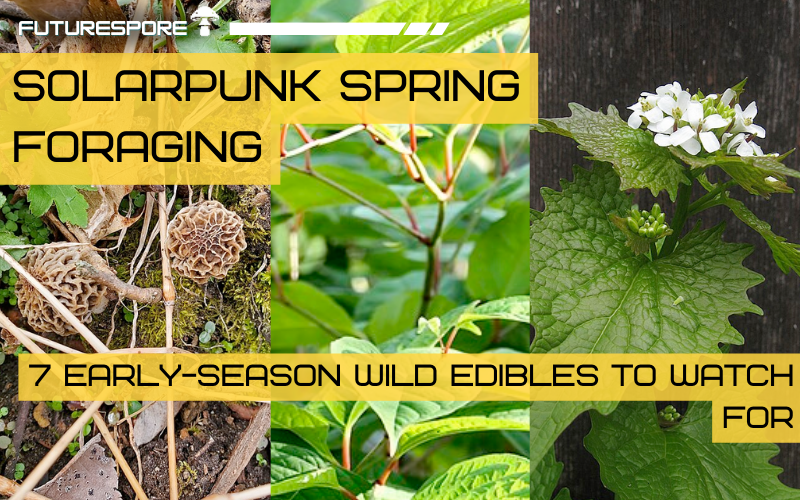
Safety Notice: This article is for educational purposes only and is not a substitute for hands-on identification training with an experienced forager or mycologist. Never consume any wild plant or mushroom you have not positively identified using at least two reliable sources. Some edible species closely resemble toxic or deadly ones. Forage only in areas free of pesticide, herbicide, and pollution contamination. When in doubt, leave it out.
The First Green After the Long Quiet — And It Is Happening Right Now
If you read our earlier piece, The Quiet Work of Winter, you know that dormancy is not death, but preparation for a new cycle. Beneath the frost, roots were deepening, mycorrhizal networks were redistributing nutrients, and embryonic buds were folding themselves tight inside protective scales, waiting for the signal. With the onset of spring, that signal has arrived. Right now, at the time of writing this, the days are measurably longer than they were two weeks ago. The soil temperature is climbing, and from the still-cold ground, the first green shoots of spring are pushing through last autumn’s decay.
For foragers, this is our favorite time of year and the beginning of our harvest. After months of root vegetables, stored preserves, and the noble, perhaps even unhealthy and junky, monotony of winter eating, the appearance of the first wild greens feels like seasonal freedom, with ability to go outside and play hide-and-seek with our favorite edibles being restored. If you are new to foraging for wild greens, spring is the most forgiving season to begin. Many of these early-season plants peak for only a few weeks, and so to capture this window, we must get outside and play.
Spring foraging is a highly accessible entry points into wild food. Many early-season edibles are abundant, easy to identify, and grow in disturbed or urban-edge habitats. These places include the kinds most of us already walk through daily without noticing what is available; some are invasive species whose removal actively benefits the ecosystems they have colonized, while others are gentle woodland ephemerals that require restraint, stewardship, and respect.
This guide introduces seven early-spring wild edibles worth knowing, along with their identification features, habitats, ecological contexts, and culinary possibilities, whether it’s your first time foraging in the spring time or your tenth. First, however, we must set some ground rules.
Foraging Safety: The Non-Negotiable Foundation
At Futurespore, we never treat foraging safety as an afterthought or a disclaimer to skim past. It is the foundation of the entire practice, and we return to it in every foraging article we publish because it is that important.
Positive identification is mandatory. Do not eat anything — ever — that you are not 100% certain you have correctly identified. “Pretty sure” is not good enough. “It looks like the picture” is not good enough. Use at least two reliable field guides specific to your region, and ideally confirm with a knowledgeable mentor or local foraging group. Many edible plants have toxic lookalikes, and the consequences of misidentification range from gastrointestinal distress to organ failure to death. Plants, and especially fungi, do not play when it comes to their chemical defense mechanisms, and respecting them means respecting how they’ve evolved to defend themselves and avoiding putting ourselves in harms way.
Use multiple identification features. Never rely on a single characteristic. Note leaf shape, leaf arrangement, stem cross-section, flower structure, scent, habitat, season, and growth habit. Compare your specimen against multiple reference images and written descriptions. Photograph the plant from multiple angles before harvesting.
Start small. Even with a confirmed identification, eat only a small amount of any new wild food the first time. Individual sensitivities vary, and some people react to plants that are widely considered safe. Wait 24 hours before consuming a larger quantity. If you have a known allergy to mushrooms… wild fungi may not be your friend either.
Avoid contaminated areas. Do not forage within 50 feet of busy roads (heavy metal contamination from vehicle exhaust and tire wear), near agricultural fields that may be sprayed, in areas treated with herbicides or pesticides (including many public parks and corporate landscapes), near industrial sites, or downstream from potential pollution sources. If you are unsure whether an area has been treated, ask the property manager or move on.
Know the law and the land. Foraging regulations vary by location. Many public parks prohibit plant removal. National forests and state lands have specific rules. Private land requires the owner’s permission. Research the regulations for your area and follow them.
Harvest sustainably. Take only what you will use and never harvest more than one-third of a local population of any species — and for slow-growing or vulnerable species, take far less. Leave roots intact unless the plant is invasive or you have confirmed the population can sustain root harvesting. The goal is to forage in a way that allows the population to thrive long after you leave.
Carry the right tools. A sharp knife or scissors for clean cuts, a breathable basket or cloth bag (plastic bags cause wilting and bacterial growth), gloves for handling nettles or other irritating species, a hand lens for examining small identification features, your field guides, and a notebook or phone for recording observations.
With those principles firmly in place, let us walk into the spring woods.
1. Ramps (Allium tricoccum) — The Coveted Spring Allium
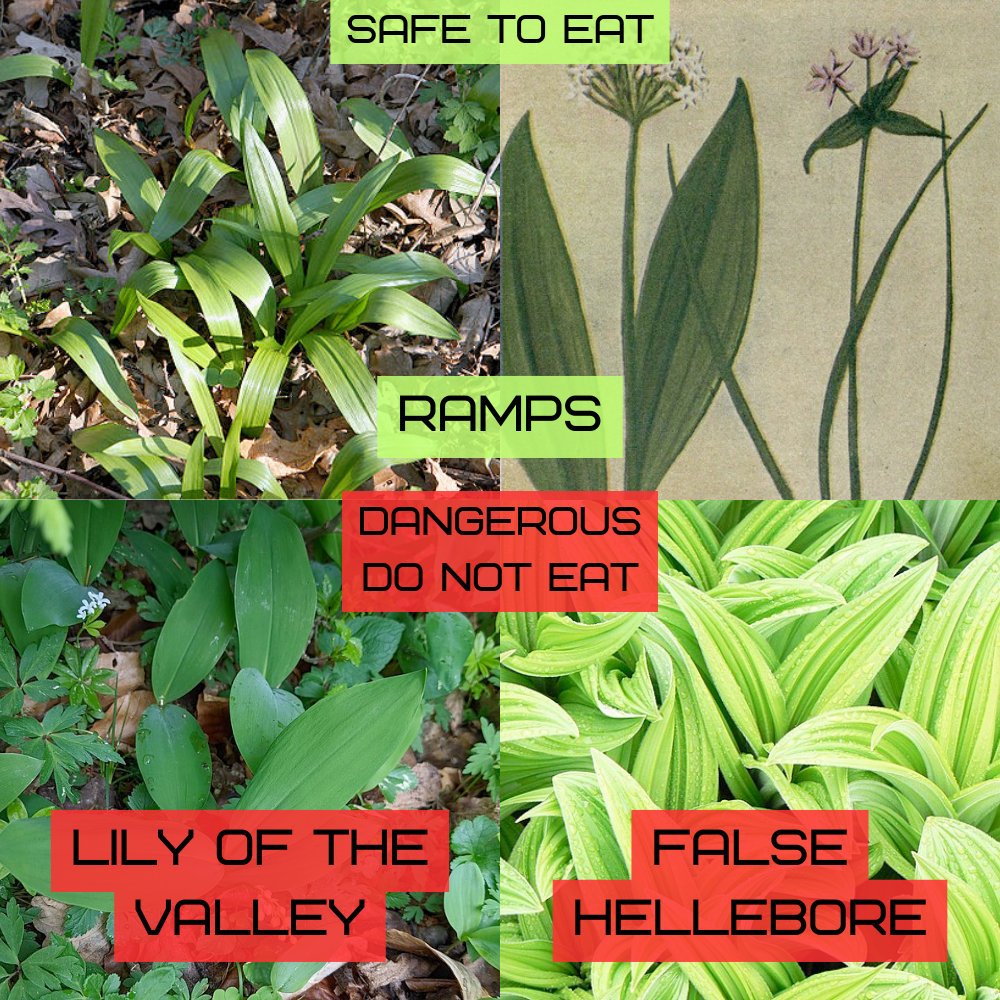
Identification: Ramps are a native North American wild leek that emerges in early spring, often before the forest canopy has fully leafed out. They send up one to three broad, smooth, elliptical leaves that are bright green on top, often with a reddish-purple tinge on the lower stem from a small, white, scallion-like bulb. The leaves are entire (smooth-edged, not toothed) and have a strong garlic-onion scent when crushed. This scent is the single most reliable identification feature. If the leaves do not smell unmistakably of garlic and onion, you do not have ramps — your sense of smell can mean the difference between harvesting a culinary delicacy or a dangerous, toxic specimen (see Lookalikes section). The leaves emerge in March through May depending on latitude and die back by early summer, when a stalk bearing a cluster of small white flowers appears.
Habitat: Ramps grow in rich, moist deciduous forests, often on north-facing slopes or along stream banks beneath sugar maples, tulip poplars, and beeches. They favor deep, well-drained soil with abundant leaf litter. In their prime habitat, ramps carpet the forest floor in dense colonies that can take decades to establish.
Lookalikes: The two most dangerous lookalikes are lily of the valley (Convallaria majalis), which is toxic, and false hellebore (Veratrum viride), which can be fatal. Both emerge in similar woodland habitats at similar times. The critical difference is scent: neither lily of the valley nor false hellebore smells of garlic or onion. Always crush a leaf and smell it before harvesting. Additionally, lily of the valley leaves tend to be more pointed and slightly folded along the midrib, while false hellebore leaves are ribbed, pleated, and clasping the stem.
Sustainability concerns: Ramps have become a serious overharvesting concern. Their popularity has surged in restaurant culture and at farmers’ markets, and demand now far exceeds what wild populations can sustain. Ramps are slow-growing: a plant takes five to seven years to reach maturity from seed, and a harvested bulb does not regenerate. Entire colonies have been wiped out by aggressive harvesting.
Sustainable harvesting: The most ethical approach is to harvest only one leaf per plant, leaving the bulb and second leaf intact. This allows the plant to continue photosynthesizing and recovering. If you harvest bulbs at all, take no more than 5% to 10% of a colony, and never from small or isolated patches. Better yet, seek out ramps at farms that cultivate them, or grow your own — ramps can be propagated from seed or transplanted bulbs in suitable woodland garden conditions.
Culinary uses: Ramps have a flavor that bridges garlic and spring onion with a wild, pungent sweetness. The leaves are excellent raw in salads, wilted into pasta, or blended into pesto. The bulbs can be pickled, grilled, or used anywhere you would use scallions or leeks. Ramp butter — softened butter blended with finely chopped ramp leaves and a pinch of salt — is a simple preparation that captures the flavor of spring.
2. Chickweed (Stellaria media) — The Gentle, Ubiquitous Green
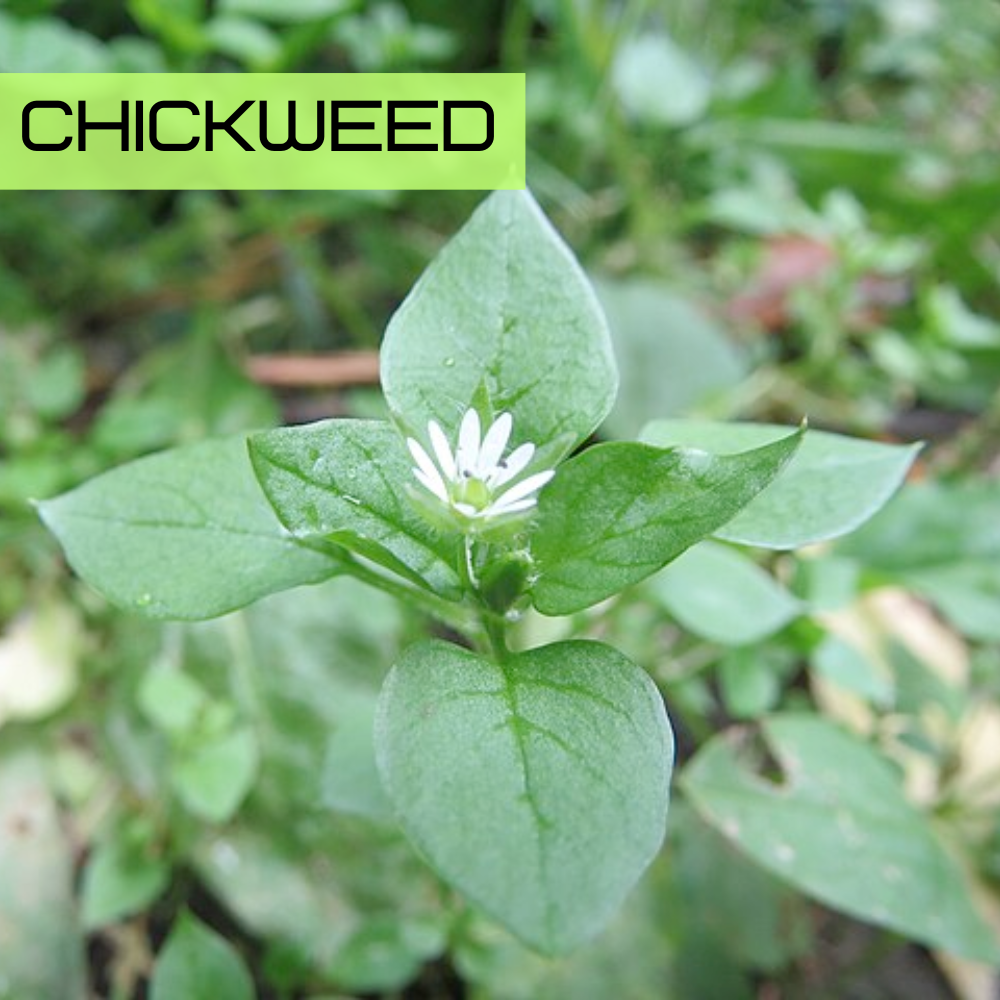
Identification: Chickweed is a low-growing, sprawling annual (sometimes overwintering) with small, opposite, ovate leaves on slender, branching stems. The stems have a distinctive single line of fine hairs that runs along one side, switching sides at each leaf node — a feature visible with a hand lens and nearly unique to this species. Flowers are tiny (about 1/4 inch), white, with five deeply notched petals that often look like ten petals at first glance. Chickweed blooms prolifically from early spring through fall.
Habitat: Gardens, lawns, disturbed ground, cultivated beds, edges of paths and driveways, and any area with moist, fertile soil. Chickweed is cosmopolitan — found across North America, Europe, and temperate Asia. It thrives in cool weather and often appears as one of the first greens of spring, sometimes emerging through the last patches of snow.
Lookalikes: Scarlet pimpernel (Anagallis arvensis) superficially resembles chickweed but has orange or red flowers (occasionally blue) and opposite, sessile leaves without the single line of hairs on the stem. Some spurges (Euphorbia spp.) may cause confusion at the seedling stage; spurges exude a milky white latex when the stem is broken, while chickweed does not. Mouse-ear chickweed (Cerastium spp.) is a close relative that is also edible but has hairy leaves and a coarser texture.
Nutritional profile: Chickweed is surprisingly nutrient-dense for such a delicate plant. It is rich in vitamin C, vitamin A (as beta-carotene), calcium, magnesium, potassium, iron, and zinc. Gram for gram, chickweed contains more iron and zinc than many cultivated greens.
Culinary uses: Chickweed has a mild, fresh, slightly grassy flavor with a pleasant crunch. It is best eaten raw — tossed into salads, piled onto sandwiches, blended into green smoothies, or used as a garnish. It can be lightly cooked (wilted into soups or scrambled eggs in the last minute of cooking), though heat diminishes both its flavor and nutritional value. Harvest by cutting handfuls of the leafy stems above the ground; the plants will regrow quickly.
3. Violet Leaves and Flowers (Viola spp.) — Edible Beauty
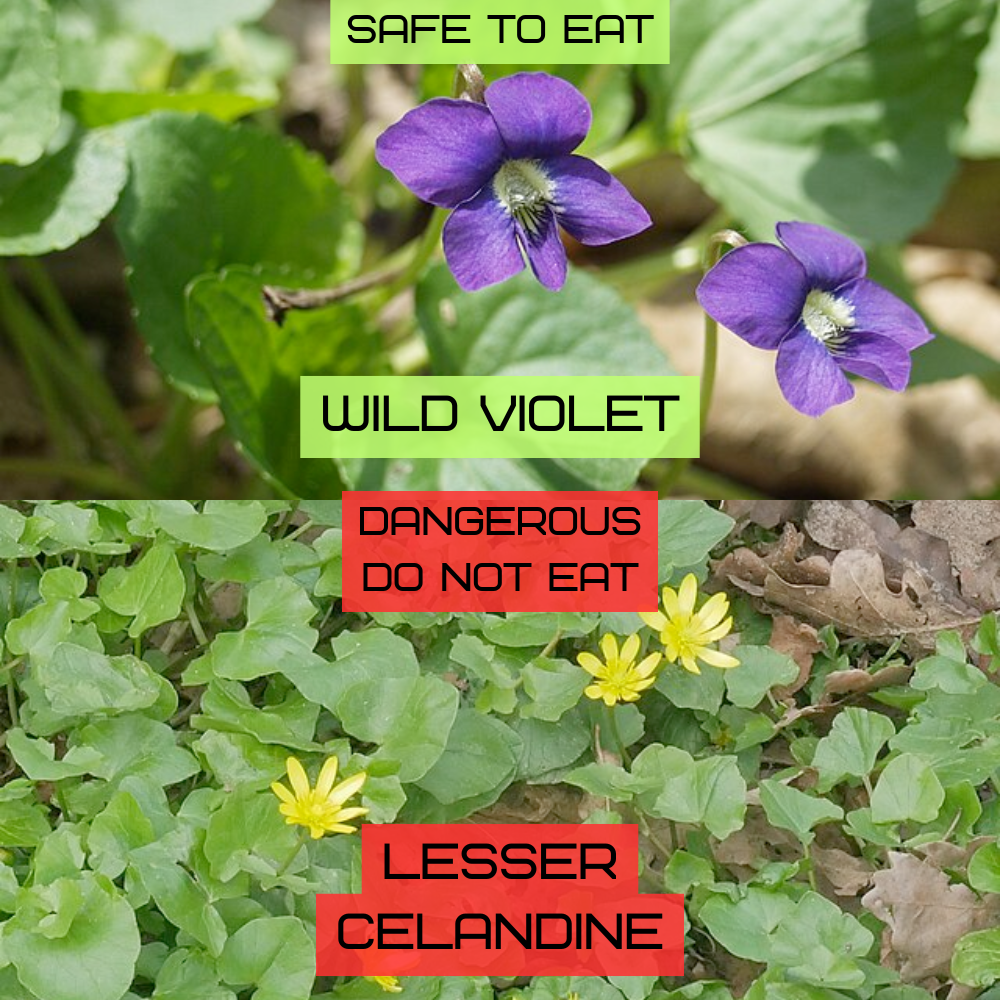
Identification: Wild violets are among the most recognizable spring wildflowers. Common blue violet (Viola sororia) produces heart-shaped, scalloped leaves on long petioles directly from the base of the plant (no above-ground stem), and iconic five-petaled flowers in shades of purple, blue, or white. The lower petal is often veined and slightly larger, serving as a landing pad for pollinators. Leaves and flowers emerge together in early to mid-spring.
Habitat: Violets are adaptable and widespread, growing in woodlands, meadows, garden edges, lawns, and shaded urban lots across most of North America, Europe, and Asia. They prefer moist, partly shaded conditions but tolerate a wide range of soils and light levels.
Lookalikes: In the early leaf-only stage, violet leaves can be confused with those of lesser celandine (Ficaria verna), which is mildly toxic. Lesser celandine leaves are shinier, more rounded, and have a slightly fleshy texture. Once flowers appear, the distinction is clear: celandine has glossy yellow, buttercup-like flowers, while violets have their characteristic five-petaled purple, blue, or white blooms. It is safest to wait until flowers are present before harvesting violet leaves if you are uncertain.
Nutritional and medicinal value: Violet leaves are exceptionally high in vitamin C — some sources report higher concentrations per weight than oranges. They also contain vitamin A, rutin (a bioflavonoid that supports capillary health), and mucilage, which gives them a slightly thickening quality when cooked. In traditional herbalism, violet leaf and flower preparations have been used as gentle demulcents for coughs and sore throats, and as poultices for skin inflammation.
Culinary uses: Violet flowers are edible and beautiful — they can be candied with egg white and sugar for cake decorations, frozen into ice cubes, infused into vinegar (which turns a stunning magenta), or scattered fresh over salads. The leaves are mild and can be eaten raw in salads, added to soups as a thickener (they contain mucilage similar to okra), or brewed into a pleasant, mild tea. Violet leaf pesto — blended with olive oil, nuts, garlic, and parmesan — is a beautiful way to use a larger harvest.
4. Cleavers (Galium aparine) — The Sticky Spring Tonic
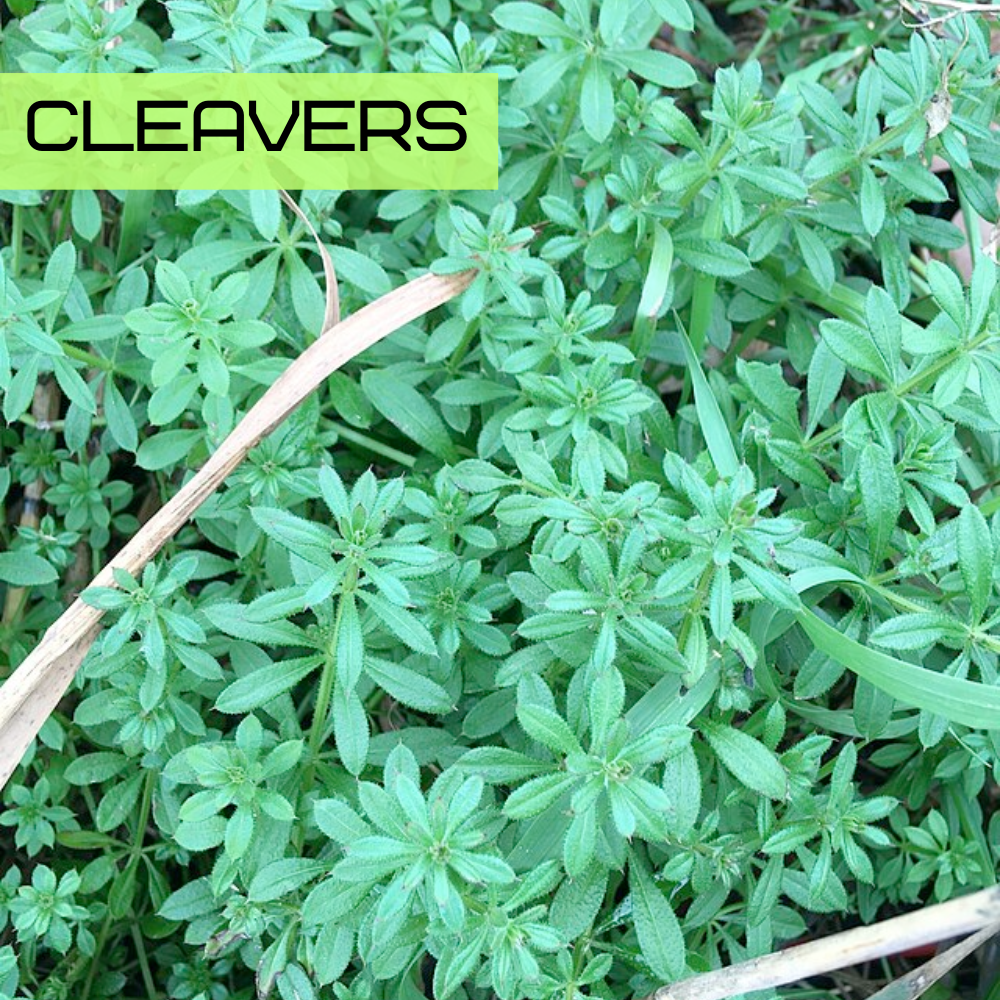
Identification: Cleavers is an annual plant with whorls of six to eight narrow, lance-shaped leaves arranged in a star pattern around a square stem. Both the leaves and stems are covered in tiny hooked hairs that cause the plant to cling to clothing, fur, and other plants — hence the common names cleavers, goosegrass, and stickyweed. The plants sprawl and climb through hedgerows and garden borders, sometimes reaching several feet in length. Small, white, four-petaled flowers appear in late spring, followed by small, round, bristly fruits.
Habitat: Cleavers is found throughout temperate North America, Europe, and Asia, growing in hedgerows, garden edges, woodland borders, stream banks, and disturbed ground. It favors moist, fertile, partly shaded habitats and often appears in abundance in spring.
Lookalikes: Other Galium species (bedstraws) are similar in appearance, with whorled leaves on square stems. Most are not toxic, but positive identification is still important. Sweet woodruff (Galium odoratum) has a similar growth habit but fewer leaves per whorl (typically six), broader leaves, and a distinctive vanilla-like scent when dried. The clinging, sticky quality of Galium aparine — the way the plant adheres to your clothing — is a strong identification feature.
Traditional medicinal uses: Cleavers has a long history of use in Western herbalism as a lymphatic tonic — an herb believed to support the lymphatic system’s role in draining fluids and filtering waste from tissues. Herbalists have traditionally used cleavers as a spring cleansing herb, often in the form of cold-infused water or freshly pressed juice. It has also been used as a gentle diuretic and to support kidney function. These traditional uses have not been extensively validated by modern clinical research, but cleavers remains a staple of herbal practice.
How to prepare: Cleavers is best harvested young, before flowering, when the stems are still tender. The plant is too rough to eat raw in most cases, but it can be lightly steamed or sauteed (the hooks soften with cooking), juiced, or infused in cold water overnight to make a traditional spring tonic. Cleavers tea is made by steeping fresh or dried herb in hot (not boiling) water for 15 to 20 minutes. The flavor is mild and slightly grassy. The round fruits, when dried and roasted, have historically been used as a coffee substitute — cleavers is in the same family (Rubiaceae) as coffee.
5. Garlic Mustard (Alliaria petiolata) — Foraging as Ecological Management
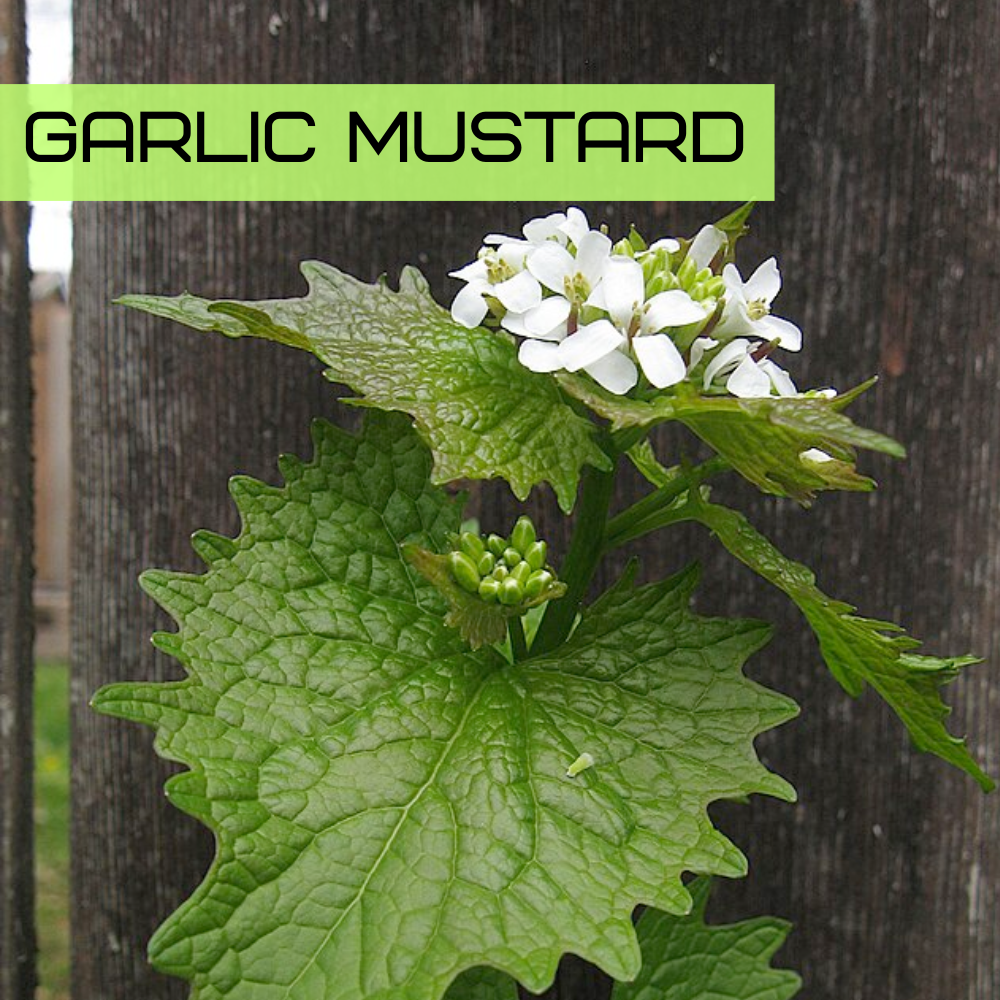
Identification: Garlic mustard is a biennial plant with a distinctive two-year growth cycle. First-year plants form a low rosette of kidney-shaped to heart-shaped, scalloped leaves that remain green through winter. Second-year plants bolt upward to two to four feet tall, producing triangular, sharply toothed, alternate leaves on an erect stem, topped by clusters of small white four-petaled flowers in the characteristic cross shape of the mustard family (Brassicaceae). When crushed, the leaves emit a clear garlic scent — the plant’s most reliable identification feature alongside its mustard-family flower structure.
Habitat: Garlic mustard grows in woodlands, forest edges, floodplains, roadsides, and shaded disturbed areas across eastern and central North America. It is most abundant in spring, when second-year plants flower prolifically.
Invasive species context: Garlic mustard is one of the most ecologically damaging invasive plants in North American forests. Native to Europe, it was introduced to North America in the 1800s, likely as a culinary herb. It has since spread aggressively through deciduous forests, where it outcompetes native spring wildflowers like trillium, bloodroot, and wild ginger. Critically, garlic mustard produces chemicals (glucosinolates and cyanide compounds) that suppress mycorrhizal fungi in the soil — the very fungal networks that native plants depend on for nutrient exchange. By degrading the mycorrhizal community, garlic mustard makes the habitat progressively less hospitable for native species and more favorable for itself.
Foraging as management: This is one of the rare cases where aggressive harvesting is actively encouraged. Pulling garlic mustard — roots and all — removes the plant from the ecosystem and prevents it from going to seed. If you are going to forage it, pull the entire plant, including the root, especially second-year flowering plants. A single plant can produce thousands of seeds that remain viable in the soil for up to five years. Consistent removal over multiple years is necessary to deplete the seed bank.
Culinary uses: First-year rosette leaves make a pungent, garlicky green for salads, pestos, and chimichurri. They are best in late winter and early spring before the plant bolts. Second-year leaves are more bitter but still usable in cooked dishes — sauteed with olive oil and garlic, blended into sauces, or added to soups. The flowers are edible and make a peppery garnish. The roots have a horseradish-like flavor and can be grated as a condiment. There is genuine satisfaction in eating an invasive species — every garlic mustard pesto is a small act of ecological restoration.
6. Japanese Knotweed (Reynoutria japonica) — Eating the Invader
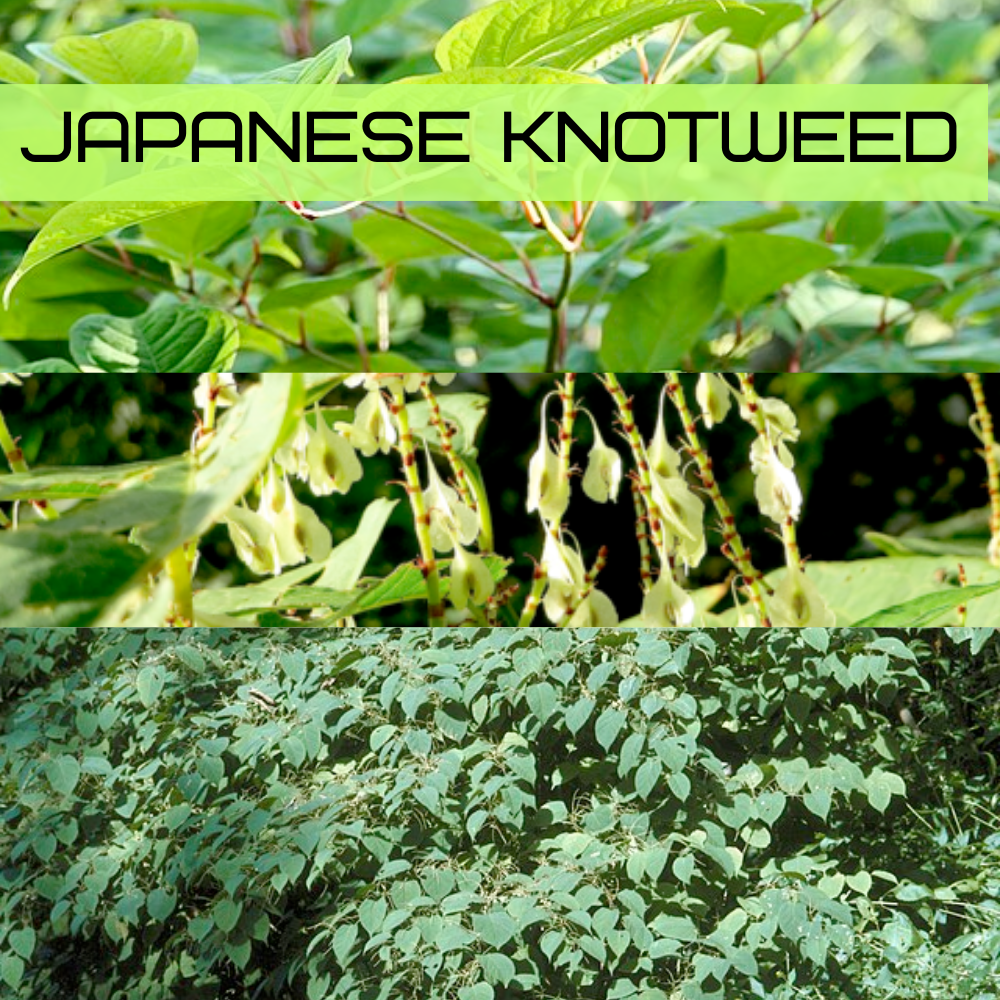
Identification: Japanese knotweed is a large, vigorous perennial that emerges in spring as thick, asparagus-like shoots — reddish-purple to green, often speckled — that can grow several inches per day. Mature plants reach six to ten feet tall with hollow, bamboo-like stems, large (up to six inches), broadly ovate leaves with a flat base, and sprays of small, creamy-white flowers in late summer. The stems are distinctly jointed, with a swollen node at each joint.
Habitat: Japanese knotweed colonizes riverbanks, roadsides, railway embankments, vacant lots, and disturbed areas throughout North America and Europe. It spreads primarily through vegetative fragments — even a small piece of root or stem can establish a new colony — and forms dense monoculture stands that shade out virtually all other vegetation.
Invasive species context: Japanese knotweed is considered one of the world’s most problematic invasive species. It causes structural damage to foundations, roads, and flood infrastructure. It displaces native riparian vegetation, reducing biodiversity and destabilizing stream banks. Eradication is extremely difficult once established. Like garlic mustard, foraging knotweed is a form of ecological management — you cannot eliminate an established colony by harvesting alone, but you can reduce its vigor and make productive use of what grows.
Harvesting tips: The edible window is narrow. Harvest young spring shoots when they are six to twelve inches tall, before the leaves have fully unfurled — at this stage they resemble thick asparagus spears and snap cleanly when bent. Once the stems become woody and fibrous (usually within a few weeks of emergence), they are no longer palatable. Cut or snap shoots at ground level. You can return multiple times as new shoots continue to emerge.
Culinary uses: Young knotweed shoots have a tart, lemony-rhubarb flavor due to their oxalic acid content (similar to rhubarb, to which they are not related). They can be used in any recipe that calls for rhubarb: chopped into compotes, baked into crisps and pies, simmered into jam, or pickled. They are also good sauteed with butter and ginger, or sliced raw into spring salads for a sour crunch. Knotweed pairs beautifully with strawberries, ginger, and citrus.
Note: Avoid harvesting knotweed from areas that have been sprayed with herbicides — knotweed stands are frequently treated with glyphosate, and recent applications may leave residues on emerging shoots.
7. Morel Mushrooms (Morchella spp.) — The Forager’s Holy Grail
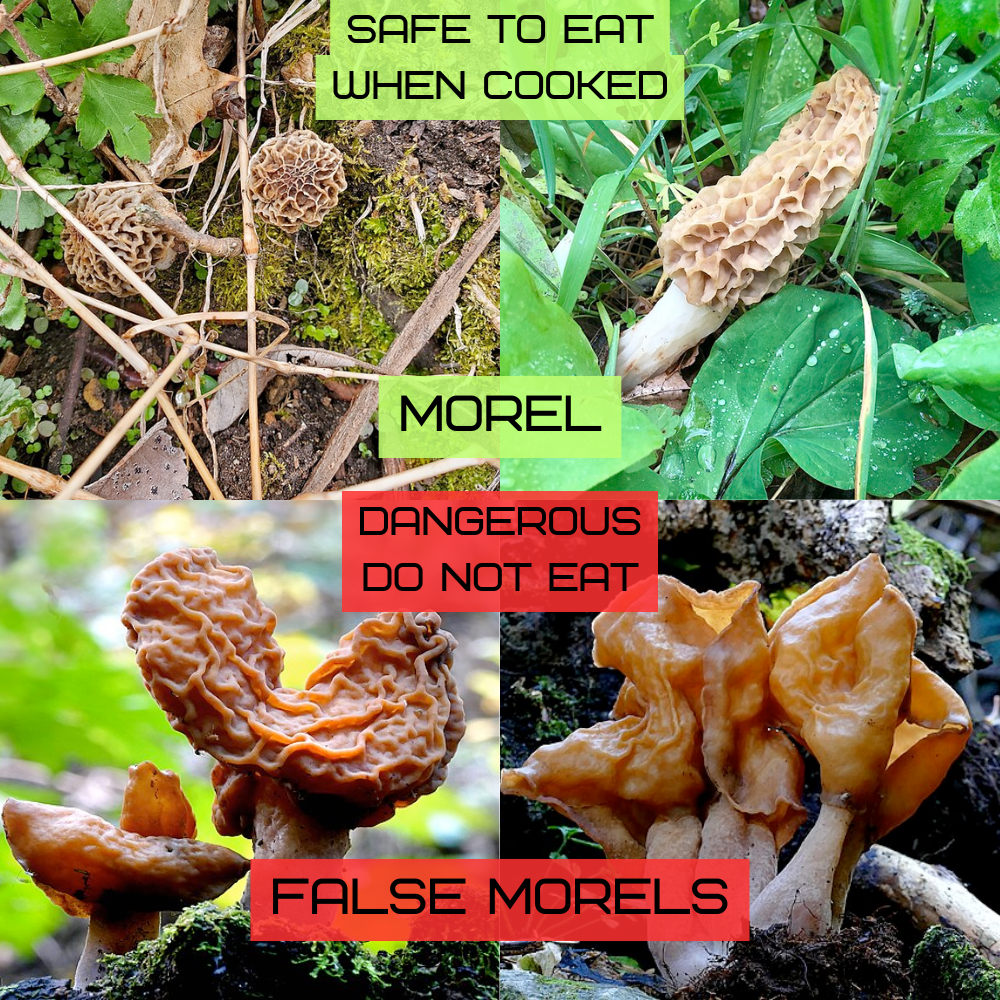
Identification: Morels are among the most prized and recognizable wild mushrooms. They have a distinctive, deeply pitted and ridged cap that resembles a honeycomb or a sponge, ranging in color from pale cream to yellow to gray to nearly black depending on the species. The cap is attached directly to the stem at its base. When cut lengthwise, a true morel is completely hollow from the base of the stem through the top of the cap — this is the single most critical identification feature.
Habitat: Morels fruit in spring (typically April through June, depending on latitude and elevation) in a variety of habitats. They are frequently associated with ash, elm, tulip poplar, and old apple orchards, and appear prolifically in burned forests the spring following a wildfire. They favor well-drained soil with good organic matter and are often found on south-facing slopes where the soil warms earliest. Morels are mycorrhizal and saprotrophic — they have complex life cycles that involve both living root partnerships and decomposition of dead wood.
False morel warning: This is the most critical safety point in this guide. False morels — primarily species in the genus Gyromitra, especially Gyromitra esculenta — contain gyromitrin, a compound that metabolizes into monomethylhydrazine (a component of rocket fuel) and can cause severe liver and kidney damage or death. False morels have caps that are wrinkled, brain-like, or irregularly lobed rather than uniformly pitted. When cut in half lengthwise, false morels are not hollow — they contain chambered, cottony, or solid tissue inside. The hollow interior test is simple and reliable: if the mushroom is not completely hollow from bottom to top when sliced in half, do not eat it.
Other distinguishing features: true morels have a cap that is attached to the stem at its base and grows upward as a continuous structure. The half-free morel (Morchella punctipes) has a cap that is attached only at the very top of the stem, with the lower edge hanging free — it is edible but less prized. In all cases, when in doubt, consult a local mycological society or experienced forager before consuming any wild mushroom.
Foraging ethics: Morels grow from below-ground mycelial networks that persist year after year. Harvesting the fruiting body (the mushroom) does not kill the organism, just as picking an apple does not kill the tree. However, responsible foraging means carrying morels in a mesh bag or open basket rather than a plastic bag, allowing spores to disperse as you walk. Avoid trampling the area around your find, as the mycelium is close to the surface. And never reveal the exact location of a productive morel spot to the internet — morel patches are fragile ecosystems, and publicizing them leads to overharvesting and habitat damage.
Culinary value: Morels are a world-class culinary mushroom with a deep, nutty, earthy flavor that intensifies when dried and rehydrated. They are exceptional sauteed in butter with a pinch of salt, stuffed with soft cheese and herbs, added to cream sauces for pasta, or paired with asparagus and spring alliums. Always cook morels thoroughly — raw morels contain trace amounts of hydrazine-related compounds that are destroyed by heat. NEVER eat raw morels, as in some cases, uncooked consumption has led to death.
General Spring Foraging Tips
Timing matters — and the clock is already running. Many spring edibles have narrow windows of optimal harvest.
- Ramp leaves are best before the plant flowers.
- Knotweed shoots must be caught before they lignify.
- Morels fruit for only a few weeks.
Visit your foraging sites regularly — every few days during peak season — to catch each species in its prime. And remember, foraging is not just a spring practice — come late summer and autumn, wild hazelnuts and other tree crops offer an entirely different harvest worth learning. If you have been meaning to start, now is the time to start looking. Chickweed and garlic mustard rosettes may be already up in many areas. Ramps are not far behind.
Learn your ecosystem. Spring foraging is deeply local. The species in this guide are widespread, but their timing, abundance, and exact habitats vary by region. Invest in a field guide specific to your state or province. Join a local foraging group on Facebook or through local meetups or education centers, mycological society, or native plant society. Walk the same trails repeatedly across seasons, and you will develop an intimate knowledge of what grows where and when that no guide can substitute.
Keep a foraging journal. Record what you find, where, when, in what conditions, and what was growing nearby. Over the years, this journal becomes a personalized almanac of your local landscape’s rhythms.
Process your harvest promptly. Wild greens wilt faster than cultivated ones. Get them into water or a cool, moist environment within a few hours of picking. Mushrooms should be brushed clean (not washed, if possible) and refrigerated or dried the same day. Many foraged foods are at their peak within 24 to 48 hours of harvest.
Respect the ecosystem. You are a visitor in someone else’s home. The forest, meadow, or stream bank was there before you and will be there after you. Tread lightly, take modestly, and leave the landscape better than you found it — which sometimes means pulling invasive garlic mustard even when you already have enough for dinner.
Foraging as Reconnection: The Solarpunk Practice of Paying Attention
There is a thread that runs through all foraging: it requires you to be present, in a specific place, at a specific time, paying close attention to what is actually there. You cannot forage while scrolling your phone. You cannot identify a morel while thinking about something else. The practice demands that you slow down, look carefully, smell, touch, kneel in the dirt, and engage with the living world on its own terms.
In a culture that is increasingly abstracted from the physical landscape where food arrives in packages and is purchased at the grocery store, seasons are a weathered inconvenience, and the names of the plants we walk past daily are entirely unknown to us, foraging is a radical act of re-engagement — one step toward rewilding your diet and reclaiming what we have lost. It is what the solarpunk and environmental movements call “re-placing”: the practice of becoming a knowledgeable participant in the ecology of the actual place where you live, rather than a passive consumer disconnected from every source.
When you know that the chickweed in your garden path is edible, nutritious, and free, your relationship with that patch of ground changes. When you recognize the garlic mustard invading your local woodland and understand both its ecological impact and its culinary potential, you become a participant in that ecosystem’s story rather than a bystander. When you carry a mesh bag of morels through the spring woods, spores drifting behind you, you are — in a small, real way — tending the mycelial networks that sustain the forest.
This is what a true embodied relationship to the earth looks like. We can go backwards while looking forwards without becoming stone-age cavemen again. This is a forward-looking practice that integrates ecological knowledge, local food sovereignty, and hands-on participation in the living systems that support us.
The spring woods are waking up right now, this week, in the places you already know. Go outside this weekend. Bring your field guides, walk slow, and don’t be afraid to let your knees dirty. Pay attention to what is actually growing in the actual ground beneath your actual feet, and if you find something beautiful that you cannot identify, leave it where it grows and come back with better questions. That, too, is foraging.
Frequently Asked Questions
What can I forage in early spring?
Seven reliable spring forages: ramps (wild leeks), fiddleheads (ostrich fern fronds), nettles, garlic mustard, violet leaves and flowers, dandelion (root and greens), and chickweed. Each appears within a 6-week window from March through May, depending on region, and each is a classic introduction to early-season wild food.
When does spring foraging season start?
It starts as soon as the ground thaws — typically March in the South, April in the Northeast and Midwest, May in the upper Midwest and mountain West. The first edibles are often weeds in lawns and edges (chickweed, dandelion, violet), followed by woodland species (ramps, fiddleheads, trout lily).
Are ramps endangered and should I forage them?
Ramps are vulnerable in many regions due to commercial overharvest. Forage sustainably: take only one leaf per plant (leaving the bulb to regrow), harvest from large patches only, and avoid the same patch year after year. Some Northeastern states now regulate ramp harvest; check local rules before commercial-scale picking.
Are fiddleheads safe to eat?
Only ostrich fern fiddleheads (Matteuccia struthiopteris), and only cooked. Raw fiddleheads can cause severe gastrointestinal distress. Identify ostrich fern by the deep U-shaped groove on the inside of the stem and the brown papery covering on the unfurled head. Boil 10–15 minutes before eating. Never eat fiddleheads from any other fern species.
What is the best beginner spring forage?
Garlic mustard. It's invasive (harvest enthusiastically), easy to identify (rosette of leaves, garlic smell when crushed), abundant in most woodland edges, and delicious in pesto, salad, or stir-fries. It's the rare forage where overharvesting is encouraged, and it's an excellent introduction to the practice.
Written by E. Silkweaver, founder of Futurespore.