Vertical gardening means growing plants upward on supports or arranging containers at different heights so more foliage reaches light within a small footprint. For food production, start with a climbing crop in a bed or large pot and a securely anchored trellis. Stacked planters also work, but each container needs enough root space, drainage, and access for watering.
Choose a vertical system that fits your space
Climbing crops keep their roots in one place while extending their stems upward. Stacked containers distribute roots across several levels, while engineered living walls combine planting pockets with built-in irrigation.
What can your space actually support? Check sunlight, permission to attach hardware, drainage, and access before buying anything. Fruiting crops usually need at least six hours of direct sun. Leafy crops can manage with less, although growth slows.
Climbing crops on supports
A climbing plant uses twining stems or tendrils to hold itself above the ground. Tomatoes need tying instead, since they don't grip a support securely on their own.
I think a large container and a borrowed trellis are the best starting point for most small spaces. Despite the familiar claim, vertical gardening doesn't create free growing space: roots still need soil, leaves still need light, and supports must carry wet plants in wind.
Stacked planters and pocket walls
Stacked pots, ladder shelves, felt pockets, and fence-mounted gutters place separate containers at different heights. They suit smaller plants whose roots can function within those restricted spaces.
Keep taller containers from shading everything below them. Gutters dry especially quickly because they're shallow, while overflowing upper pots can leave lower ones waterlogged. Check each level separately.
Engineered living walls
Living walls integrate plants into a mounted system, usually with irrigation tubing and a reservoir or water supply. Their limited soil volume makes dependable water delivery essential.
For ordinary food growing, they're poor value compared with pots and supports. I wouldn't buy one before solving the simpler problems of sunlight, root space, and watering access.
Match the crop to its climbing habit
Pole beans, peas, cucumbers, and Malabar spinach climb with relatively little guidance. Tomatoes need regular tying, while perennial kiwi and hops require structures intended to remain in place.
Choose a crop you'll actually use. A productive vine that blocks your doorway or puts its harvest beyond reach hasn't solved the space problem.
Pole beans
Pole beans commonly climb six to eight feet by winding their stems around narrow supports. A tripod gives them several routes upward without occupying much ground.
Six seeds around a tripod can make a useful planting, but they won't reliably feed a household. Harvest regularly once pods reach the variety's picking stage. Cook beans before eating, especially mature dried beans, which need proper preparation to destroy harmful lectins.
Sugar snap peas
Sugar snap peas are cool-season climbers, with taller varieties reaching four to six feet. Their tendrils grasp thin twigs, wire, or mesh more readily than thick posts.
Install the support when sowing so stems don't collapse into a tangle. Read the variety description before choosing a trellis: compact peas won't fill a tall frame, and summer heat can end production even when watering is adequate.
Cucumbers
Vining cucumbers commonly need four to six feet of support. Their tendrils catch mesh, lifting leaves and fruit away from soil and making harvest easier.
Guide young stems toward the trellis without forcing them. Hanging fruit often grows straighter, and better airflow helps leaves dry, although it won't prevent every disease. Use a frame that can carry the fruit's weight.
Indeterminate tomatoes
Indeterminate tomatoes keep extending their stems through the growing season and can reach six to eight feet or more. Stakes, strings, and woven supports keep that growth accessible.
Tie stems loosely with soft material and check them as they thicken. I wouldn't promise that one trained tomato outproduces three caged plants. Variety, light, soil volume, pruning, and season length determine the harvest.
Malabar spinach
Malabar spinach is a heat-loving twining vine that can reach six to ten feet. Red-stemmed forms are especially conspicuous, although green-stemmed forms also exist.
Its leaves are used as a vegetable, but it isn't true spinach, and its texture becomes more slippery when cooked. Established plants tolerate some dry weather. Container-grown vines still need regular moisture to keep producing tender leaves.
Scarlet runner beans
Scarlet runner beans can climb eight to twelve feet, producing red flowers visited by hummingbirds. Their height calls for a support you can harvest safely from the ground.
Young pods and mature beans are food crops, but raw runner beans contain harmful lectins. Cook pods thoroughly, and prepare dried beans properly, including soaking and boiling. Don't nibble raw beans while harvesting.
Hardy kiwi
Hardy kiwi, Actinidia arguta, is a perennial woody vine that can exceed fifteen feet. Its small, smooth-skinned fruits don't require peeling, although fruiting often takes four to five years or longer.
Most varieties need a compatible male pollinator, and mature vines require substantial supports and pruning. Check regional invasive-plant guidance before planting: hardy kiwi can escape cultivation in parts of the eastern United States. It isn't a sensible choice for a temporary balcony trellis.
Hops
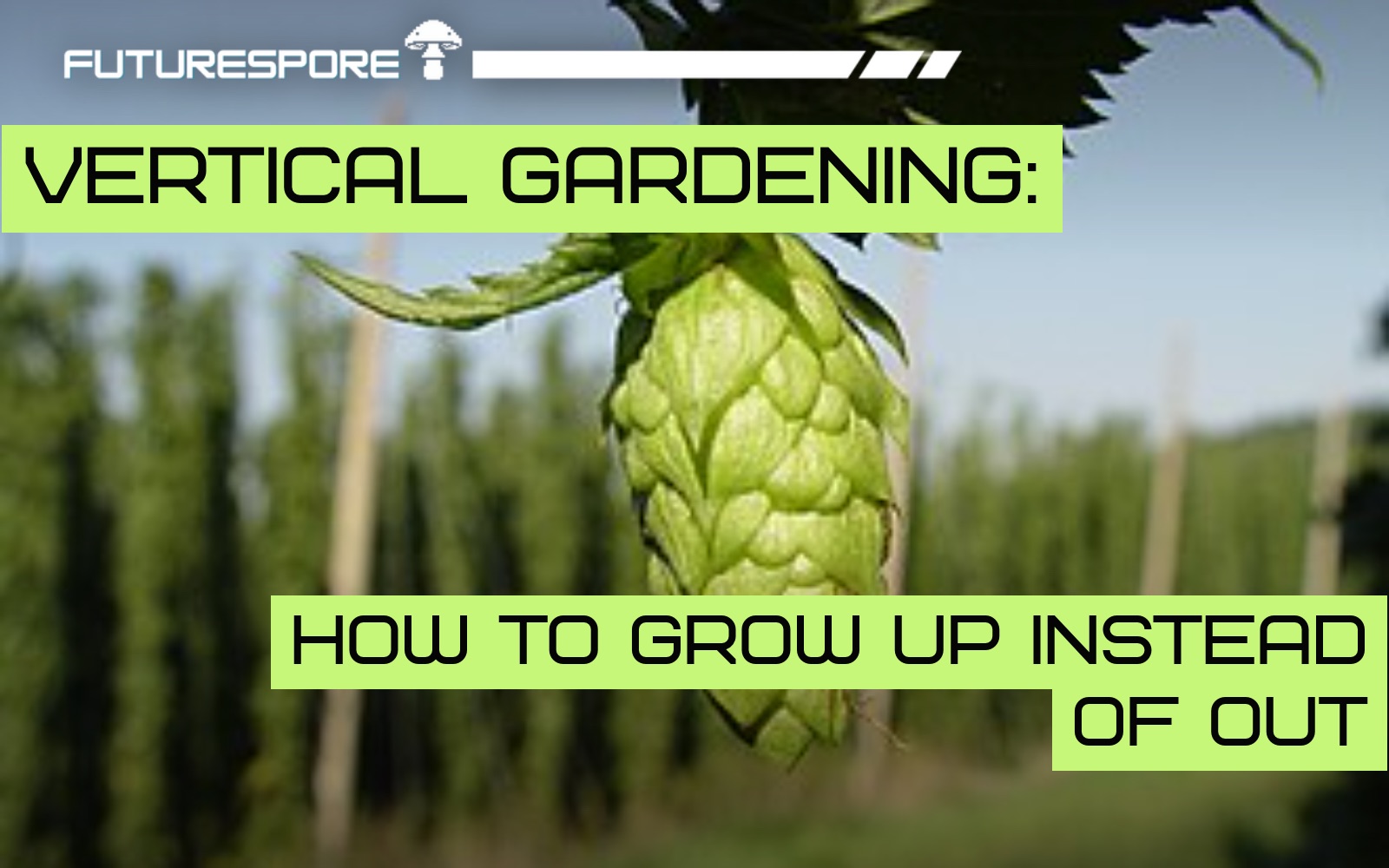
Hops produce annual climbing shoots from a perennial crown and can exceed fifteen feet in a season. Their stems grip supports with stiff hairs, so gloves help when handling them.
The cones are used in brewing and have a history of use in sedating herbal preparations, but that history doesn't establish a reliable sleep benefit. Hops may add to sedating medicines or alcohol. Avoid medicinal use during pregnancy or breastfeeding without clinical guidance, and keep hops away from dogs because ingestion can cause life-threatening poisoning.
Build supports for wind and harvest weight
A useful trellis carries stems, wet foliage, and fruit without shifting when the wind catches them. Install it before plants become heavy, and anchor it independently of any pot too light to resist overturning.
Can you reach the harvest without climbing onto something unstable? Height is only useful while the crop remains manageable. I think a secure, reachable frame earns its footprint more than an impressive tall one.
Bamboo tripod
Three long bamboo poles lashed near the top make a practical support for twining beans. Eight-foot poles leave climbing height after their bases are pushed into the ground.
Salvaged poles and sound cord can keep costs low. Spread the legs widely, test the lashing, and inspect bamboo each season for splits and rot. A fixed three-season lifespan isn't something any natural pole can promise.
Cattle-panel arch
A sixteen-foot livestock panel can form an arch between beds, carrying cucumbers or small squash. The stiff welded grid distributes the plant's weight across the structure.
Panels are awkward to transport without a truck, so borrow delivery before buying. Anchor both sides to substantial posts, cover sharp cut ends, and leave enough headroom. Larger squash may need individual slings secured to the frame.
Florida weave
The Florida weave holds tomato plants between horizontal runs of twine stretched along a row of posts. Additional lines contain the stems as the plants grow.
Posts around six feet apart are a starting point, not a guarantee against sagging. Heavy plants may need closer spacing and end-post bracing. Keep adding support before stems fall outward, and don't cinch twine tightly around them.
Overhead string trellis
An overhead string trellis suspends a line for each plant from a strong upper support. Tomatoes are clipped or loosely tied to the strings, while cucumbers can attach with tendrils.
An eight-foot wire is useful only when its anchors can carry the combined load. This system needs repeated training as stems grow. Thin decorative hooks and an uncertain wall fixing aren't adequate substitutes for structural hardware.
Cattle-panel A-frame
Two panels joined at the top and restrained at their bases form an A-frame, with vines climbing the outside. Brace the ends so the panels can't slide apart or collapse sideways.
The interior can shelter lettuce from some direct summer sun. Shade reduces heating, but it won't reliably stop bolting, the shift into flowering triggered by conditions including heat and day length. Leave room to reach the lettuce without trampling roots.
Grow vertically on a balcony or five feet of concrete
Container-based vertical gardens need drainage, secure supports, and a watering routine that matches their exposure. Wind and reflected heat can dry a balcony pot much faster than a bed at ground level.
Wet potting mix is heavy. Check balcony load limits and tenancy rules before installing concentrated groups of containers, and keep exits clear. Position drainage so it doesn't soak the building or fall onto someone below.
Felt pocket planters
Felt pockets can hold lettuce, compact herbs, strawberries, and trailing nasturtiums. Panels with six to ten pockets are manageable, but pocket depth matters more than the number advertised.
UV-resistant fabric lasts longer outdoors, although sun and repeated wetting still wear it down. Mount pockets against a suitable waterproof backing with an air gap, not directly against vulnerable siding. Use only correctly identified culinary herbs and edible nasturtiums, Tropaeolum species, grown without unsuitable pesticides.
Railing planters
Railing planters lift small crops into light without using much floor area. Strawberries and compact culinary herbs fit this arrangement, while sweet alyssum can provide trailing flowers.
Use brackets matched to the actual railing and secure the planter against lifting or tipping. Keep containers inside the railing where falling pots would endanger people below. Don't assume a planter that straddles a rail is secure.
Wall-mounted strings and container vines
Strings suspended above a large container can guide a vine across a sunny wall. Masonry stores solar heat and releases it later, which may benefit warm-season crops but can overheat roots and foliage during summer.
Get permission before drilling, use hardware suited to the wall, and keep foliage away from vents. A freestanding frame is the better rental option when fixings aren't allowed. You shouldn't need a damn masonry repair to grow a cucumber.
Watering and signs the system is working
A functioning vertical garden has firm new growth, leaves that recover overnight, and supports that stay still under load. Check moisture in the root zone instead of watering because the surface looks pale.
So push a finger into the potting mix before adding water. A dry root zone calls for a thorough watering with free drainage. Wet mix and wilting leaves call for checking blocked drainage and damaged roots, not another automatic soaking.
Drip irrigation with a timer can serve a busy schedule, especially across multiple containers. But test every outlet: a working timer doesn't prove water reached the last pot, and a blocked emitter can leave one plant dry.
Watch the structure as closely as the leaves. Leaning posts, tightening ties, and cracks around wall fixings are early warnings. Repairing a loose support while the vine is small is tedious; untangling a mature crop from a collapsed frame is considerably worse.
Frequently Asked Questions
What is vertical gardening?
Vertical gardening is the practice of growing plants upward instead of outward, using trellises, wall planters, pocket walls, towers, and climbing crops. It packs more growing space into a small footprint. A 4-foot trellis can double or triple a 4-square-foot patch's yield by giving beans, cucumbers, peas, and squash room to climb.
What plants are best for vertical gardening?
Pole beans, peas, cucumbers, vining squash, supported tomatoes, nasturtiums, and Malabar climbing spinach suit trellises. Lettuce, herbs, strawberries, kale, and chard suit wall pockets and towers. Cherry tomatoes, strawberries, trailing herbs, and peppers work in hanging baskets. For compact vertical systems, I'd favor shallow-rooted, fast-maturing crops.
How do vertical gardens save space?
Vertical gardens turn unused air space into growing surface. A conventional 4×8 bed has 32 square feet of growing area. Adding a 6-foot trellis can effectively provide 80+ square feet because climbing crops occupy the column above it. That's how balconies and small yards can double their food output with vertical structure.
Are vertical garden walls worth it?
DIY pocket walls made from felt, pallets, or recycled materials can be excellent value. Commercial living walls are often expensive and need sophisticated irrigation. I'd start with a simple trellis or pallet wall before buying a commercial system. The cheap version usually outperforms the heavily marketed one, so don't assume expensive means better.
Can I grow tomatoes vertically?
Yes, indeterminate tomatoes are ideal for vertical growing. Give them stakes or trellises at least 6 feet tall, prune to one or two main stems, and tie them up weekly through the growing season. A single plant can yield 20+ pounds in a one-square-foot footprint. Determinate, or bush, tomatoes don't benefit much from vertical training.
Written by E. Silkweaver