Overview
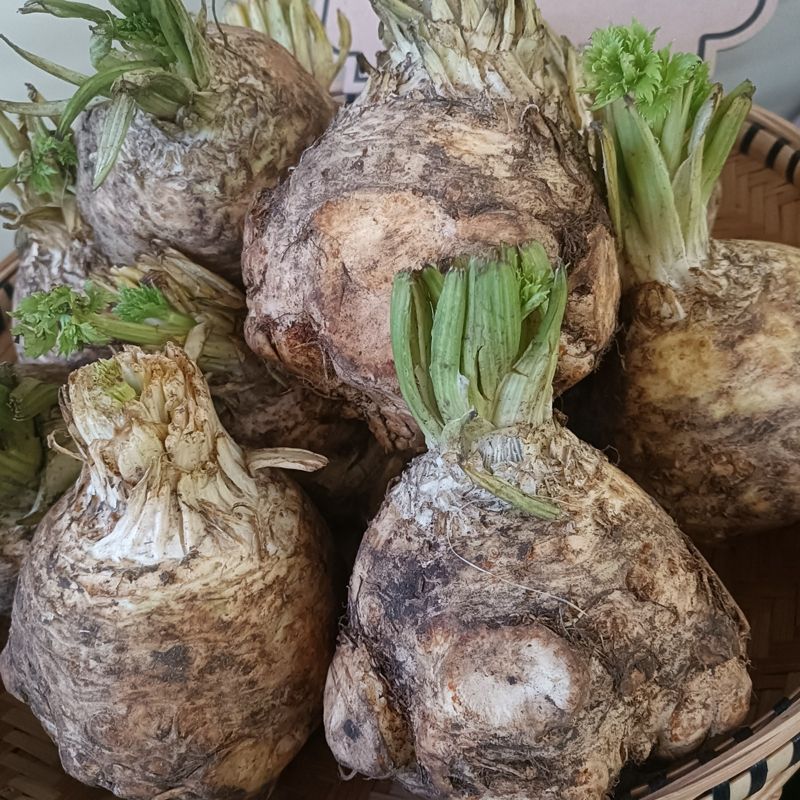
Also called celery root, celeriac is an ugly-duckling root vegetable with a complex, nutty celery flavor that shines in cold-weather cooking. Beneath its knobby exterior lies creamy white flesh that is equally delicious raw or cooked. A staple of French cuisine, it is the star of céleri rémoulade and adds depth to soups, gratins, and purees.
How to Grow Celeriac
Plant it in rich, deep, moisture-retentive soil with plenty of compost, at a slightly acidic pH of 6–7.
Exact sowing, transplanting, and harvest months shift by climate zone — the planting calendar below lays them out for cool through hot regions. Give it what it asks for here, and it will find its place in the garden.
Companion Planting & Soil
Celeriac grows well alongside leek, onion, cabbage, and tomato — but keep it clear of parsnip and corn.
Good Companions
Avoid Planting Near
Planting Calendar
When to sow, transplant, and harvest by growing zone.
| Zone | Action | Months | Notes |
|---|---|---|---|
| Cold (1-2) | Start Indoors | Feb — Mar | Start indoors 10-12 weeks early; needs long season (120 days); tiny seeds |
| Cold (1-2) | Transplant | May — Jun | Transplant after frost; space 8" apart; keep consistently moist |
| Cold (1-2) | Harvest | Sep — Oct | Harvest after first light frost sweetens flavor; roots store well in ground |
| Cool (3-4) | Start Indoors | Jan — Feb | Start indoors early; very slow grower |
| Cool (3-4) | Transplant | Apr — May | Transplant in spring; remove lower side shoots to enlarge root |
| Cool (3-4) | Harvest | Sep — Nov | Dig after frost; store in damp sand at 32-40°F for months |
| Moderate (5-7) | Start Indoors | Dec — Jan (wraps) | Start indoors 12 weeks before transplant |
| Moderate (5-7) | Transplant | Mar — Apr | Transplant in spring; side-dress with compost; needs steady moisture |
| Moderate (5-7) | Harvest | Sep — Nov | Harvest in fall; flavor improves with cool weather |
| Warm (8-9) | Transplant | Aug — Sep | Fall plant for winter harvest; needs 120+ frost-free days |
| Warm (8-9) | Harvest | Dec — Feb (wraps) | Winter harvest from fall planting |
| Hot (10+) | Transplant | Sep — Oct | Fall planting only; needs cool weather to size up |
| Hot (10+) | Harvest | Jan — Feb | Harvest during coolest months |
Uses
In the Kitchen
In the kitchen, celeriac turns up in more than one form: shredded raw in céleri rémoulade; roasted or mashed as a potato alternative; added to soups and stews for earthy celery depth.
Medicinal & Folk Use
In herbal and folk tradition, it has been valued in several ways: diuretic properties support kidney function; rich in vitamin K and phosphorus; good source of fiber and antioxidants. These are traditional uses, not medical advice.
Beyond the Garden
Celeriac earns its keep past the plate, too: long-storing winter root vegetable (keeps months in root cellar).
The Field Library
Books from the Futurespore shelf that go deeper on plants like this one.
- Northeast Foraging region-tuned wild food guidance with clear lookalike warnings
- Braiding Sweetgrass reframes growing and gathering as a relationship of reciprocity
These are Bookshop.org affiliate links — they support independent bookstores and earn Futurespore a small commission at no extra cost to you. Browse the full Futurespore Bookshelf.