 Forest & Kim Starr / CC BY 3.0 · Source
Swiss chard
Beta vulgaris subsp. cicla
Overview
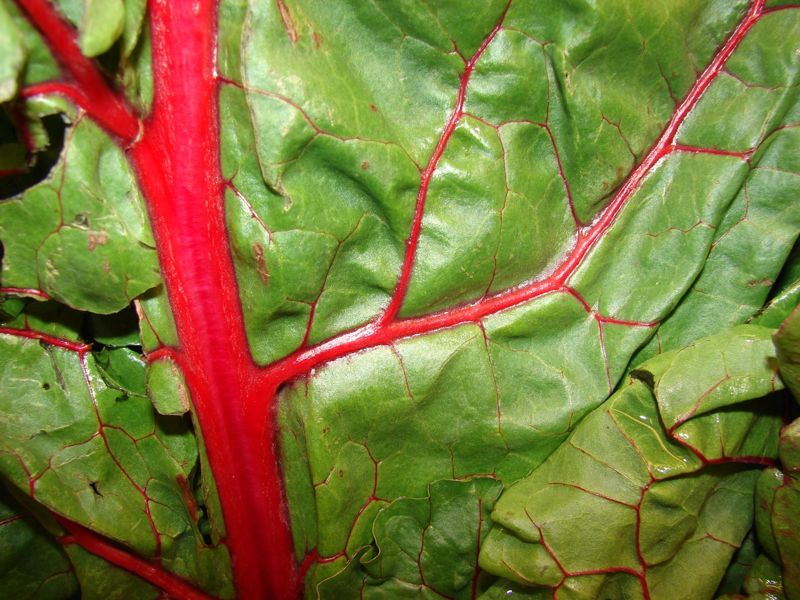
A stunning dual-purpose vegetable that provides both beautiful ornamental color and nutritious, mild-flavored greens. Swiss chard's stems come in electric rainbow colors — ruby red, golden yellow, hot pink, and sunset orange — making it as ornamental as any flower. It is remarkably heat-tolerant for a leafy green, producing through summer when lettuce and spinach have long bolted.
Growing Conditions
How to Grow Swiss chard
Swiss chard (Beta vulgaris subsp. cicla) is a biennial forb/herb that grows to about 1.5 feet tall and 12 inches wide.
To grow swiss chard, give it full sun, though it tolerates a little shade. It is hardy across USDA hardiness zones 3–11. Plant it in rich, moist, well-drained soil with plenty of organic matter, at a slightly acidic pH of 6–7. It does best with even, moderate watering.
Exact sowing, transplanting, and harvest months shift by climate zone — the planting calendar below lays them out for cool through hot regions. The details above are a starting point — your ground will teach you the rest.
Companion Planting & Soil
Swiss chard grows well alongside tomato, cabbage, onion, lettuce, and bean — but keep it clear of corn and cucumber.
Good Companions
Avoid Planting Near
Planting Calendar
When to sow, transplant, and harvest by growing zone.
| Zone | Action | Months | Notes |
|---|---|---|---|
| Cold (1-2) | Direct Sow | May — Jun | Direct sow 2-4 weeks before last frost |
| Cold (1-2) | Harvest | Jun — Sep | Cut outer leaves; plant produces all season |
| Cool (3-4) | Direct Sow | Apr — May | Direct sow 2-4 weeks before last frost |
| Cool (3-4) | Harvest | May — Oct | Cut-and-come-again harvest |
| Moderate (5-7) | Direct Sow | Mar — Apr | Direct sow in early spring |
| Moderate (5-7) | Direct Sow | Aug — Sep | Fall sowing for winter harvest |
| Moderate (5-7) | Harvest | Apr — Nov | Harvest outer leaves continuously |
| Warm (8-9) | Direct Sow | Feb — Mar | Spring sowing |
| Warm (8-9) | Direct Sow | Sep — Oct | Fall sowing |
| Warm (8-9) | Harvest | Mar — Jun | Harvest before bolting |
| Hot (10+) | Direct Sow | Oct — Dec | Cool-season crop; sow fall through winter |
| Hot (10+) | Harvest | Nov — Apr (wraps) | Winter through spring harvest |
Uses
In the Kitchen
In the kitchen, swiss chard turns up in more than one form: leaves sautéed with garlic and olive oil; stems braised separately — they take longer to cook than leaves; young leaves raw in salads.
Medicinal & Folk Use
In herbal and folk tradition, it has been valued in several ways: extremely high in vitamin K; rich in vitamins A and C, magnesium, and iron; betalain pigments in colored stems have antioxidant and anti-inflammatory properties. These are traditional uses, not medical advice.
Beyond the Garden
Swiss chard earns its keep past the plate, too: ornamental edible for decorative kitchen gardens; heat-tolerant green that produces through summer.
Safety Notes
Contains oxalates — moderate intake if prone to kidney stones. Otherwise safe. Both leaves and stems are edible cooked or raw.
The Field Library
Books from the Futurespore shelf that go deeper on plants like this one.
- Edible Wild Plants a photographic guide organized by season — good for checking an ID twice in the field
- The Resilient Gardener growing staple food through drought, flood, and hard seasons
These are Bookshop.org affiliate links — they support independent bookstores and earn Futurespore a small commission at no extra cost to you. Browse the full Futurespore Bookshelf.