 Stephen Ausmus / Public domain · Source
Carrot
Daucus carota subsp. sativus
Overview
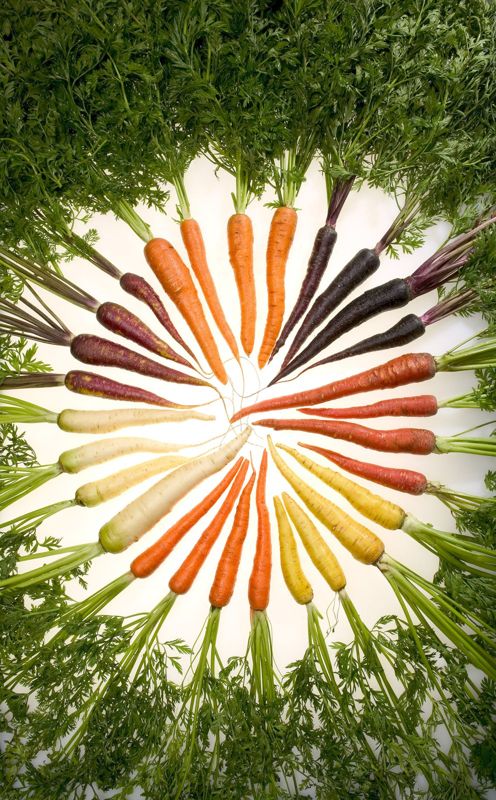
Classic root vegetable, descended from the wild Queen Anne's Lace. Requires loose, rock-free soil for straight roots — heavy clay produces forked, stunted carrots. Sweetens dramatically after frost as the plant converts starches to sugars. Many heirloom colors beyond orange: purple, yellow, white, red.
Mentioned in The Mycelial Grimoire
Posts on the Grimoire that reference Carrot.
Growing Conditions
How to Grow Carrot
Carrot (Daucus carota subsp. sativus) is a taprooted biennial (grown as annual) that grows to about 1.5 feet tall and 6 inches wide.
To grow carrot, give it full sun. It is hardy across USDA hardiness zones 3–10. Plant it in deep, loose, stone-free sandy loam, at a slightly acidic pH of 6–6.8. It does best with even, moderate watering.
Exact sowing, transplanting, and harvest months shift by climate zone — the planting calendar below lays them out for cool through hot regions. Let a few flowers go by unpicked; the bees will thank you, and so will next season.
Companion Planting & Soil
Carrot grows well alongside onion, leek, tomato, lettuce, rosemary, and sage — but keep it clear of dill, fennel, and parsnip.
Good Companions
Avoid Planting Near
Planting Calendar
When to sow, transplant, and harvest by growing zone.
| Zone | Action | Months | Notes |
|---|---|---|---|
| Cold (1-2) | Direct Sow | Apr — Jun | Sow as soon as soil is workable; needs loose soil free of rocks |
| Cold (1-2) | Direct Sow | Jul — Jul | Mid-summer sowing for fall storage crop |
| Cold (1-2) | Harvest | Jul — Oct | Pull when shoulders show; flavor sweetens after first frost |
| Cool (3-4) | Direct Sow | Mar — May | Spring sowing; keep soil consistently moist for germination |
| Cool (3-4) | Harvest | Jun — Oct | Pull as needed; mulch heavily to overwinter in ground |
| Moderate (5-7) | Direct Sow | Feb — Apr | Spring crop; cover seeds lightly — they need light to germinate |
| Moderate (5-7) | Direct Sow | Aug — Sep | Fall crop sweetens after frost |
| Moderate (5-7) | Harvest | May — Nov | Continuous harvest 60-80 days after sowing |
| Warm (8-9) | Direct Sow | Jan — Mar | Winter and spring crop; not heat tolerant |
| Warm (8-9) | Direct Sow | Sep — Nov | Fall and winter crop |
| Warm (8-9) | Harvest | Apr — Jun | Spring harvest |
| Warm (8-9) | Harvest | Nov — Jan (wraps) | Fall and winter harvest |
| Hot (10+) | Direct Sow | Oct — Jan (wraps) | Winter crop only; needs cool temperatures |
| Hot (10+) | Harvest | Jan — Apr | Winter and early spring harvest |
Uses
In the Kitchen
In the kitchen, carrot turns up in more than one form: raw in salads, slaws, and crudités; roasted, steamed, or pureed into soups; carrot tops make excellent pesto and chimichurri.
Medicinal & Folk Use
In herbal and folk tradition, it has been valued in several ways: rich source of beta-carotene (vitamin A precursor) for eye health; high in fiber and antioxidants. These are traditional uses, not medical advice.
Beyond the Garden
Carrot earns its keep past the plate, too: save seeds in second year — let plants overwinter and flower.
Safety Notes
Wild carrot (Queen Anne's Lace) looks similar to deadly Poison Hemlock — never forage carrot family without expert identification.
The Field Library
Books from the Futurespore shelf that go deeper on plants like this one.
- Medicinal Herbs: A Beginner's Guide the friendliest on-ramp to growing and using healing herbs at home
- The Forager's Harvest identification, harvest windows, and preparation from someone who eats what he teaches
- Gaia's Garden home-scale permaculture — guilds, food forests, and beds that tend themselves
These are Bookshop.org affiliate links — they support independent bookstores and earn Futurespore a small commission at no extra cost to you. Browse the full Futurespore Bookshelf.