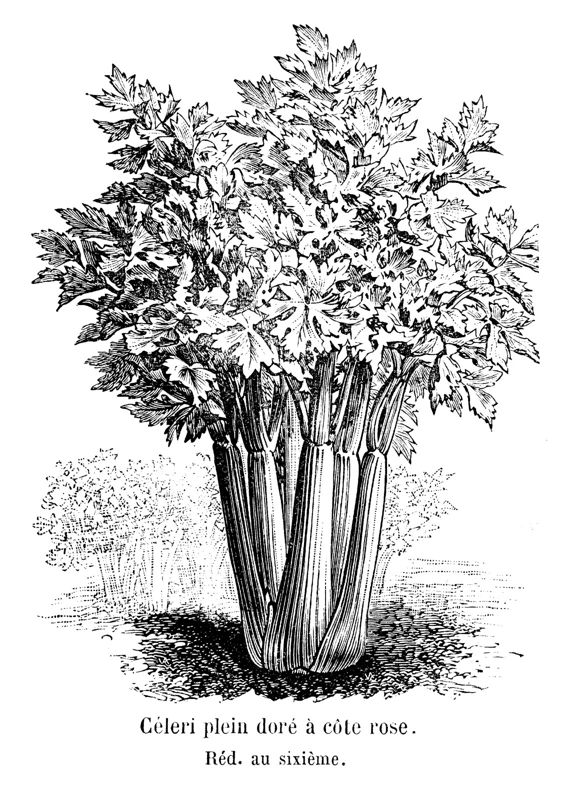
 VAC = Vilmorin-Andrieux & Compagnie / Public domain · Source
Celery
Apium graveolens
Overview
A marshland plant that has been transformed through centuries of selective breeding from a bitter, thin-stalked wild herb into the crisp, mild vegetable we know today. Celery is notoriously demanding to grow, requiring consistent moisture, rich soil, and a long cool season to produce its characteristic crunchy stalks. It remains one of the highest-value crops for dedicated vegetable gardeners.
Growing Conditions
How to Grow Celery
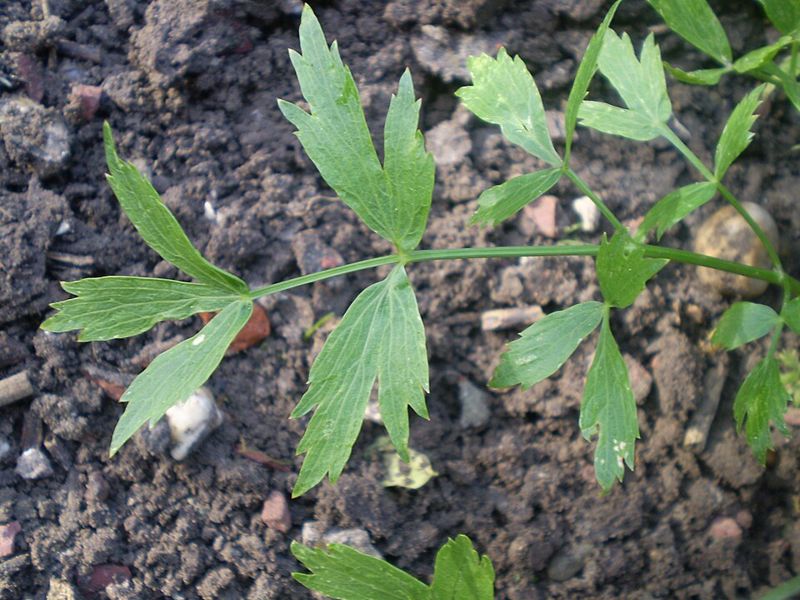
Celery (Apium graveolens) is a forb/herb that grows to about 4 inches tall and 12 inches wide.
To grow celery, give it partial sun to partial shade. It is hardy across USDA hardiness zones 5–9. Plant it in rich, deep, constantly moist muck or loam soil, at a slightly acidic pH of 6–7. It does best with even, moderate watering.
Exact sowing, transplanting, and harvest months shift by climate zone — the planting calendar below lays them out for cool through hot regions. Its flowers appear from June through August, offering high value to pollinators. Food and forage in one stand — plant it where both you and the pollinators can reach.
Companion Planting & Soil
Celery grows well alongside tomato, cabbage, leek, bean, and cauliflower — but keep it clear of corn, parsnip, and potato.
Good Companions
Avoid Planting Near
Planting Calendar
When to sow, transplant, and harvest by growing zone.
| Zone | Action | Months | Notes |
|---|---|---|---|
| Cold (1-2) | Start Indoors | Feb — Mar | Start indoors 10-12 weeks before last frost; tiny seeds need light — press onto surface |
| Cold (1-2) | Transplant | May — Jun | Transplant after last frost; needs constant moisture and rich soil |
| Cold (1-2) | Harvest | Aug — Sep | Harvest outer stalks or pull whole plant at 3 months; blanch by mounding soil |
| Cool (3-4) | Start Indoors | Jan — Feb | Start indoors 12 weeks early; slow to germinate (2-3 weeks) |
| Cool (3-4) | Transplant | Apr — May | Transplant when nights stay above 40°F; bolts if exposed to prolonged cold |
| Cool (3-4) | Harvest | Jul — Sep | Cut individual stalks from outside or harvest whole plant |
| Moderate (5-7) | Start Indoors | Dec — Jan (wraps) | Start indoors early; transplant in spring |
| Moderate (5-7) | Transplant | Mar — Apr | Plant in rich, moist soil; side-dress with compost monthly |
| Moderate (5-7) | Harvest | Jun — Aug | Harvest before summer heat makes stalks pithy |
| Warm (8-9) | Transplant | Aug — Sep | Transplant in fall for cool-season crop; needs 120+ days |
| Warm (8-9) | Harvest | Dec — Feb (wraps) | Harvest during cool season |
| Hot (10+) | Transplant | Sep — Oct | Fall planting only; cannot tolerate heat |
| Hot (10+) | Harvest | Dec — Feb (wraps) | Winter harvest only |
Uses
In the Kitchen
In the kitchen, celery turns up in more than one form: raw as a snack or in salads and slaws; foundation of mirepoix for stocks and sauces; braised whole as a side dish in European cuisine.
Medicinal & Folk Use
In herbal and folk tradition, it has been valued in several ways: natural diuretic supporting fluid balance; contains apigenin, an anti-inflammatory flavonoid; traditionally used for joint pain and gout. These are traditional uses, not medical advice.
Beyond the Garden
Celery earns its keep past the plate, too: leaves used as a soup herb (stronger flavor than stalks).
Safety Notes
Celery is one of the more common food allergies in Europe. Its psoralens can cause skin burns when handling a lot of foliage in strong sun. Avoid medicinal quantities of celery seed in pregnancy.
The Field Library
Books from the Futurespore shelf that go deeper on plants like this one.
- Edible Wild Plants a photographic guide organized by season — good for checking an ID twice in the field
- The Resilient Gardener growing staple food through drought, flood, and hard seasons
These are Bookshop.org affiliate links — they support independent bookstores and earn Futurespore a small commission at no extra cost to you. Browse the full Futurespore Bookshelf.