Overview
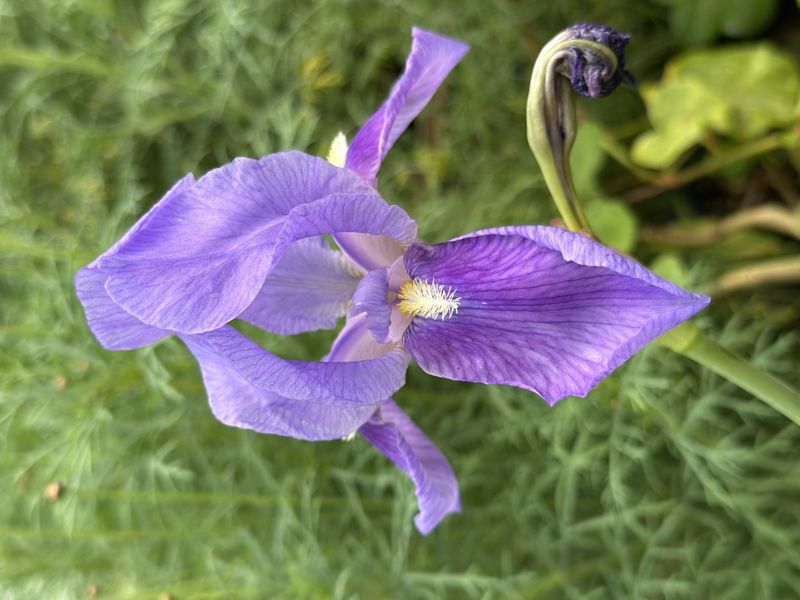
Named for the Greek goddess of the rainbow, irises come in an astonishing palette of colors and are among the most iconic garden flowers worldwide. From the stately bearded irises to the moisture-loving Japanese and Louisiana irises, there is a type for virtually every garden condition. Orris root, derived from iris rhizomes, has been used in perfumery and gin production for centuries.
Growing Conditions
How to Grow Iris
Iris (Iris spp.) is a forb/herb that grows to about 3 feet tall and 3 feet wide.
Iris is hardy across USDA hardiness zones 6–9. Plant it in well-drained soil with rhizomes at or near the surface; varies by type, at a slightly acidic pH of 6–7.5.
Exact sowing, transplanting, and harvest months shift by climate zone — the planting calendar below lays them out for cool through hot regions. Its flowers appear from May through June, offering moderate value to pollinators. Learn its cautions before you harvest — the safety notes below are not decoration.
Companion Planting & Soil
Iris grows well alongside daylily, peony, lavender, and alyssum.
Good Companions
Planting Calendar
When to sow, transplant, and harvest by growing zone.
| Zone | Action | Months | Notes |
|---|---|---|---|
| Cold (1-2) | Transplant | Jul — Aug | Plant rhizomes in midsummer; top of rhizome must be at soil surface — do not bury |
| Cold (1-2) | Bloom | May — Jun | Late spring bloom; remove spent stems but leave fan of leaves |
| Cool (3-4) | Transplant | Jul — Aug | Plant in summer; rhizome should bake in sun; excellent drainage |
| Cool (3-4) | Bloom | May — Jun | Spring bloom; reblooming varieties may flower again in fall |
| Moderate (5-7) | Transplant | Jul — Sep | Plant in late summer/early fall; do not mulch over rhizome — needs sun exposure |
| Moderate (5-7) | Bloom | Apr — Jun | Spring bloom; hundreds of color combinations available |
| Moderate (5-7) | Divide | Jul — Aug | Divide every 3-4 years after bloom; discard old center section; trim leaves to 6" fan |
| Warm (8-9) | Transplant | Sep — Oct | Plant in fall; bearded iris needs some winter chill; Louisiana iris thrives in warm zones |
| Warm (8-9) | Bloom | Mar — May | Early spring bloom; Louisiana iris blooms in wet soil |
| Hot (10+) | Transplant | Oct — Nov | Plant in fall; choose Louisiana or Japanese iris for hot humid areas |
| Hot (10+) | Bloom | Feb — Apr | Late winter/spring bloom |
Uses
Beyond the Garden
Iris earns its keep past the plate, too: iconic ornamental perennial in nearly every color; orris root used in high perfumery and potpourri; rain garden and water feature plantings (Japanese and Louisiana types).
Safety Notes
All irises are poisonous, the rhizomes most of all — irritant compounds cause vomiting and diarrhea, and the sap can inflame skin. Never confuse iris rhizomes with edible roots, or blue flag iris with sweet flag.
The Field Library
Books from the Futurespore shelf that go deeper on plants like this one.
- Gaia's Garden home-scale permaculture — guilds, food forests, and beds that tend themselves
- The Resilient Gardener growing staple food through drought, flood, and hard seasons
These are Bookshop.org affiliate links — they support independent bookstores and earn Futurespore a small commission at no extra cost to you. Browse the full Futurespore Bookshelf.