 Frank K. / CC BY 2.0 · Source
Phlox
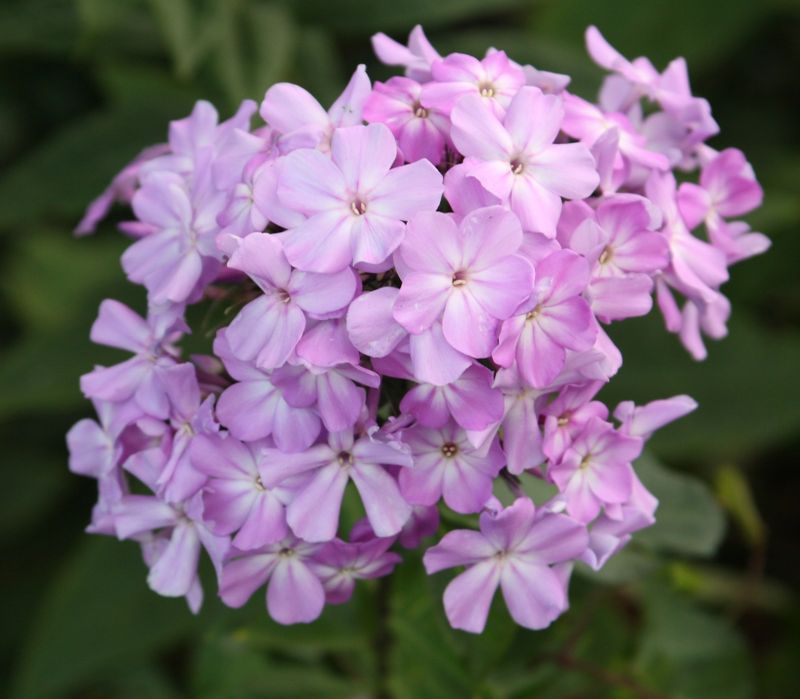
Phlox acuminata
Overview
From the low, creeping ground covers of spring to the tall, fragrant garden phlox of midsummer, this genus provides some of the most colorful and fragrant perennials available. Tall garden phlox (P. paniculata) fills the air with sweet perfume on summer evenings and is a major nectar source for butterflies and hummingbird moths. Modern mildew-resistant cultivars have solved the powdery mildew issues that plagued older varieties.
Growing Conditions
How to Grow Phlox
Phlox (Phlox acuminata) is a forb/herb that grows to about 2 feet tall and 2 feet wide.
Phlox is hardy across USDA hardiness zones 5–9. Plant it in rich, moist, well-drained soil with good air circulation, at a slightly acidic pH of 6–7.
Exact sowing, transplanting, and harvest months shift by climate zone — the planting calendar below lays them out for cool through hot regions. Its flowers appear from April through August, offering high value to pollinators. Give it what it asks for here, and it will find its place in the garden.
Companion Planting & Soil
Phlox grows well alongside echinacea, daylily, rudbeckia, and lavender.
Good Companions
Planting Calendar
When to sow, transplant, and harvest by growing zone.
| Zone | Action | Months | Notes |
|---|---|---|---|
| Cold (1-2) | Transplant | May — Jun | Plant in spring; choose mildew-resistant cultivars; full sun with good air flow |
| Cold (1-2) | Bloom | Jul — Aug | Midsummer bloom; fragrant; deadhead for rebloom |
| Cool (3-4) | Transplant | Apr — May | Plant in spring; thin to 4-5 stems per clump for mildew prevention |
| Cool (3-4) | Bloom | Jun — Aug | Summer bloom; one of the most fragrant perennials |
| Moderate (5-7) | Transplant | Mar — Apr | Plant in spring; fragrant flowers attract butterflies and hummingbird moths |
| Moderate (5-7) | Bloom | Jun — Sep | Long bloom summer through fall; excellent cut flower |
| Moderate (5-7) | Divide | Mar — Apr | Divide every 3-4 years in spring; discard woody center |
| Warm (8-9) | Transplant | Feb — Mar | Plant in late winter; afternoon shade helps in warm zones |
| Warm (8-9) | Bloom | May — Jul | Spring/summer bloom; may rebloom in fall if cut back |
| Hot (10+) | Transplant | Nov — Dec | Plant in fall; struggles in extreme heat and humidity |
| Hot (10+) | Bloom | Apr — Jun | Spring bloom; goes dormant in extreme heat |
Uses
Beyond the Garden
Phlox earns its keep past the plate, too: fragrant midsummer perennial for butterflies and moths; ground cover types for spring rock garden color; long-blooming cut flower with sweet scent.
The Field Library
Books from the Futurespore shelf that go deeper on plants like this one.
- Braiding Sweetgrass reframes growing and gathering as a relationship of reciprocity
- Gaia's Garden home-scale permaculture — guilds, food forests, and beds that tend themselves
These are Bookshop.org affiliate links — they support independent bookstores and earn Futurespore a small commission at no extra cost to you. Browse the full Futurespore Bookshelf.