 Jebulon / Public domain · Source
Sunflower
Helianthus annuus
Overview
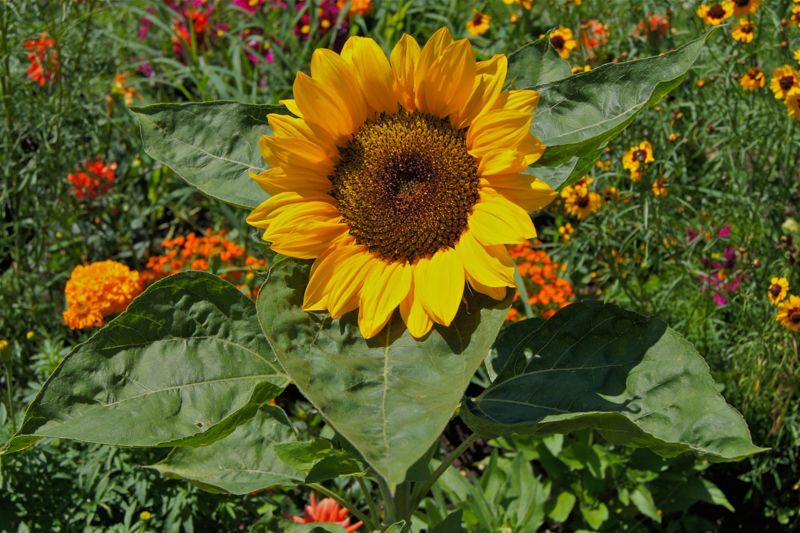
Towering symbols of summer joy, sunflowers have been cultivated by Native Americans for over 4,500 years — one of the few crops domesticated in North America. Their massive flower heads track the sun (heliotropism) when young, and a single head can contain up to 2,000 seeds. Beyond the classic giant yellow, modern varieties come in burgundy, bicolor, and branching multi-flower types.
Mentioned in The Mycelial Grimoire
Posts on the Grimoire that reference Sunflower.
Growing Conditions
How to Grow Sunflower
Sunflower (Helianthus annuus) is a forb/herb that grows to about 8 feet tall and 2.5 feet wide.
Sunflower is hardy across USDA hardiness zones 5–9. Plant it in average, well-drained soil; drought-tolerant once established, at a slightly acidic pH of 6–7.5.
Exact sowing, transplanting, and harvest months shift by climate zone — the planting calendar below lays them out for cool through hot regions. Its flowers appear from August through November, offering high value to pollinators. Let a few flowers go by unpicked; the bees will thank you, and so will next season.
Companion Planting & Soil
Sunflower grows well alongside corn, squash, cucumber, lettuce, and bean — but keep it clear of potato.
Good Companions
Avoid Planting Near
Planting Calendar
When to sow, transplant, and harvest by growing zone.
| Zone | Action | Months | Notes |
|---|---|---|---|
| Cold (1-2) | Direct Sow | Jun — Jun | Direct sow after last frost; 1" deep |
| Cold (1-2) | Harvest | Aug — Sep | Harvest when back of head turns brown |
| Cool (3-4) | Direct Sow | May — Jun | Direct sow after last frost |
| Cool (3-4) | Harvest | Aug — Sep | Harvest when back of head turns brown |
| Moderate (5-7) | Direct Sow | Apr — Jun | Direct sow; succession sow every 2 weeks |
| Moderate (5-7) | Harvest | Jul — Oct | Harvest when seeds are plump |
| Warm (8-9) | Direct Sow | Mar — May | Direct sow in spring |
| Warm (8-9) | Harvest | Jun — Aug | Harvest before birds get them |
| Hot (10+) | Direct Sow | Feb — Apr | Direct sow early; avoid summer heat |
| Hot (10+) | Harvest | May — Jul | Harvest before summer heat |
Uses
In the Kitchen
In the kitchen, sunflower turns up in more than one form: seeds roasted and salted for snacking; cold-pressed sunflower oil for cooking; sprouted seeds (microgreens) for salads.
Medicinal & Folk Use
In herbal and folk tradition, it has been valued in several ways: seeds rich in vitamin E, selenium, and magnesium; linoleic acid supports skin and cardiovascular health; traditional use of petals as a fever-reducing tea. These are traditional uses, not medical advice.
Beyond the Garden
Sunflower earns its keep past the plate, too: phytoremediation — sunflowers absorb heavy metals from contaminated soil; dramatic cut flower and garden focal point; bird food from mature seed heads left standing.
The Field Library
Books from the Futurespore shelf that go deeper on plants like this one.
- The Forager's Harvest identification, harvest windows, and preparation from someone who eats what he teaches
- Gaia's Garden home-scale permaculture — guilds, food forests, and beds that tend themselves
These are Bookshop.org affiliate links — they support independent bookstores and earn Futurespore a small commission at no extra cost to you. Browse the full Futurespore Bookshelf.