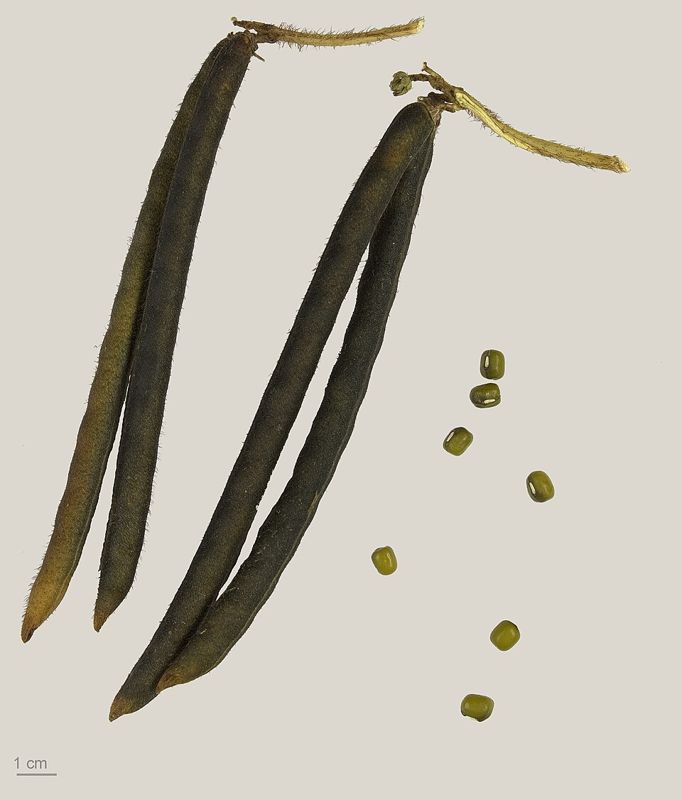
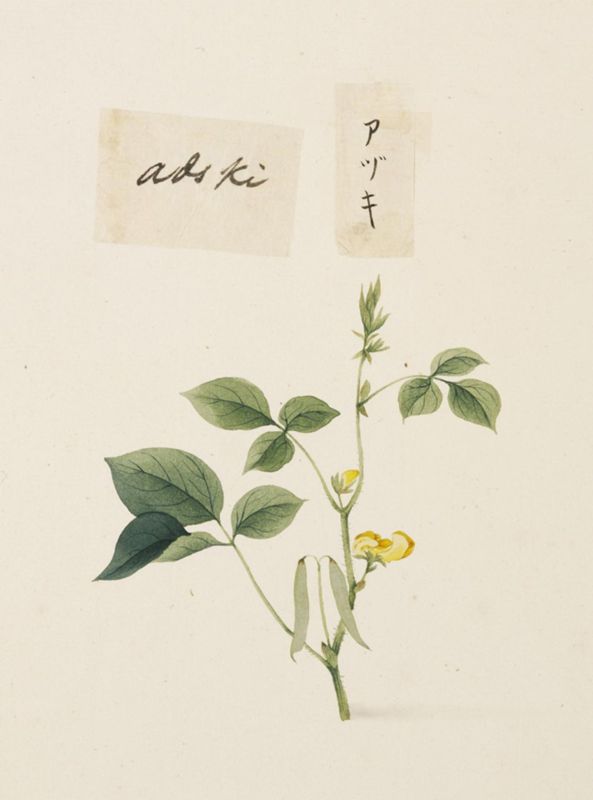
 Ishizaki Yūshi / Public domain · Source
Adzuki bean
Vigna angularis
Overview
A small, reddish-brown legume that has been a staple in East Asian cuisine for over a thousand years. Adzuki beans are one of the most easily digested beans, making them a gentle introduction to legume-based diets. In Japan, they hold cultural significance and are used in sweet red bean paste for traditional confections.
Growing Conditions
How to Grow Adzuki bean
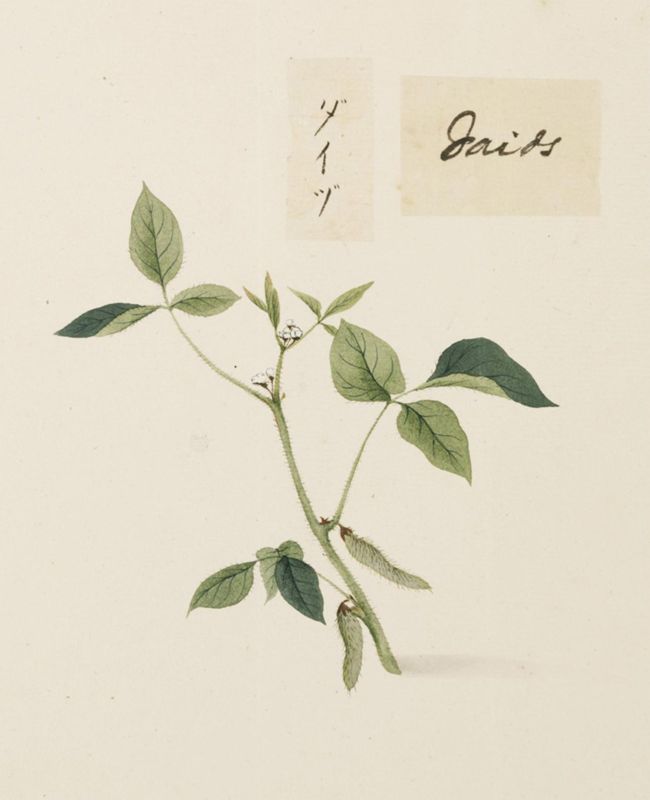
Adzuki bean (Vigna angularis) is a forb/herb that grows to about 2.5 feet tall and 8 inches wide.
To grow adzuki bean, give it partial sun to partial shade. It is hardy across USDA hardiness zones 10–13. Plant it in well-drained, fertile loam, at a slightly acidic pH of 5.8–7. It does best with even, moderate watering.
Exact sowing, transplanting, and harvest months shift by climate zone — the planting calendar below lays them out for cool through hot regions. Its flowers appear from April through November, offering high value to pollinators. Once its roots take hold, it asks little of you.
Companion Planting & Soil
Adzuki bean grows well alongside corn, squash, cucumber, celery, and potato — but keep it clear of onion, garlic, and fennel.
Good Companions
Avoid Planting Near
Planting Calendar
When to sow, transplant, and harvest by growing zone.
| Zone | Action | Months | Notes |
|---|---|---|---|
| Cold (1-2) | Direct Sow | Jun — Jun | Direct sow after all frost; needs 120 warm days; marginal in cold zones |
| Cold (1-2) | Harvest | Sep — Oct | Harvest when pods are dry and papery; thresh to remove beans |
| Cool (3-4) | Direct Sow | May — Jun | Direct sow when soil is 60°F+; bush type; no trellis needed |
| Cool (3-4) | Harvest | Sep — Oct | Pull plants when most pods are dry; hang to finish drying |
| Moderate (5-7) | Direct Sow | May — Jun | Direct sow after frost; 120 days to dry bean stage |
| Moderate (5-7) | Harvest | Aug — Oct | Harvest dry pods; small red beans store for years |
| Warm (8-9) | Direct Sow | Mar — May | Direct sow in spring; red beans used for sweet bean paste |
| Warm (8-9) | Harvest | Jul — Sep | Harvest when pods rattle; dry thoroughly before storing |
| Hot (10+) | Direct Sow | Feb — Apr | Sow in spring; heat tolerant |
| Hot (10+) | Harvest | Jun — Aug | Harvest when pods are dry and brown |
Uses
In the Kitchen
In the kitchen, adzuki bean turns up in more than one form: sweet red bean paste (anko) for desserts and mochi; sprouted for salads and stir-fries; cooked in soups and congee.
Medicinal & Folk Use
In herbal and folk tradition, it has been valued in several ways: traditional Chinese medicine uses for kidney and bladder health; rich in folate and iron for blood health; high fiber content supports healthy digestion. These are traditional uses, not medical advice.
Beyond the Garden
Adzuki bean earns its keep past the plate, too: used as a nitrogen-fixing cover crop; ground into flour for gluten-free baking.
The Field Library
Books from the Futurespore shelf that go deeper on plants like this one.
- Medicinal Herbs: A Beginner's Guide the friendliest on-ramp to growing and using healing herbs at home
- Edible Wild Plants a photographic guide organized by season — good for checking an ID twice in the field
- The Resilient Gardener growing staple food through drought, flood, and hard seasons
These are Bookshop.org affiliate links — they support independent bookstores and earn Futurespore a small commission at no extra cost to you. Browse the full Futurespore Bookshelf.