 Harter, Leonard Lee, 1875- / Public domain · Source
Lima bean
Phaseolus lunatus
Overview
A heat-loving legume native to Central America that produces creamy, buttery beans available in both bush and pole varieties. Lima beans are sometimes called butter beans in the Southern US, where they are a soul food staple. Baby limas are milder and more tender than large varieties, and all types provide exceptional plant-based protein and fiber.
Growing Conditions
How to Grow Lima bean
Lima bean (Phaseolus lunatus) is an annual forb/herb that grows to about 1.5 feet tall and 12 inches wide.
To grow lima bean, give it full sun. It is hardy across USDA hardiness zones 5–11. Plant it in rich, well-drained, warm loam, at a slightly acidic pH of 6–7. It does best with even, moderate watering.
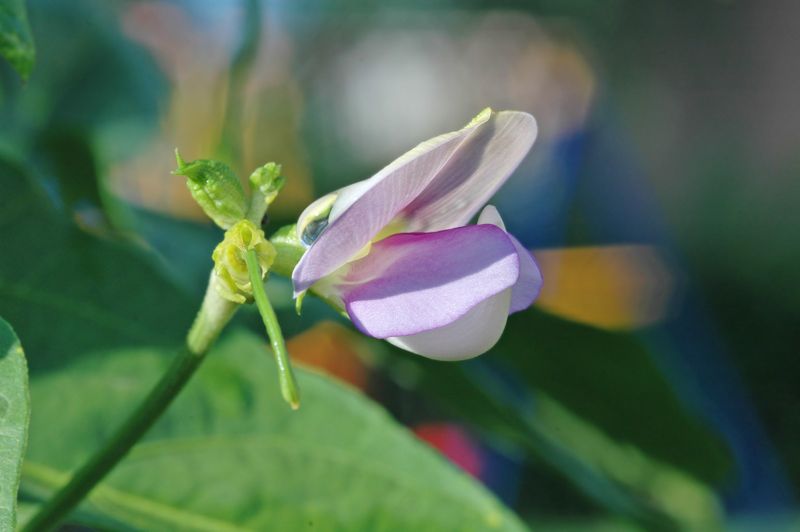
Exact sowing, transplanting, and harvest months shift by climate zone — the planting calendar below lays them out for cool through hot regions. Its flowers appear from April through July, offering high value to pollinators. It feeds two tables at once: yours and the pollinators’.
Companion Planting & Soil
Lima bean grows well alongside corn, squash, cucumber, radish, and marigold — but keep it clear of onion, garlic, and fennel.
Good Companions
Avoid Planting Near
Planting Calendar
When to sow, transplant, and harvest by growing zone.
| Zone | Action | Months | Notes |
|---|---|---|---|
| Cold (1-2) | Direct Sow | Jun — Jun | Direct sow after soil reaches 65°F; very frost sensitive |
| Cold (1-2) | Harvest | Aug — Sep | Harvest when pods are plump but still green; 75-90 days |
| Cool (3-4) | Direct Sow | May — Jun | Direct sow after soil is 65°F; do not start indoors |
| Cool (3-4) | Harvest | Jul — Sep | Pick pods when plump; shell promptly |
| Moderate (5-7) | Direct Sow | May — Jun | Direct sow when soil is 65°F+; needs long warm season |
| Moderate (5-7) | Harvest | Jul — Sep | Harvest pods when firm and plump |
| Warm (8-9) | Direct Sow | Mar — Apr | Direct sow in spring; soil must be 65°F+ |
| Warm (8-9) | Direct Sow | Jul — Aug | Second planting for fall harvest |
| Warm (8-9) | Harvest | May — Jul | Harvest spring planting |
| Warm (8-9) | Harvest | Sep — Oct | Harvest fall planting |
| Hot (10+) | Direct Sow | Feb — Apr | Sow in spring; also Aug-Sep for fall crop |
| Hot (10+) | Harvest | May — Jun | Spring harvest; pick before pods dry |
Uses
In the Kitchen
In the kitchen, lima bean turns up in more than one form: succotash with corn — a Native American classic; slow-cooked with ham hock in Southern tradition; pureed into dips and spreads.
Medicinal & Folk Use
In herbal and folk tradition, it has been valued in several ways: rich in molybdenum, an important trace mineral for detoxification; high in folate and manganese; fiber and protein support blood sugar management. These are traditional uses, not medical advice.
Beyond the Garden
Lima bean earns its keep past the plate, too: nitrogen-fixing crop for crop rotation.
Safety Notes
Raw lima beans contain linamarin which converts to cyanide. Must be thoroughly cooked. Never eat raw.
The Field Library
Books from the Futurespore shelf that go deeper on plants like this one.
- The Modern Herbal Dispensatory a working reference for tinctures, salves, and doses once you get serious
- Edible Wild Plants a photographic guide organized by season — good for checking an ID twice in the field
- The Resilient Gardener growing staple food through drought, flood, and hard seasons
These are Bookshop.org affiliate links — they support independent bookstores and earn Futurespore a small commission at no extra cost to you. Browse the full Futurespore Bookshelf.