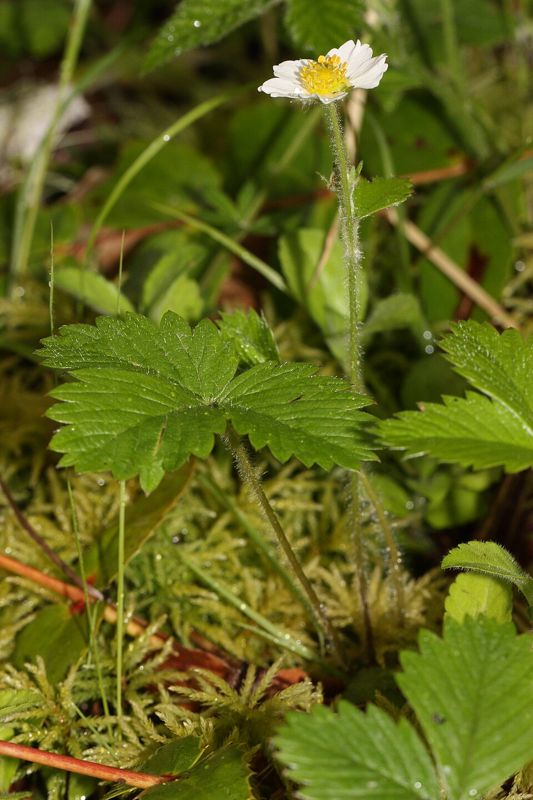
 Walter Siegmund (talk) / CC BY-SA 3.0 · Source
Strawberry
Fragaria spp.
Overview
The world's most popular berry, strawberries are one of the most rewarding crops for home gardeners — nothing compares to the flavor of a sun-warmed, vine-ripened strawberry. June-bearing types produce one large harvest, while ever-bearing and day-neutral varieties fruit continuously from spring through fall. Alpine strawberries are tiny, intensely flavored woodland gems perfect for edging and ground cover.
Mentioned in The Mycelial Grimoire
Posts on the Grimoire that reference Strawberry.
Growing Conditions
How to Grow Strawberry
Strawberry (Fragaria spp.) is a forb/herb that grows to about 8 inches tall and 3 feet wide.
To grow strawberry, give it partial sun to partial shade. It is hardy across USDA hardiness zones 5–9. Plant it in rich, well-drained, slightly acidic, sandy loam, at a slightly acidic pH of 5.5–6.8. It does best with even, moderate watering.
Exact sowing, transplanting, and harvest months shift by climate zone — the planting calendar below lays them out for cool through hot regions. Its flowers appear from April through June, offering high value to pollinators. A generous plant — a harvest for you, and forage for the pollinators.
Companion Planting & Soil
Strawberry grows well alongside borage, lettuce, spinach, onion, and thyme — but keep it clear of cabbage, broccoli, fennel, and walnut.
Good Companions
Avoid Planting Near
Planting Calendar
When to sow, transplant, and harvest by growing zone.
| Zone | Action | Months | Notes |
|---|---|---|---|
| Cold (1-2) | Transplant | May — Jun | Plant after last frost; pinch first-year blossoms for stronger plants |
| Cool (3-4) | Transplant | Apr — May | Plant in spring; June-bearing or everbearing types |
| Moderate (5-7) | Transplant | Mar — Apr | Plant in spring or fall; everbearing for extended harvest |
| Moderate (5-7) | Harvest | May — Jul | Pick when fully red; check every 1-2 days |
| Warm (8-9) | Transplant | Oct — Nov | Plant in fall for spring harvest |
Uses
In the Kitchen
In the kitchen, strawberry turns up in more than one form: fresh eating — peak flavor lasts only hours after picking; jams, preserves, and compotes; frozen for smoothies, desserts, and baking.
Medicinal & Folk Use
In herbal and folk tradition, it has been valued in several ways: rich in vitamin C and anthocyanins; ellagic acid studied for anti-cancer properties; anti-inflammatory and heart-protective compounds. These are traditional uses, not medical advice.
Beyond the Garden
Strawberry earns its keep past the plate, too: edible ground cover and border plant; alpine varieties for woodland garden edges; container growing on patios and balconies.
The Field Library
Books from the Futurespore shelf that go deeper on plants like this one.
- The Forager's Harvest identification, harvest windows, and preparation from someone who eats what he teaches
- Gaia's Garden home-scale permaculture — guilds, food forests, and beds that tend themselves
These are Bookshop.org affiliate links — they support independent bookstores and earn Futurespore a small commission at no extra cost to you. Browse the full Futurespore Bookshelf.