 Judy Gallagher / CC BY 2.0 · Source
Blueberry
Vaccinium corymbosum
Overview
One of only a handful of commercially important fruit crops native to North America, blueberries have been gathered by Indigenous peoples for thousands of years. These acid-loving shrubs produce some of the most antioxidant-rich fruits in the world, with a complex sweet-tart flavor that varies by species and cultivar. Highbush, lowbush, and rabbiteye types offer options for nearly every climate.
Growing Conditions
How to Grow Blueberry
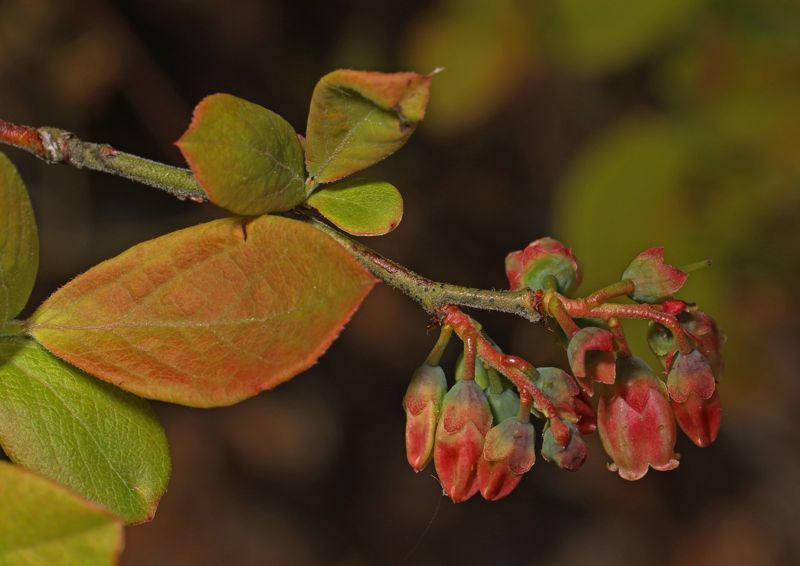
Blueberry (Vaccinium corymbosum) is a shrub that grows to about 6 feet tall and 4 feet wide.
Blueberry is hardy across USDA hardiness zones 5–8. Plant it in acidic, well-drained, sandy soil rich in organic matter, at a acidic pH of 4–5.5.
Exact sowing, transplanting, and harvest months shift by climate zone — the planting calendar below lays them out for cool through hot regions. Its flowers appear from April through July, offering moderate value to pollinators. Match it to the right spot, and the rest is mostly patience.
Companion Planting & Soil
Blueberry grows well alongside azalea, rhododendron, strawberry, thyme, and clover — but keep it clear of walnut, tomato, and pepper.
Good Companions
Avoid Planting Near
Planting Calendar
When to sow, transplant, and harvest by growing zone.
| Zone | Action | Months | Notes |
|---|---|---|---|
| Cold (1-2) | Transplant | May — Jun | Plant bare-root in spring after ground thaws; needs acidic soil pH 4.5-5.5 |
| Cool (3-4) | Transplant | Apr — May | Plant bare-root in early spring; amend soil with sulfur if pH > 5.5 |
| Moderate (5-7) | Transplant | Mar — Apr | Plant in early spring; mulch heavily with pine needles |
| Moderate (5-7) | Harvest | Jun — Aug | Harvest when berries are fully blue and come off easily |
| Moderate (5-7) | Prune | Feb — Mar | Prune during dormancy; remove oldest canes |
| Warm (8-9) | Transplant | Jan — Feb | Plant in winter dormancy; choose southern highbush varieties |
Uses
In the Kitchen
In the kitchen, blueberry turns up in more than one form: fresh eating, baking, and preserves; frozen for year-round smoothies and desserts; dried as a snack or trail mix ingredient.
Medicinal & Folk Use
In herbal and folk tradition, it has been valued in several ways: exceptionally high in anthocyanins for brain health; supports urinary tract health similar to cranberry; anti-inflammatory properties may support heart health. These are traditional uses, not medical advice.
Beyond the Garden
Blueberry earns its keep past the plate, too: beautiful ornamental shrub with fall color; wildlife food source for birds and mammals; lowbush types used as edible ground cover.
The Field Library
Books from the Futurespore shelf that go deeper on plants like this one.
- The Forager's Harvest identification, harvest windows, and preparation from someone who eats what he teaches
- Gaia's Garden home-scale permaculture — guilds, food forests, and beds that tend themselves
These are Bookshop.org affiliate links — they support independent bookstores and earn Futurespore a small commission at no extra cost to you. Browse the full Futurespore Bookshelf.