 Cody Hough / CC BY-SA 3.0 · Source
Blue vervain
Verbena hastata
Overview
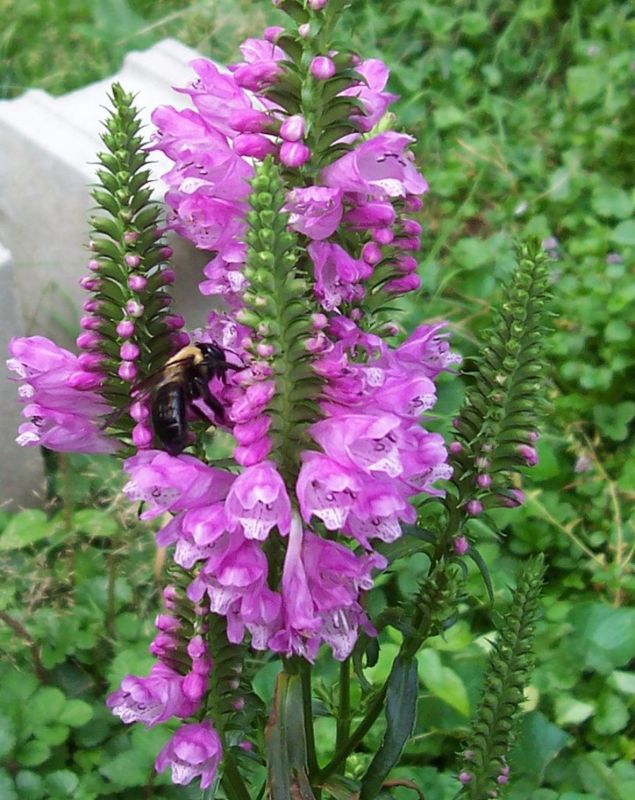
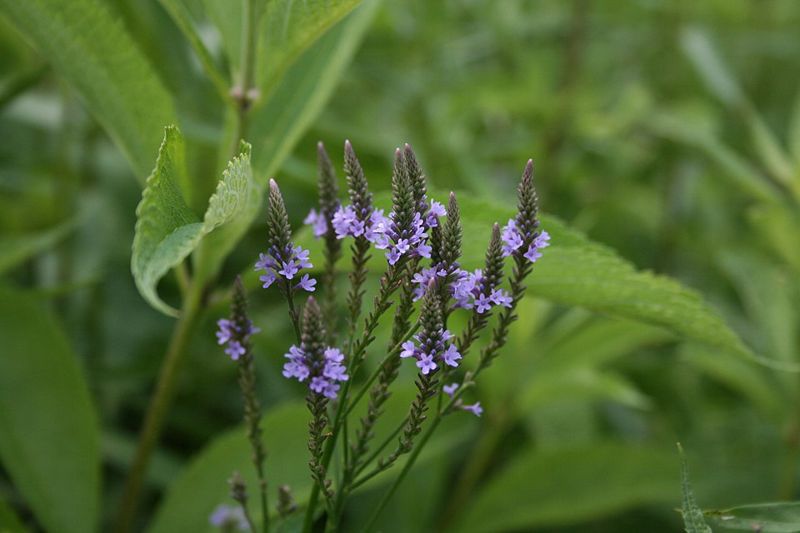
A tall, elegant native perennial with candelabra-like spikes of small violet-purple flowers that open from the bottom up over six to eight weeks — far longer than most prairie perennials. Bees and especially small native bees swarm its tiny tubular blooms. Found wild in moist meadows, streambanks, and disturbed wet ground across most of eastern and central North America. Not to be confused with the bedding-plant verbenas at garden centers, which are different species bred for showiness rather than ecological function.
Mentioned in The Mycelial Grimoire
Posts on the Grimoire that reference Blue vervain.
Growing Conditions
How to Grow Blue vervain
Blue vervain (Verbena hastata) is a perennial forb/herb that grows to about 5 feet tall and 2 feet wide.
To grow blue vervain, give it full sun. It is hardy across USDA hardiness zones 3–8. Plant it in moist to wet, fertile soil; tolerates clay; full sun preferred, at a slightly acidic pH of 5.5–7.5. It does best with consistently moist to wet soil.
Exact sowing, transplanting, and harvest months shift by climate zone — the planting calendar below lays them out for cool through hot regions. Its purple flowers appear from July through October, offering high value to pollinators. Old knowledge lives in this one; grow it, and you keep a little of that alive.
Companion Planting & Soil
Blue vervain grows well alongside joe-pye weed, swamp milkweed, ironweed, cardinal flower, and wild bergamot.
Good Companions
Planting Calendar
When to sow, transplant, and harvest by growing zone.
| Zone | Action | Months | Notes |
|---|---|---|---|
| Cold (1-2) | Direct Sow | Nov — Dec | Fall sow seeds outdoors — requires cold stratification to germinate |
| Cold (1-2) | Transplant | May — Jun | Transplant plugs after last frost; space 12–18 inches |
| Cold (1-2) | Bloom | Jul — Sep | Candelabra spikes of small purple flowers; bloom bottom-up over 6–8 weeks |
| Cool (3-4) | Direct Sow | Nov — Dec | Fall sow for cold stratification; surface-press seed on moist soil |
| Cool (3-4) | Bloom | Jul — Sep | Long mid-to-late summer bloom; small native bees swarm it |
| Moderate (5-7) | Direct Sow | Oct — Dec | Fall sow; do not bury seed, light helps germination |
| Moderate (5-7) | Transplant | Apr — May | Plant in spring at back of border or moist meadow edge |
| Moderate (5-7) | Bloom | Jul — Oct | Extended bloom into early fall; deadhead to limit self-seeding |
| Moderate (5-7) | Divide | Mar — Apr | Divide mature clumps every 3–4 years in early spring |
| Warm (8-9) | Direct Sow | Oct — Nov | Late fall sow; mild winter chill enough for germination |
| Warm (8-9) | Bloom | Jun — Sep | Summer bloom; needs consistent moisture in heat |
Uses
Medicinal & Folk Use
In herbal and folk tradition, it has been valued in several ways: traditional nervine for anxiety and tension; mild sedative tea (caution with dosage); historical Indigenous use for headaches and fevers. These are traditional uses, not medical advice.
Beyond the Garden
Blue vervain earns its keep past the plate, too: premier pollinator plant for native bees; rain garden and wet meadow restoration; vertical accent for back of perennial border.
Safety Notes
Traditionally used as a nervine and mild sedative in herbal medicine. Avoid during pregnancy and with blood-thinning medications. May cause vomiting in high doses. Consult a qualified herbalist before medicinal use.
The Field Library
Books from the Futurespore shelf that go deeper on plants like this one.
- The Modern Herbal Dispensatory a working reference for tinctures, salves, and doses once you get serious
- Braiding Sweetgrass reframes growing and gathering as a relationship of reciprocity
These are Bookshop.org affiliate links — they support independent bookstores and earn Futurespore a small commission at no extra cost to you. Browse the full Futurespore Bookshelf.