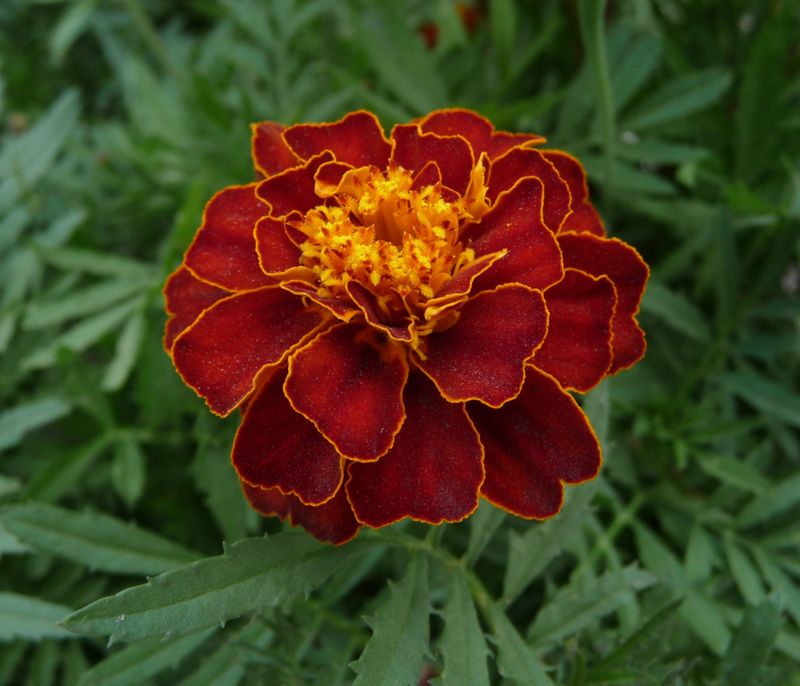
 George Chernilevsky / Public domain · Source
Marigold
Tagetes spp.
Overview
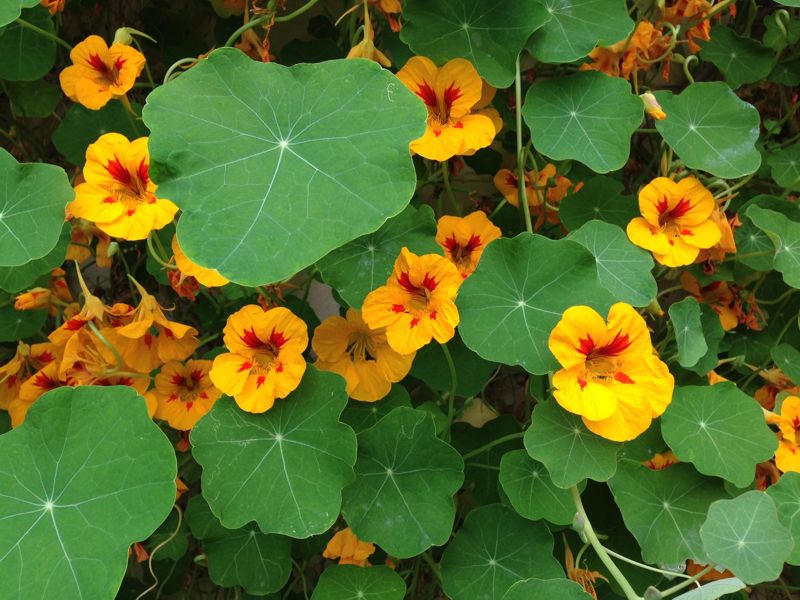
One of the most useful companion plants in the garden, marigolds exude substances from their roots that suppress nematodes and repel many common pests. Their cheerful orange, yellow, and red blooms are also edible, adding color to salads and rice. French and African marigolds (Tagetes) are the garden workhorses, while Mexican marigold (T. lucida) is used as a tarragon substitute.
Mentioned in The Mycelial Grimoire
Posts on the Grimoire that reference Marigold.
Growing Conditions
How to Grow Marigold
Marigold (Tagetes spp.) is a forb/herb that grows to about 12 inches tall and 12 inches wide.
To grow marigold, give it full sun. It is hardy across USDA hardiness zones 5–9. Plant it in average, well-drained soil; tolerates poor soils, at a slightly acidic pH of 6–7.5. It does best with even, moderate watering.
Exact sowing, transplanting, and harvest months shift by climate zone — the planting calendar below lays them out for cool through hot regions. Its flowers appear from April through October, offering high value to pollinators. A generous plant — a harvest for you, and forage for the pollinators.
Companion Planting & Soil
Marigold grows well alongside tomato, pepper, bean, cabbage, and squash — but keep it clear of bean (some reports).
Good Companions
Avoid Planting Near
Planting Calendar
When to sow, transplant, and harvest by growing zone.
| Zone | Action | Months | Notes |
|---|---|---|---|
| Cold (1-2) | Start Indoors | Apr — Apr | Start 6 weeks before last frost |
| Cold (1-2) | Transplant | Jun — Jun | Transplant after all frost danger |
| Cool (3-4) | Start Indoors | Mar — Apr | Start 6 weeks before last frost |
| Cool (3-4) | Transplant | May — Jun | Transplant after last frost |
| Moderate (5-7) | Start Indoors | Feb — Mar | Start 6 weeks before last frost |
| Moderate (5-7) | Direct Sow | Apr — May | Direct sow after last frost |
| Warm (8-9) | Direct Sow | Mar — Apr | Direct sow in spring |
| Hot (10+) | Direct Sow | Feb — Mar | Direct sow; also fall planting Sep-Oct |
Uses
In the Kitchen
In the kitchen, marigold turns up in more than one form: petals added to salads, rice, and eggs for color; used as a saffron substitute in some Latin American dishes; mexican marigold (Tagetes lucida) used as tarragon substitute.
Medicinal & Folk Use
In herbal and folk tradition, it has been valued in several ways: traditional use for wound healing and skin inflammation; calendula-like properties for digestive and skin health; antimicrobial and antifungal properties. These are traditional uses, not medical advice.
Beyond the Garden
Marigold earns its keep past the plate, too: premier companion plant for pest suppression; root exudates suppress harmful soil nematodes; attracts beneficial insects including hoverflies.
Safety Notes
Two different plants share the name: pot marigold (Calendula, which has its own entry here) and garden marigolds (Tagetes). Tagetes petals are edible in moderation — T. lucida, T. tenuifolia and T. patula are the culinary ones — but the foliage sap can irritate skin, and nursery bedding plants may have been sprayed. Grow your own for the kitchen.
The Field Library
Books from the Futurespore shelf that go deeper on plants like this one.
- Medicinal Herbs: A Beginner's Guide the friendliest on-ramp to growing and using healing herbs at home
- The Forager's Harvest identification, harvest windows, and preparation from someone who eats what he teaches
- Gaia's Garden home-scale permaculture — guilds, food forests, and beds that tend themselves
These are Bookshop.org affiliate links — they support independent bookstores and earn Futurespore a small commission at no extra cost to you. Browse the full Futurespore Bookshelf.