Overview
A low-growing annual that forms a fragrant carpet of tiny white, pink, or purple flowers beloved by beneficial insects. Sweet alyssum is one of the most effective companion plants in the garden, attracting hoverflies and parasitic wasps that prey on aphids. Its honey-like scent and continuous blooming make it a powerhouse of biodiversity support.
Growing Conditions
How to Grow Alyssum
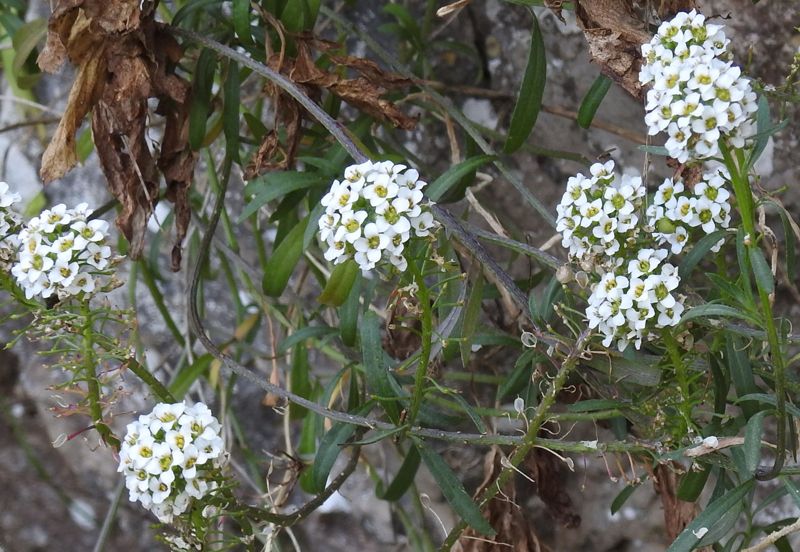
Alyssum (Alyssum alpestre) is a forb/herb that grows to about 8 inches tall and 8 inches wide.
Alyssum is hardy across USDA hardiness zones 4–8. Plant it in average, well-drained soil; tolerates poor soils, at a slightly acidic pH of 6–7.5.
Exact sowing, transplanting, and harvest months shift by climate zone — the planting calendar below lays them out for cool through hot regions. Its flowers appear from May through August, offering moderate value to pollinators. Give it what it asks for here, and it will find its place in the garden.
Companion Planting & Soil
Alyssum grows well alongside tomato, broccoli, grape, rose, and potato.
Good Companions
Planting Calendar
When to sow, transplant, and harvest by growing zone.
| Zone | Action | Months | Notes |
|---|---|---|---|
| Cold (1-2) | Direct Sow | May — Jun | Direct sow after last frost; scatter seeds on surface; honey-scented |
| Cold (1-2) | Bloom | Jun — Sep | Continuous bloom; shear back midseason if it gets ratty; resumes quickly |
| Cool (3-4) | Direct Sow | Apr — May | Direct sow in spring; self-sows freely; excellent pollinator plant |
| Cool (3-4) | Bloom | May — Oct | Long bloom; excellent border edging and container spiller |
| Moderate (5-7) | Direct Sow | Mar — Apr | Sow in early spring; or fall in mild climates |
| Moderate (5-7) | Direct Sow | Sep — Oct | Fall sow for winter/spring bloom |
| Moderate (5-7) | Bloom | Mar — Jun | Spring bloom; may reseed for fall show |
| Moderate (5-7) | Bloom | Sep — Nov | Fall bloom from reseeds or fall sowing |
| Warm (8-9) | Direct Sow | Sep — Oct | Fall sow; blooms all winter; honey fragrance |
| Warm (8-9) | Bloom | Oct — May (wraps) | Fall through spring bloom; heat causes summer dormancy |
| Hot (10+) | Direct Sow | Oct — Nov | Fall sow; cool-season annual; attracts beneficial hoverflies |
| Hot (10+) | Bloom | Nov — Mar (wraps) | Winter bloom; dies in summer heat |
Uses
Beyond the Garden
Alyssum earns its keep past the plate, too: premier beneficial insect attractor; living mulch and ground cover between rows; erosion control on slopes and edges.
The Field Library
Books from the Futurespore shelf that go deeper on plants like this one.
- Braiding Sweetgrass reframes growing and gathering as a relationship of reciprocity
- Gaia's Garden home-scale permaculture — guilds, food forests, and beds that tend themselves
These are Bookshop.org affiliate links — they support independent bookstores and earn Futurespore a small commission at no extra cost to you. Browse the full Futurespore Bookshelf.