 Oceancetaceen - Alice Chodura / Public domain · Source
Dahlia
Dahlia pinnata
Overview
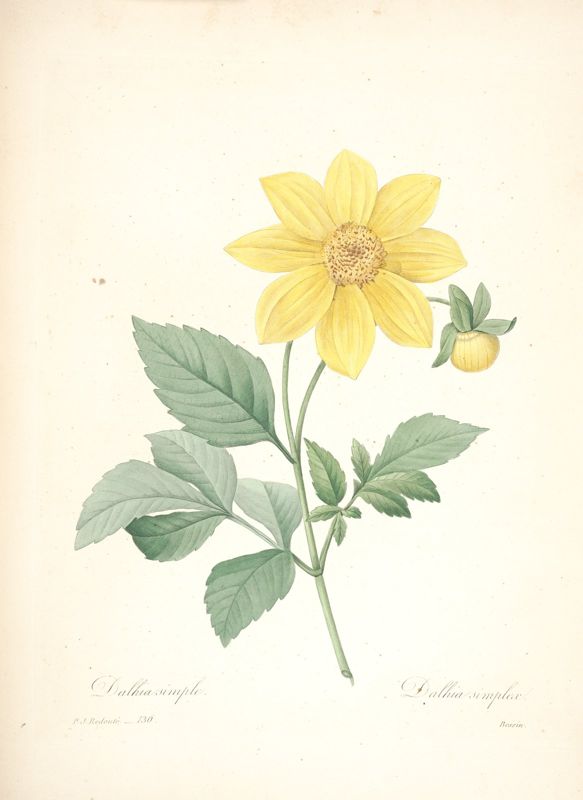
Originally cultivated by the Aztecs for food and ceremony, dahlias now dazzle in an astonishing range of flower forms — from dinner-plate sized blooms to tiny pompons in virtually every color except blue. Their tuberous roots are edible, with a flavor ranging from apple to celery depending on the variety. Dahlias are the national flower of Mexico and a testament to centuries of selective breeding.
Growing Conditions
How to Grow Dahlia
Dahlia (Dahlia pinnata) is a forb/herb that grows to about 3 feet tall and 2 feet wide.
To grow dahlia, give it full sun. It is hardy across USDA hardiness zones 9–13. Plant it in rich, well-drained, loamy soil with plenty of compost, at a slightly acidic pH of 6–7. It does best with even, moderate watering.
Exact sowing, transplanting, and harvest months shift by climate zone — the planting calendar below lays them out for cool through hot regions. Its flowers appear from June through September, offering high value to pollinators. A generous plant — a harvest for you, and forage for the pollinators.
Companion Planting & Soil
Dahlia grows well alongside marigold, zinnia, and sunflower.
Good Companions
Planting Calendar
When to sow, transplant, and harvest by growing zone.
| Zone | Action | Months | Notes |
|---|---|---|---|
| Cold (1-2) | Start Indoors | Mar — Apr | Start tubers indoors 4-6 weeks before last frost in pots |
| Cold (1-2) | Transplant | Jun — Jun | Plant out after all frost; lift tubers before freeze in fall |
| Cold (1-2) | Harvest | Jul — Sep | Cut flowers in morning; place in hot water immediately for longest vase life |
| Cool (3-4) | Transplant | May — May | Plant tubers 4-6" deep after last frost; stake tall varieties |
| Cool (3-4) | Harvest | Jul — Oct | Cut when flowers are 3/4 open |
| Moderate (5-7) | Transplant | Apr — May | Plant tubers after frost danger; pinch first center bud for bushier plants |
| Moderate (5-7) | Harvest | Jun — Oct | Harvest blooms regularly to encourage more flowers |
| Warm (8-9) | Transplant | Mar — Apr | Plant tubers in spring; provide afternoon shade |
| Warm (8-9) | Harvest | May — Jul | Harvest before summer heat stalls blooming |
| Warm (8-9) | Harvest | Sep — Nov | Fall rebloom |
| Hot (10+) | Transplant | Feb — Mar | Plant early; may struggle in extreme heat |
| Hot (10+) | Harvest | Apr — Jun | Spring bloom; may go dormant in summer |
Uses
In the Kitchen
In the kitchen, dahlia turns up in more than one form: tubers roasted or boiled — grown as a root crop by the Aztecs; petals as a colorful salad garnish.
Beyond the Garden
Dahlia earns its keep past the plate, too: premier cut flower with extraordinary variety; competitive exhibition flower culture; tubers stored over winter and divided for propagation.
Safety Notes
Only eat tubers from plants you grew yourself without pesticides. Purchased dahlia tubers are sold for planting, not eating, and are routinely treated with fungicides. Flavour varies wildly by variety; some people also react to the inulin they contain with digestive upset.
The Field Library
Books from the Futurespore shelf that go deeper on plants like this one.
- The Forager's Harvest identification, harvest windows, and preparation from someone who eats what he teaches
- Gaia's Garden home-scale permaculture — guilds, food forests, and beds that tend themselves
These are Bookshop.org affiliate links — they support independent bookstores and earn Futurespore a small commission at no extra cost to you. Browse the full Futurespore Bookshelf.