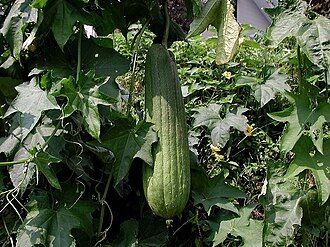
 ‘Uncle Carl’ (カールおじさん). / CC BY-SA 3.0
Luffa
Luffa aegyptiaca
Overview
The natural sponge that grows on a vine — luffa is a tropical gourd that can be eaten young like zucchini or left to mature into the fibrous bath sponges found in every health store. Young luffa gourds are a popular vegetable across Asia, with a mild, slightly sweet flavor. The mature dried skeleton is one of the most sustainable alternatives to synthetic sponges.
Growing Conditions
How to Grow Luffa
Luffa (Luffa aegyptiaca) is a vine that grows to about 1.5 feet tall and 13 feet wide.
To grow luffa, give it full sun. It is hardy across USDA hardiness zones 7–11. Plant it in rich, well-drained, warm soil with plenty of organic matter, at a slightly acidic pH of 6–6.8. It does best with even, moderate watering.
Exact sowing, transplanting, and harvest months shift by climate zone — the planting calendar below lays them out for cool through hot regions. Its flowers appear from May through August, offering high value to pollinators. It feeds two tables at once: yours and the pollinators’.
Companion Planting & Soil
Luffa grows well alongside corn, bean, sunflower, and marigold.
Good Companions
Planting Calendar
When to sow, transplant, and harvest by growing zone.
| Zone | Action | Months | Notes |
|---|---|---|---|
| Cold (1-2) | Start Indoors | Mar — Apr | Start indoors 6-8 weeks early; nick seed coat; needs 150-200 frost-free days |
| Cold (1-2) | Transplant | Jun — Jun | Transplant after all frost to south-facing wall; needs strong trellis |
| Cold (1-2) | Harvest | Sep — Oct | Let fruit dry on vine until brown and light; peel skin to reveal sponge |
| Cool (3-4) | Start Indoors | Feb — Mar | Start indoors; long season crop |
| Cool (3-4) | Transplant | May — Jun | Transplant to warmest spot; vigorous vine needs 10+ feet of trellis |
| Cool (3-4) | Harvest | Sep — Oct | Harvest when skin turns brown; shake out seeds; rinse and dry sponge |
| Moderate (5-7) | Start Indoors | Mar — Apr | Start indoors 4-6 weeks early |
| Moderate (5-7) | Transplant | May — May | Transplant when soil is warm; grows like a large cucumber |
| Moderate (5-7) | Harvest | Sep — Nov | Leave on vine until dry; for eating, harvest young at 6-8 inches |
| Warm (8-9) | Direct Sow | Mar — Apr | Direct sow in spring; soak seeds 24 hours; full sun |
| Warm (8-9) | Harvest | Jul — Nov | Eat young fruit; or dry mature fruit for sponges |
| Hot (10+) | Direct Sow | Feb — Mar | Direct sow in early spring; thrives in heat and humidity |
| Hot (10+) | Harvest | Jun — Nov | Long harvest season; eat young or dry for sponges |
Uses
In the Kitchen
In the kitchen, luffa turns up in more than one form: young gourds stir-fried in Asian cuisine; added to soups and curries when young and tender; sliced and sautéed with garlic and soy sauce.
Medicinal & Folk Use
In herbal and folk tradition, it has been valued in several ways: traditional Chinese medicine use for chest congestion and detox; sap used topically for skin conditions in folk medicine. These are traditional uses, not medical advice.
Beyond the Garden
Luffa earns its keep past the plate, too: mature gourds dried as natural bath and kitchen sponges; sustainable alternative to synthetic sponges and scrubbers.
Safety Notes
Only young fruit is edible; mature fruit becomes fibrous and inedible.
The Field Library
Books from the Futurespore shelf that go deeper on plants like this one.
- The Modern Herbal Dispensatory a working reference for tinctures, salves, and doses once you get serious
- Edible Wild Plants a photographic guide organized by season — good for checking an ID twice in the field
- The Resilient Gardener growing staple food through drought, flood, and hard seasons
These are Bookshop.org affiliate links — they support independent bookstores and earn Futurespore a small commission at no extra cost to you. Browse the full Futurespore Bookshelf.