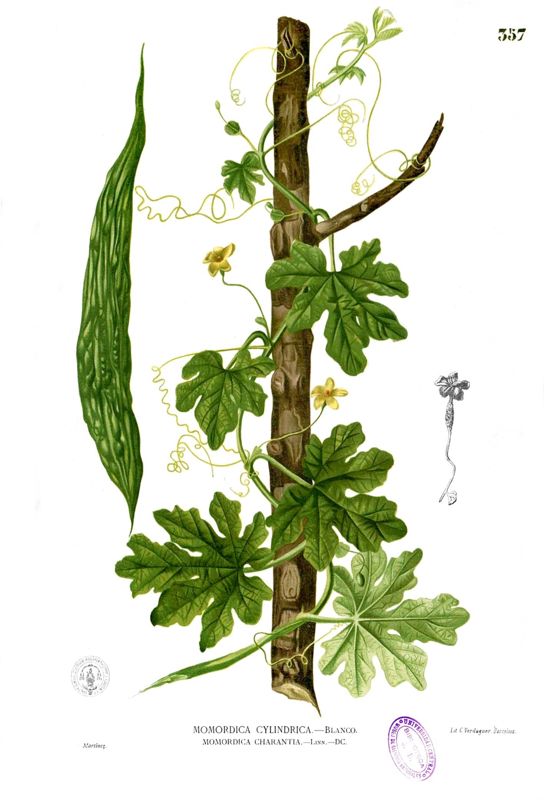
 Francisco Manuel Blanco (O.S.A.) / Public domain · Source
Bitter melon
Momordica charantia
Overview
A tropical vine producing warty, oblong fruits with an intensely bitter flavor that is central to cuisines across Asia and the Caribbean. Bitter melon is one of the most studied plants for blood sugar regulation, used for centuries in Ayurvedic, Chinese, and traditional medicine. The bitterness mellows with cooking, and the fruit is often stuffed, stir-fried, or added to curries.
Growing Conditions
How to Grow Bitter melon
Bitter melon (Momordica charantia) is a vine that grows to about 1.5 feet tall and 10 feet wide.
To grow bitter melon, give it full sun. It is hardy across USDA hardiness zones 9–11. Plant it in rich, well-drained, sandy loam with plenty of organic matter, at a slightly acidic pH of 5.5–6.7. It does best with even, moderate watering.
Exact sowing, transplanting, and harvest months shift by climate zone — the planting calendar below lays them out for cool through hot regions. Its flowers appear from May through August, offering moderate value to pollinators. Give it what it asks for here, and it will find its place in the garden.
Companion Planting & Soil
Bitter melon grows well alongside corn, bean, sunflower, and marigold.
Good Companions
Planting Calendar
When to sow, transplant, and harvest by growing zone.
| Zone | Action | Months | Notes |
|---|---|---|---|
| Cold (1-2) | Start Indoors | Mar — Apr | Start indoors 4-6 weeks early; soak seeds 24 hours; needs trellis |
| Cold (1-2) | Transplant | Jun — Jun | Transplant after all frost; needs 80+ days of warm weather |
| Cold (1-2) | Harvest | Aug — Sep | Harvest when fruit is green and 4-8" long; turns orange when overripe |
| Cool (3-4) | Start Indoors | Mar — Apr | Start indoors; tropical vine needs warmth |
| Cool (3-4) | Transplant | May — Jun | Transplant after last frost; full sun; trellis to 6 feet |
| Cool (3-4) | Harvest | Jul — Sep | Pick while green and firm; bitterness increases with maturity |
| Moderate (5-7) | Direct Sow | May — Jun | Direct sow after soil warms to 70°F; soak seeds first |
| Moderate (5-7) | Harvest | Jul — Oct | Harvest every 2-3 days; fruit matures quickly in heat |
| Warm (8-9) | Direct Sow | Mar — May | Direct sow in spring; common in Asian gardens |
| Warm (8-9) | Harvest | May — Oct | Long harvest; pick when still green |
| Hot (10+) | Direct Sow | Feb — Apr | Direct sow in spring; thrives in tropical heat |
| Hot (10+) | Harvest | Apr — Nov | Extended harvest; traditional medicinal and culinary use |
Uses
In the Kitchen
In the kitchen, bitter melon turns up in more than one form: stir-fried with eggs, pork, or fermented black beans; stuffed with spiced meat and braised; sliced thin, salted, and added to salads in Southeast Asia.
Medicinal & Folk Use
In herbal and folk tradition, it has been valued in several ways: extensively studied for blood sugar regulation in type 2 diabetes; rich in charantin and polypeptide-p, insulin-like compounds; traditional use for digestive health and parasite control. These are traditional uses, not medical advice.
Beyond the Garden
Bitter melon earns its keep past the plate, too: ornamental vine with bright orange-red seed arils when ripe.
Safety Notes
Eat only the flesh of green fruit — the seeds and the red arils of ripe fruit are toxic. Bitter melon genuinely lowers blood sugar: if you take diabetes medication, talk to your doctor before eating it regularly. Avoid during pregnancy.
The Field Library
Books from the Futurespore shelf that go deeper on plants like this one.
- Northeast Foraging region-tuned wild food guidance with clear lookalike warnings
- Braiding Sweetgrass reframes growing and gathering as a relationship of reciprocity
These are Bookshop.org affiliate links — they support independent bookstores and earn Futurespore a small commission at no extra cost to you. Browse the full Futurespore Bookshelf.