Overview
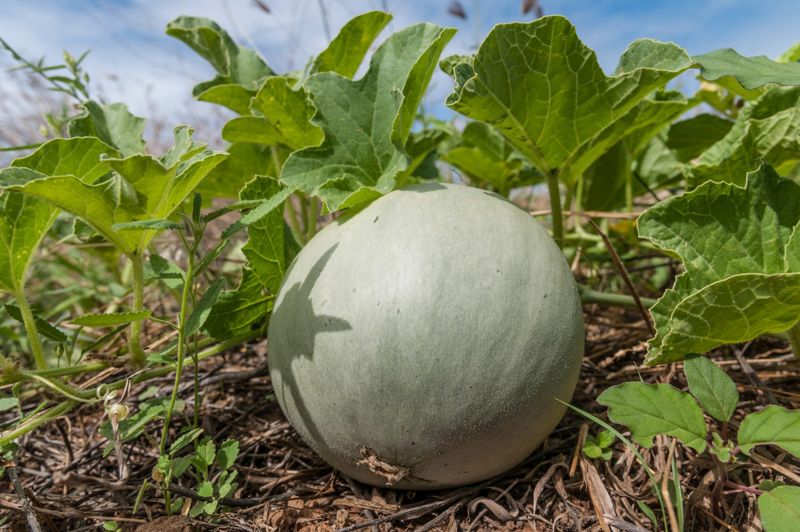
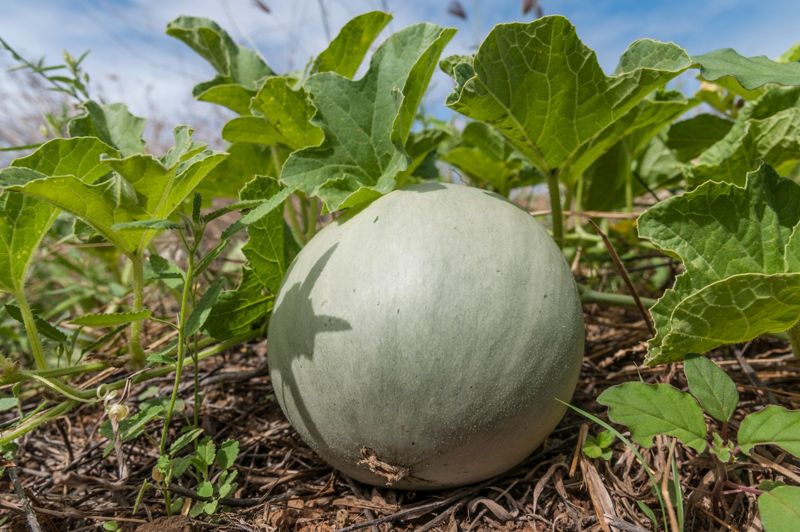
A warmth-loving melon whose sweet, aromatic orange flesh is one of summer's greatest pleasures. True cantaloupes have rough, netted skin and a musky fragrance when ripe that signals their readiness to eat. They originated in Persia and India, and their sweetness is directly tied to warm days, cool nights, and careful irrigation management.
Growing Conditions
How to Grow Cantaloupe
Cantaloupe (Cucumis melo) is a forb/herb that grows to about 5 feet tall and 5 feet wide.
To grow cantaloupe, give it full sun. It is hardy across USDA hardiness zones 10–13. Plant it in sandy, well-drained loam rich in organic matter, at a slightly acidic pH of 6–6.8. It does best with even, moderate watering.
Exact sowing, transplanting, and harvest months shift by climate zone — the planting calendar below lays them out for cool through hot regions. Its flowers appear from May through August, offering high value to pollinators. It feeds two tables at once: yours and the pollinators’.
Companion Planting & Soil
Cantaloupe grows well alongside corn, sunflower, radish, marigold, and nasturtium — but keep it clear of potato and cucumber.
Good Companions
Avoid Planting Near
Planting Calendar
When to sow, transplant, and harvest by growing zone.
| Zone | Action | Months | Notes |
|---|---|---|---|
| Cold (1-2) | Start Indoors | Apr — May | Start indoors 3-4 weeks before last frost; use peat pots |
| Cold (1-2) | Transplant | Jun — Jun | Transplant after soil is 65°F; use black plastic mulch |
| Cold (1-2) | Harvest | Aug — Sep | Harvest when stem slips easily from fruit; fragrant at blossom end |
| Cool (3-4) | Start Indoors | Mar — Apr | Start indoors 4 weeks before transplant |
| Cool (3-4) | Transplant | May — Jun | Transplant after soil reaches 65°F; short-season varieties |
| Cool (3-4) | Harvest | Aug — Sep | Ripe when stem separates with gentle pressure |
| Moderate (5-7) | Direct Sow | May — Jun | Direct sow when soil is 65°F; needs 80-100 warm days |
| Moderate (5-7) | Harvest | Jul — Sep | Harvest when aromatic and stem slips |
| Warm (8-9) | Direct Sow | Mar — Apr | Direct sow in spring; plenty of warm days |
| Warm (8-9) | Harvest | Jun — Aug | Harvest when fragrant; netting turns tan |
| Hot (10+) | Direct Sow | Feb — Mar | Sow early spring; harvest before extreme heat |
| Hot (10+) | Harvest | May — Jul | Harvest before extreme heat sets in |
Uses
In the Kitchen
In the kitchen, cantaloupe turns up in more than one form: fresh sliced or in fruit salads; blended into agua fresca and smoothies; wrapped in prosciutto as an appetizer.
Medicinal & Folk Use
In herbal and folk tradition, it has been valued in several ways: rich in beta-carotene and vitamin C for immune support; high water content supports hydration; contains adenosine, which may have blood-thinning properties. These are traditional uses, not medical advice.
Beyond the Garden
Cantaloupe earns its keep past the plate, too: seeds can be dried and roasted for snacking.
Safety Notes
Wash and scrub the rind before cutting: cantaloupe rinds can carry Listeria and Salmonella, which the knife drags into the flesh — the cause of several deadly outbreaks. Refrigerate cut melon promptly.
The Field Library
Books from the Futurespore shelf that go deeper on plants like this one.
- The Modern Herbal Dispensatory a working reference for tinctures, salves, and doses once you get serious
- Edible Wild Plants a photographic guide organized by season — good for checking an ID twice in the field
- The Resilient Gardener growing staple food through drought, flood, and hard seasons
These are Bookshop.org affiliate links — they support independent bookstores and earn Futurespore a small commission at no extra cost to you. Browse the full Futurespore Bookshelf.