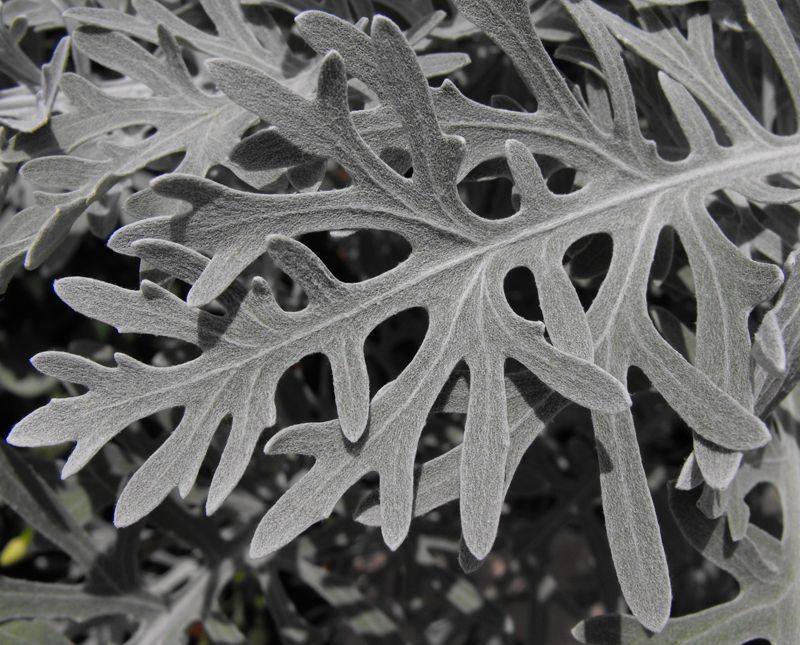
 Stickpen / Public domain · Source
Dusty miller
Centaurea cineraria
Overview
A silvery-white foliage plant whose felt-like, deeply divided leaves provide dramatic contrast in garden beds and containers. The dense, woolly coating that gives dusty miller its characteristic silver appearance is actually an adaptation to Mediterranean coastal conditions, protecting it from salt spray and intense sun. It is invaluable as a foliage filler in both garden design and floral arrangements.
Growing Conditions
How to Grow Dusty miller
Dusty miller (Centaurea cineraria) is a forb/herb that grows to about 2 feet tall and 3 feet wide.
Dusty miller is hardy across USDA hardiness zones 5–9. Plant it in well-drained, average to lean soil; drought-tolerant, at a slightly acidic pH of 5.5–7.5.
Exact sowing, transplanting, and harvest months shift by climate zone — the planting calendar below lays them out for cool through hot regions. Its flowers appear from July through September, offering high value to pollinators. The details above are a starting point — your ground will teach you the rest.
Companion Planting & Soil
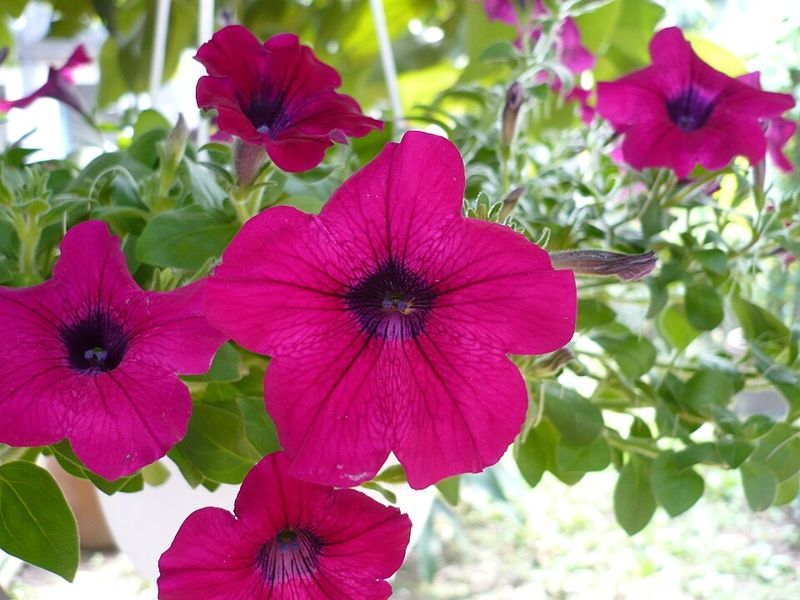
Dusty miller grows well alongside petunia, salvia, marigold, and geranium.
Good Companions
Planting Calendar
When to sow, transplant, and harvest by growing zone.
| Zone | Action | Months | Notes |
|---|---|---|---|
| Cold (1-2) | Start Indoors | Feb — Mar | Start indoors 8-10 weeks early; grown for silvery foliage; annual |
| Cold (1-2) | Transplant | Jun — Jun | Transplant after frost; silvery foliage contrasts with bright flowers |
| Cold (1-2) | Bloom | Jun — Sep | Grown for foliage; remove small yellow flowers to keep plants compact |
| Cool (3-4) | Transplant | May — May | Transplant after last frost; drought tolerant once established |
| Cool (3-4) | Bloom | May — Oct | Silvery foliage all season; excellent in moon gardens |
| Moderate (5-7) | Transplant | Mar — Apr | Transplant in spring; may overwinter in zone 7+ |
| Moderate (5-7) | Bloom | Apr — Nov | Season-long foliage interest; tolerates drought and salt spray |
| Warm (8-9) | Transplant | Feb — Mar | Plant in late winter; perennial in zones 8-10 |
| Warm (8-9) | Bloom | Jan — Dec | Year-round silver foliage in warm zones |
| Hot (10+) | Transplant | Oct — Nov | Plant in fall; evergreen perennial in hot zones; remove yellow flowers |
| Hot (10+) | Bloom | Jan — Dec | Evergreen; pinch flowers for best foliage |
Uses
Beyond the Garden
Dusty miller earns its keep past the plate, too: silver foliage contrast plant in bedding and containers; drought-tolerant filler for coastal and xeriscape gardens; cut foliage for floral arrangements and wreaths.
The Field Library
Books from the Futurespore shelf that go deeper on plants like this one.
- The Resilient Gardener growing staple food through drought, flood, and hard seasons
- Braiding Sweetgrass reframes growing and gathering as a relationship of reciprocity
These are Bookshop.org affiliate links — they support independent bookstores and earn Futurespore a small commission at no extra cost to you. Browse the full Futurespore Bookshelf.