 Daderot / CC0 · Source
Garlic
Allium sativum
Overview
Possibly the most important culinary and medicinal plant in human history, garlic has been used for over 5,000 years across virtually every culture on earth. Each head contains multiple cloves, each capable of growing into a new plant, making garlic one of the easiest crops to propagate. Hardneck varieties produce flavorful scapes (flower stalks) that are a prized seasonal delicacy.
Growing Conditions
How to Grow Garlic
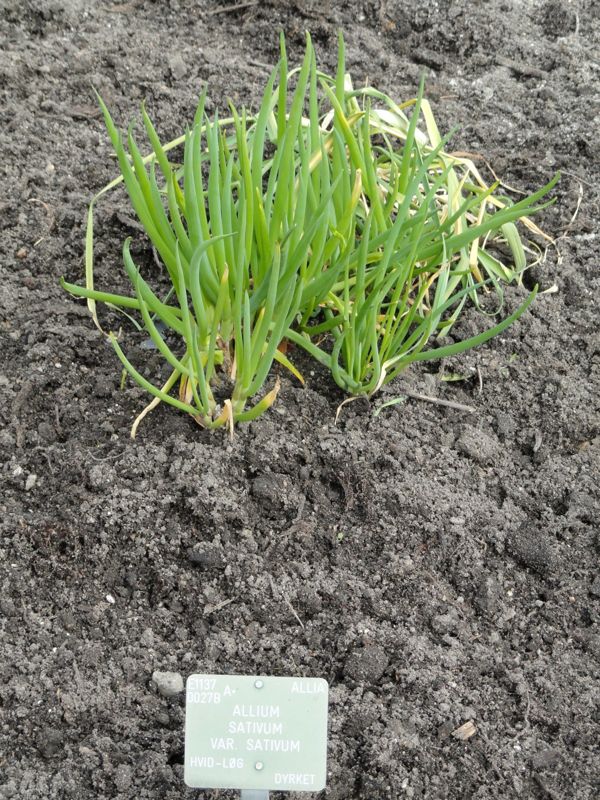
Garlic (Allium sativum) is a perennial forb/herb that grows to about 2 feet tall and 6 inches wide.
To grow garlic, give it full sun. It is hardy across USDA hardiness zones 3–10. Plant it in rich, well-drained, loamy soil with good fertility, at a slightly acidic pH of 6–7. It does best with even, moderate watering.
Exact sowing, transplanting, and harvest months shift by climate zone — the planting calendar below lays them out for cool through hot regions. Its flowers appear from May through June, offering high value to pollinators. Food and forage in one stand — plant it where both you and the pollinators can reach.
Companion Planting & Soil
Garlic grows well alongside rose, tomato, pepper, carrot, and fruit trees — but keep it clear of bean, pea, asparagus, and sage.
Good Companions
Avoid Planting Near
Planting Calendar
When to sow, transplant, and harvest by growing zone.
| Zone | Action | Months | Notes |
|---|---|---|---|
| Cold (1-2) | Direct Sow | Sep — Oct | Plant cloves 2" deep in fall; mulch heavily before freeze |
| Cold (1-2) | Harvest | Jul — Aug | Harvest when lower 3-4 leaves turn brown; cure 2 weeks |
| Cool (3-4) | Direct Sow | Sep — Oct | Plant cloves in fall; 4-6" apart |
| Cool (3-4) | Harvest | Jun — Jul | Harvest when lower leaves brown; cure in shade 2 weeks |
| Moderate (5-7) | Direct Sow | Oct — Nov | Plant in fall; needs 6-8 weeks before ground freezes |
| Moderate (5-7) | Harvest | Jun — Jul | Harvest when lower leaves brown; cure 2-3 weeks |
| Warm (8-9) | Direct Sow | Oct — Dec | Plant in fall; softneck varieties recommended |
| Warm (8-9) | Harvest | May — Jun | Harvest when lower leaves brown |
| Hot (10+) | Direct Sow | Nov — Jan (wraps) | Plant in late fall/winter; softneck varieties only |
| Hot (10+) | Harvest | Apr — May | Harvest in late spring before heat |
Uses
In the Kitchen
In the kitchen, garlic turns up in more than one form: foundation ingredient in cuisines worldwide; scapes used in pesto, stir-fries, and pickles; roasted whole as a spread or condiment.
Medicinal & Folk Use
In herbal and folk tradition, it has been valued in several ways: allicin provides broad-spectrum antimicrobial activity; supports cardiovascular health and blood pressure regulation; traditional immune tonic and cold remedy. These are traditional uses, not medical advice.
Beyond the Garden
Garlic earns its keep past the plate, too: companion plant that deters aphids, Japanese beetles, and fungal diseases; planted around roses and fruit trees for pest prevention.
Safety Notes
Safe. Raw garlic can cause heartburn/digestive upset. When preserving in oil, refrigerate immediately — room temperature garlic-in-oil can grow botulism.
The Field Library
Books from the Futurespore shelf that go deeper on plants like this one.
- The Modern Herbal Dispensatory a working reference for tinctures, salves, and doses once you get serious
- Edible Wild Plants a photographic guide organized by season — good for checking an ID twice in the field
- The Resilient Gardener growing staple food through drought, flood, and hard seasons
These are Bookshop.org affiliate links — they support independent bookstores and earn Futurespore a small commission at no extra cost to you. Browse the full Futurespore Bookshelf.