 George Chernilevsky / Public domain · Source
Pepper (Sweet & Hot)
Capsicum annuum
Overview
From sweet bell to fiery habanero, peppers offer the widest flavor range of any single species. All Capsicum annuum varieties (jalapeño, bell, cayenne, poblano, serrano) share the same growing requirements. Loves heat and consistent moisture. Mature, fully-colored peppers contain dramatically more vitamins than green-stage fruit.
Mentioned in The Mycelial Grimoire
Posts on the Grimoire that reference Pepper (Sweet & Hot).
Growing Conditions
How to Grow Pepper (Sweet & Hot)
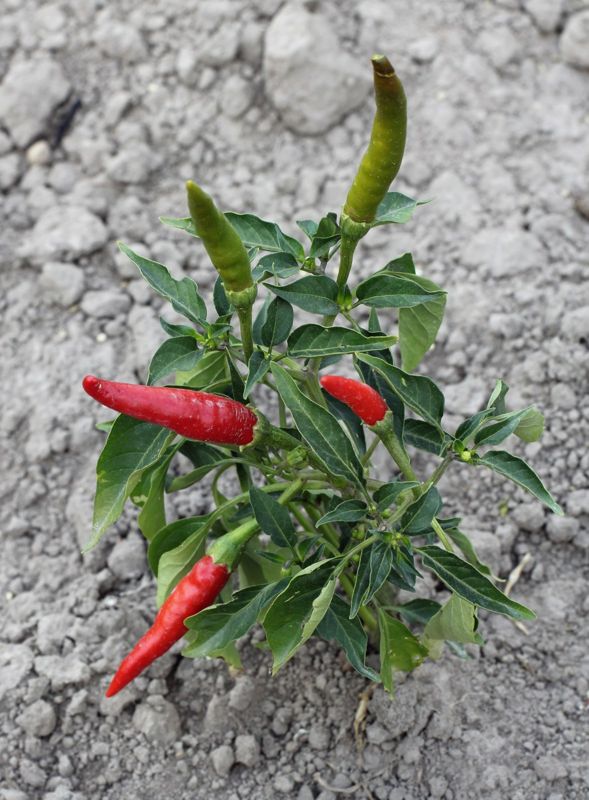
Pepper (Sweet & Hot) (Capsicum annuum) is a bushy perennial (grown as annual in cold climates) that grows to about 2.5 feet tall and 1.5 feet wide.
To grow pepper (sweet & hot), give it full sun. It is hardy across USDA hardiness zones 9–11. Plant it in rich, well-drained loam with consistent moisture, at a slightly acidic pH of 6–6.8. It does best with even, moderate watering.
Exact sowing, transplanting, and harvest months shift by climate zone — the planting calendar below lays them out for cool through hot regions. Its white flowers appear from June through September, offering moderate value to pollinators. Come to it with patience — its value is the kind that rewards knowing.
Companion Planting & Soil
Pepper (Sweet & Hot) grows well alongside basil, tomato, onion, carrot, and marigold — but keep it clear of fennel, brassicas, and beans.
Good Companions
Avoid Planting Near
Planting Calendar
When to sow, transplant, and harvest by growing zone.
| Zone | Action | Months | Notes |
|---|---|---|---|
| Cold (1-2) | Start Indoors | Feb — Mar | Start 8-10 weeks before last frost; needs bottom heat to germinate |
| Cold (1-2) | Transplant | Jun — Jun | Wait for nights above 55°F; protect from wind |
| Cold (1-2) | Harvest | Aug — Oct | Pick green or wait for full color (sweeter, more nutritious) |
| Cool (3-4) | Start Indoors | Jan — Feb | Start very early — peppers are slow |
| Cool (3-4) | Transplant | May — Jun | Soil must be 65°F+ for good growth |
| Cool (3-4) | Harvest | Jul — Oct | Continuous harvest extends production through fall |
| Moderate (5-7) | Transplant | Apr — May | Plant after last frost; stake taller varieties |
| Moderate (5-7) | Harvest | Jul — Oct | Picking encourages more fruit set; ripe colors are sweeter |
| Warm (8-9) | Transplant | Mar — Apr | Plant in spring; provide afternoon shade in peak heat |
| Warm (8-9) | Harvest | Jun — Nov | Long harvest season; some varieties produce 2 years |
| Hot (10+) | Transplant | Feb — Mar | Winter planting for spring harvest; perennial in zone 10+ |
| Hot (10+) | Harvest | May — Dec | Year-round in zone 10+; provide shade in peak summer |
Uses
In the Kitchen
In the kitchen, pepper (sweet & hot) turns up in more than one form: fresh, roasted, stuffed, pickled, or fermented (hot sauce); dried and ground into paprika, cayenne, chipotle powders; stuffed bell peppers; fresh jalapeño on tacos.
Medicinal & Folk Use
In herbal and folk tradition, it has been valued in several ways: capsaicin used topically for pain relief and arthritis; rich in vitamin C — more than citrus per gram. These are traditional uses, not medical advice.
Beyond the Garden
Pepper (Sweet & Hot) earns its keep past the plate, too: ornamental varieties grown for colorful fruit displays.
Safety Notes
Capsaicin in hot peppers can irritate skin and eyes — wear gloves when processing hot varieties.
The Field Library
Books from the Futurespore shelf that go deeper on plants like this one.
- The Modern Herbal Dispensatory a working reference for tinctures, salves, and doses once you get serious
- Edible Wild Plants a photographic guide organized by season — good for checking an ID twice in the field
- The Resilient Gardener growing staple food through drought, flood, and hard seasons
These are Bookshop.org affiliate links — they support independent bookstores and earn Futurespore a small commission at no extra cost to you. Browse the full Futurespore Bookshelf.