Nasturtium
Tropaeolum majus
Overview
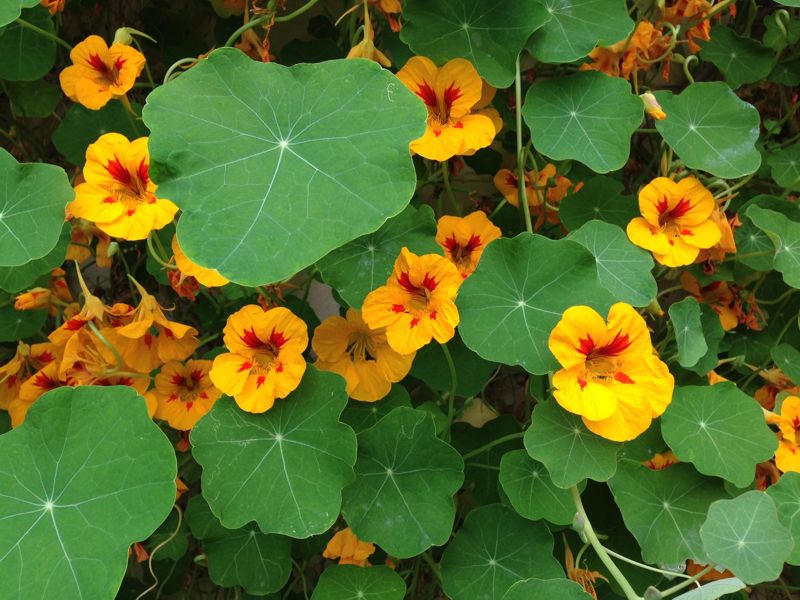
One of the most useful plants in the garden, nasturtium serves as a trap crop for aphids, a companion plant for vegetables, and a beautiful edible flower all at once. Every part is edible — the peppery leaves and flowers brighten salads, and the green seed pods can be pickled as 'poor man's capers.' Nasturtiums thrive in poor soil, where they bloom most prolifically.
Mentioned in The Mycelial Grimoire
Posts on the Grimoire that reference Nasturtium.
Growing Conditions
How to Grow Nasturtium
Nasturtium (Tropaeolum majus) is an annual forb/herb that grows to about 12 inches tall and 1.5 feet wide.
To grow nasturtium, give it full sun. It is hardy across USDA hardiness zones 4–11. Plant it in average to poor, well-drained soil (rich soil produces leaves over flowers), at a slightly acidic pH of 6–7.5. It does best with dry, sharply drained conditions.
Exact sowing, transplanting, and harvest months shift by climate zone — the planting calendar below lays them out for cool through hot regions. It feeds two tables at once: yours and the pollinators’.
Companion Planting & Soil
Nasturtium grows well alongside tomato, cucumber, squash, cabbage, and fruit trees.
Good Companions
Planting Calendar
When to sow, transplant, and harvest by growing zone.
| Zone | Action | Months | Notes |
|---|---|---|---|
| Cold (1-2) | Direct Sow | Jun — Jun | Direct sow after frost; edible flowers and leaves |
| Cool (3-4) | Direct Sow | May — Jun | Direct sow after frost |
| Moderate (5-7) | Direct Sow | Apr — May | Direct sow after frost; nick seeds first |
| Warm (8-9) | Direct Sow | Mar — Apr | Direct sow in spring |
| Hot (10+) | Direct Sow | Feb — Mar | Direct sow; also fall planting Oct-Nov |
Uses
In the Kitchen
In the kitchen, nasturtium turns up in more than one form: peppery leaves and flowers in salads; green seed pods pickled as capers substitute; flowers stuffed with herbed cream cheese.
Medicinal & Folk Use
In herbal and folk tradition, it has been valued in several ways: natural antibiotic with glucotropaeolin, a potent antimicrobial compound; traditionally used for urinary tract and respiratory infections; high in vitamin C and lutein. These are traditional uses, not medical advice.
Beyond the Garden
Nasturtium earns its keep past the plate, too: trap crop that lures aphids away from vegetables; companion plant that deters whiteflies, squash bugs, and beetles; vigorous trailing ground cover and container spiller.
Safety Notes
Edible flowers and leaves. Contains oxalic acid; eat in moderation. Avoid in large quantities if prone to kidney stones.
The Field Library
Books from the Futurespore shelf that go deeper on plants like this one.
- The Modern Herbal Dispensatory a working reference for tinctures, salves, and doses once you get serious
- Edible Wild Plants a photographic guide organized by season — good for checking an ID twice in the field
- The Resilient Gardener growing staple food through drought, flood, and hard seasons
These are Bookshop.org affiliate links — they support independent bookstores and earn Futurespore a small commission at no extra cost to you. Browse the full Futurespore Bookshelf.