Geranium
Geranium nepalense
Overview
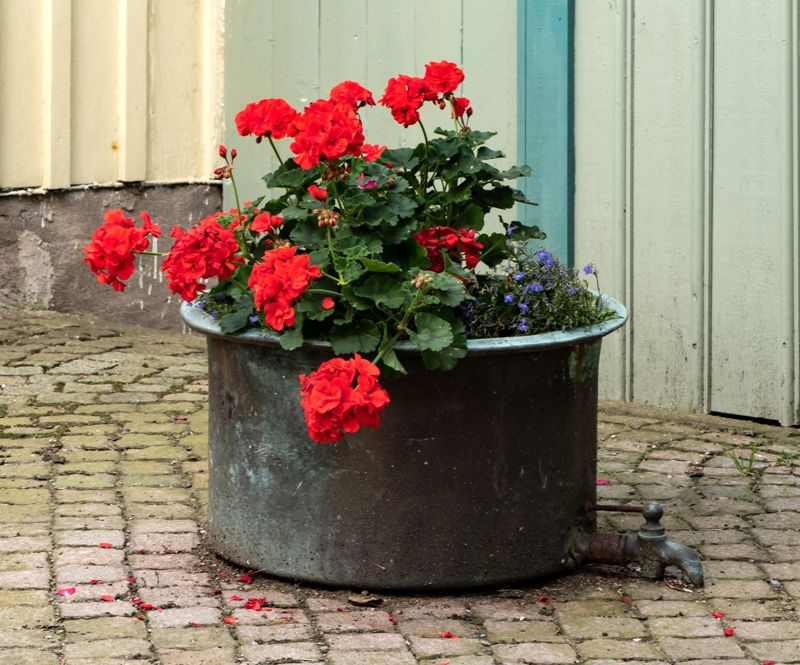
The term 'geranium' encompasses both true hardy geraniums (cranesbills) and the tender Pelargoniums commonly grown as annuals. Scented-leaf geraniums offer an astonishing range of fragrances including rose, lemon, mint, chocolate, and nutmeg, all from rubbing their aromatic foliage. Hardy cranesbills are tough, long-blooming ground covers, while Pelargoniums are classic window box and container plants.
Growing Conditions
How to Grow Geranium
Geranium (Geranium nepalense) is a forb/herb that grows to about 3 feet tall and 1.5 feet wide.
To grow geranium, give it full sun. It is hardy across USDA hardiness zones 7–11. Plant it in well-drained, moderately fertile soil, at a slightly acidic pH of 6–7. It does best with even, moderate watering.
Exact sowing, transplanting, and harvest months shift by climate zone — the planting calendar below lays them out for cool through hot regions. Its flowers appear from May through August, offering high value to pollinators. Food and forage in one stand — plant it where both you and the pollinators can reach.
Companion Planting & Soil
Geranium grows well alongside rose, grape, corn, and pepper.
Good Companions
Planting Calendar
When to sow, transplant, and harvest by growing zone.
| Zone | Action | Months | Notes |
|---|---|---|---|
| Cold (1-2) | Start Indoors | Jan — Feb | Start indoors 12-14 weeks before last frost; slow grower from seed |
| Cold (1-2) | Transplant | Jun — Jun | Transplant after all frost; take cuttings in fall to overwinter indoors |
| Cold (1-2) | Bloom | Jun — Sep | Bloom until frost; remove faded flower clusters at base of stem |
| Cool (3-4) | Transplant | May — May | Transplant after last frost; deadhead regularly for continuous bloom |
| Cool (3-4) | Bloom | May — Oct | Long bloom; excellent on patios and balconies |
| Moderate (5-7) | Transplant | Apr — May | Transplant in spring; classic container, window box, and bedding plant |
| Moderate (5-7) | Bloom | Apr — Nov | Continuous bloom with deadheading; allow soil to dry between waterings |
| Warm (8-9) | Transplant | Mar — Apr | Plant in spring; may need afternoon shade in hottest areas |
| Warm (8-9) | Bloom | Mar — Jun | Spring bloom; may stall in summer heat then rebloom in fall |
| Warm (8-9) | Bloom | Sep — Dec | Fall rebloom |
| Hot (10+) | Transplant | Feb — Mar | Plant in early spring; or grow as fall/winter annual in hottest zones |
| Hot (10+) | Bloom | Oct — Apr (wraps) | Cool-season bloom; best fall through spring |
Uses
In the Kitchen
In the kitchen, geranium turns up in more than one form: scented-leaf varieties flavor cakes, jellies, and sugar; rose geranium leaves layered in cake pans for flavor; flowers used as edible garnish.
Medicinal & Folk Use
In herbal and folk tradition, it has been valued in several ways: rose geranium essential oil used for anxiety and skin care; traditional astringent for wound care and inflammation; aromatherapy for stress relief and hormonal balance. These are traditional uses, not medical advice.
Beyond the Garden
Geranium earns its keep past the plate, too: classic window box and container plant; scented varieties used as natural air fresheners; hardy cranesbills are excellent ground covers.
Safety Notes
A naming trap: the 'rose geraniums' and scented geraniums used to flavour cakes and sugars are Pelargonium, a different genus from this hardy cranesbill despite sharing the common name. Hardy geraniums are not grown as food. If a recipe calls for geranium leaves it means a scented Pelargonium, and only pesticide-free plants grown for the kitchen.
The Field Library
Books from the Futurespore shelf that go deeper on plants like this one.
- The Modern Herbal Dispensatory a working reference for tinctures, salves, and doses once you get serious
- Edible Wild Plants a photographic guide organized by season — good for checking an ID twice in the field
- The Resilient Gardener growing staple food through drought, flood, and hard seasons
These are Bookshop.org affiliate links — they support independent bookstores and earn Futurespore a small commission at no extra cost to you. Browse the full Futurespore Bookshelf.