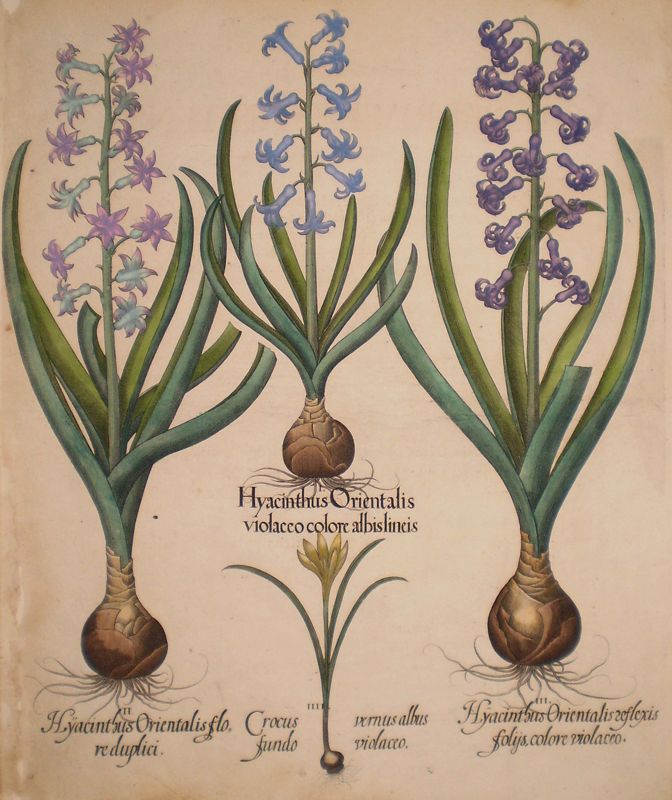
 Basilius Besler / Public domain · Source
Hyacinth
Hyacinthus orientalis
Overview
Spring-blooming bulbs famous for their intoxicating fragrance, hyacinths produce dense spikes of bell-shaped flowers in vivid blues, purples, pinks, whites, and yellows. A single hyacinth can perfume an entire room, making them popular for indoor forcing. All parts are toxic, containing oxalic acid that can irritate skin, so gloves are recommended when handling bulbs.
Growing Conditions
How to Grow Hyacinth
Hyacinth (Hyacinthus orientalis) is a forb/herb that grows to about 12 inches tall and 4 inches wide.
To grow hyacinth, give it partial sun to partial shade. It is hardy across USDA hardiness zones 5–9. Plant it in well-drained, moderately fertile, sandy loam, at a slightly acidic pH of 6–7. It does best with even, moderate watering.
Exact sowing, transplanting, and harvest months shift by climate zone — the planting calendar below lays them out for cool through hot regions. Its flowers appear from May through June, offering high value to pollinators. Handle it with the respect a defended plant has earned — read the safety notes first.
Companion Planting & Soil
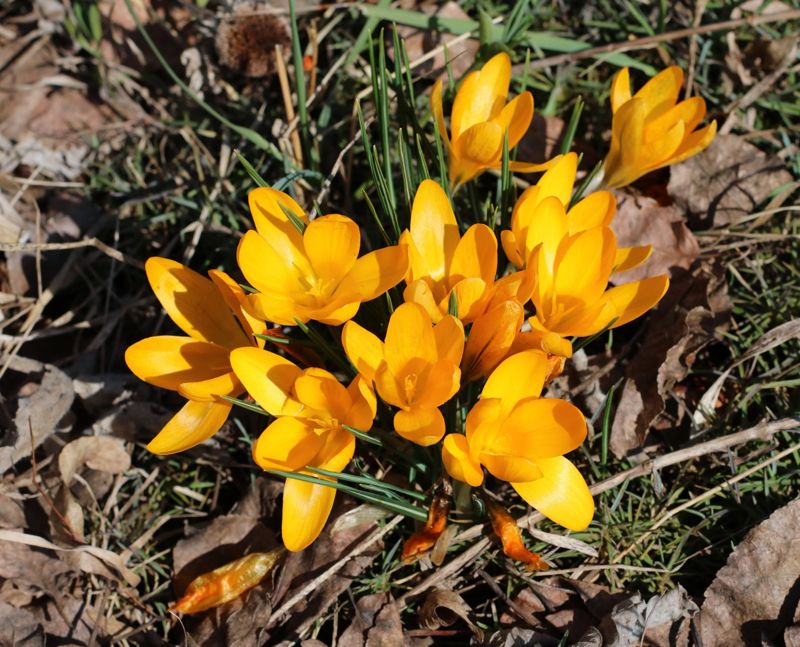
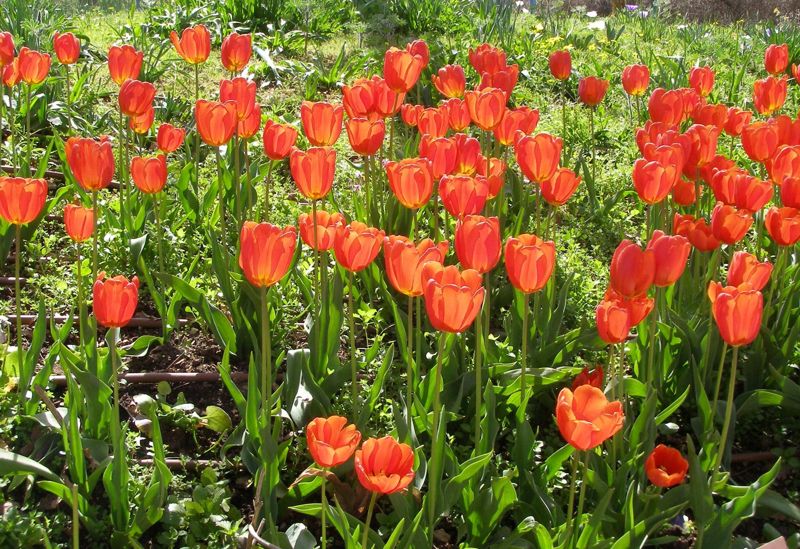
Hyacinth grows well alongside tulip, daffodil, and crocus.
Good Companions
Planting Calendar
When to sow, transplant, and harvest by growing zone.
| Zone | Action | Months | Notes |
|---|---|---|---|
| Cold (1-2) | Transplant | Sep — Oct | Plant bulbs in fall 6" deep; intensely fragrant; needs cold to bloom |
| Cold (1-2) | Bloom | Apr — May | Mid-spring bloom; dense flower spike; one of the most fragrant bulbs |
| Cool (3-4) | Transplant | Sep — Oct | Plant in fall; fragrance is overpowering indoors — excellent forced bulb |
| Cool (3-4) | Bloom | Mar — Apr | Spring bloom; good cut flower; sap can irritate skin |
| Moderate (5-7) | Transplant | Oct — Nov | Plant in fall; flower spikes become looser/shorter after first year |
| Moderate (5-7) | Bloom | Mar — Apr | Early-mid spring bloom; flower loosens after first year but still blooms |
| Warm (8-9) | Transplant | Nov — Dec | Pre-chill bulbs 8-12 weeks; grow as annual in warm zones |
| Warm (8-9) | Bloom | Jan — Feb | Late winter bloom from pre-chilled bulbs |
| Hot (10+) | Transplant | Dec — Jan (wraps) | Pre-chill 12+ weeks; single-year bloom only |
| Hot (10+) | Bloom | Jan — Feb | Brief winter bloom; treat as annual |
Uses
Beyond the Garden
Hyacinth earns its keep past the plate, too: intensely fragrant spring garden bulb; indoor forcing for winter bloom and fragrance; formal bedding displays and container plantings.
Safety Notes
Poisonous, the sap can cause dermatitis. The toxins are concentrated in the bulb.
The Field Library
Books from the Futurespore shelf that go deeper on plants like this one.
- Braiding Sweetgrass reframes growing and gathering as a relationship of reciprocity
- Gaia's Garden home-scale permaculture — guilds, food forests, and beds that tend themselves
These are Bookshop.org affiliate links — they support independent bookstores and earn Futurespore a small commission at no extra cost to you. Browse the full Futurespore Bookshelf.