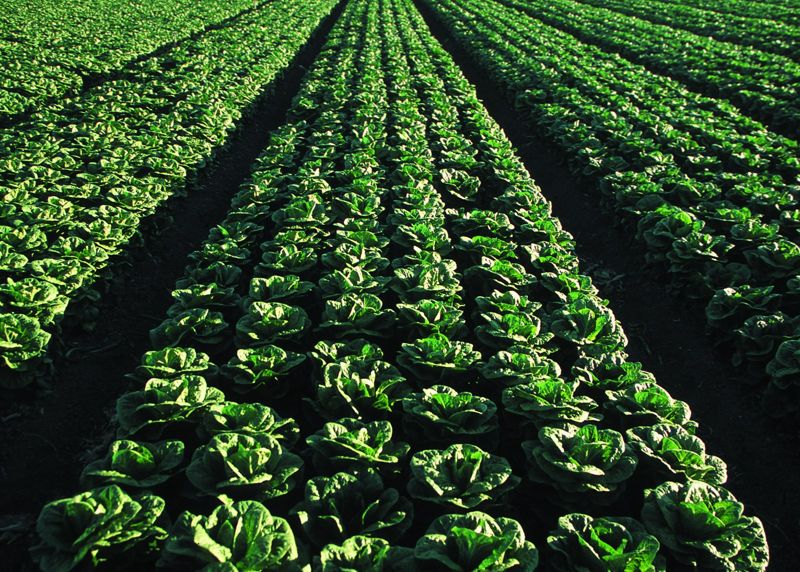
 Photo by Jeff Vanuga, USDA Natural Resources Conservation Service. / Public domain · Source
Lettuce
Lactuca sativa
Overview
The quintessential salad green. Cool-weather crop that bolts (sends up flower stalk) in summer heat, turning leaves bitter. Many varieties: butterhead (Boston, Bibb), crisphead (iceberg), loose-leaf (red leaf, oak leaf), and romaine. Loose-leaf varieties allow cut-and-come-again harvest for weeks of fresh greens.
Mentioned in The Mycelial Grimoire
Posts on the Grimoire that reference Lettuce.
Growing Conditions
How to Grow Lettuce
Lettuce (Lactuca sativa) is a rosette annual that grows to about 12 inches tall and 12 inches wide.
To grow lettuce, give it full sun, though it tolerates a little shade. It is hardy across USDA hardiness zones 2–11. Plant it in loose, moisture-retentive loam with high organic matter, at a slightly acidic pH of 6–7. It does best with even, moderate watering.
Exact sowing, transplanting, and harvest months shift by climate zone — the planting calendar below lays them out for cool through hot regions. Here and gone in a year — save a little seed, and you carry it into the next.
Companion Planting & Soil
Lettuce grows well alongside carrot, radish, cucumber, strawberry, and onion — but keep it clear of celery, parsley, and brassicas (heavy feeders).
Good Companions
Avoid Planting Near
Planting Calendar
When to sow, transplant, and harvest by growing zone.
| Zone | Action | Months | Notes |
|---|---|---|---|
| Cold (1-2) | Direct Sow | Apr — May | Sow as soon as soil is workable; tolerates light frost |
| Cold (1-2) | Direct Sow | Aug — Aug | Late summer sowing for fall crop |
| Cold (1-2) | Harvest | May — Jul | Cut outer leaves or whole head; harvest before flower stalk forms |
| Cool (3-4) | Direct Sow | Mar — May | Spring crop; succession sow every 2 weeks |
| Cool (3-4) | Direct Sow | Jul — Sep | Fall crop continues into early winter under cover |
| Cool (3-4) | Harvest | Apr — Jun | Cut-and-come-again harvest extends production |
| Moderate (5-7) | Direct Sow | Feb — Apr | Spring crop; bolts in summer heat |
| Moderate (5-7) | Direct Sow | Sep — Oct | Fall crop in cool weather |
| Moderate (5-7) | Harvest | Apr — May | Spring crop; cut whole plants before bolting in heat |
| Moderate (5-7) | Harvest | Oct — Nov | Fall crop harvest |
| Warm (8-9) | Direct Sow | Oct — Feb (wraps) | Cool-season crop in mild climates |
| Warm (8-9) | Harvest | Dec — Mar (wraps) | Winter harvest in mild climates |
| Hot (10+) | Direct Sow | Nov — Jan (wraps) | Winter crop only; needs partial shade if temperatures rise |
| Hot (10+) | Harvest | Jan — Mar | Winter harvest only |
Uses
In the Kitchen
In the kitchen, lettuce turns up in more than one form: fresh salads — base for countless preparations; wraps and sandwiches; grilled romaine hearts for warm-weather salads.
Medicinal & Folk Use
In herbal and folk tradition: mild sedative tradition (wild lettuce, L. virosa, is stronger). These are traditional uses, not medical advice.
Beyond the Garden
Lettuce earns its keep past the plate, too: save your own seed easily — lettuce self-pollinates and breeds true.
Safety Notes
Wild-harvested wild lettuce species (L. virosa) contain stronger compounds; cultivated lettuce is safe.
The Field Library
Books from the Futurespore shelf that go deeper on plants like this one.
- Northeast Foraging region-tuned wild food guidance with clear lookalike warnings
- Braiding Sweetgrass reframes growing and gathering as a relationship of reciprocity
These are Bookshop.org affiliate links — they support independent bookstores and earn Futurespore a small commission at no extra cost to you. Browse the full Futurespore Bookshelf.