Leek
Allium porrum
Overview
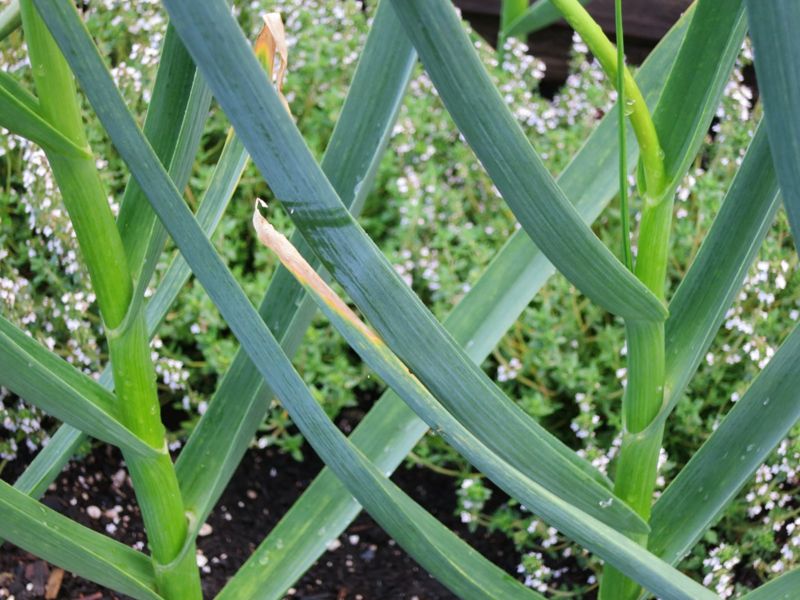
A mild, elegant allium that forms a thick white shaft rather than a bulb, leeks are a cornerstone of French and European cuisine. They take patience to grow — often 100+ days to maturity — but reward with a sweet, buttery onion flavor that is irreplaceable in soups, gratins, and braises. Leeks are also remarkably cold-hardy and can be overwintered in the garden under mulch.
Mentioned in The Mycelial Grimoire
Posts on the Grimoire that reference Leek.
Growing Conditions
How to Grow Leek
Leek (Allium porrum) is a biennial forb/herb that grows to about 2 feet tall and 6 inches wide.
To grow leek, give it full sun. It is hardy across USDA hardiness zones 3–9. Plant it in rich, deep, well-drained, moisture-retentive soil, at a slightly acidic pH of 6–7. It does best with even, moderate watering.
Exact sowing, transplanting, and harvest months shift by climate zone — the planting calendar below lays them out for cool through hot regions. Its flowers appear from May through June, offering high value to pollinators. Let a few flowers go by unpicked; the bees will thank you, and so will next season.
Companion Planting & Soil
Leek grows well alongside carrot, celery, onion, and strawberry — but keep it clear of bean and pea.
Good Companions
Avoid Planting Near
Planting Calendar
When to sow, transplant, and harvest by growing zone.
| Zone | Action | Months | Notes |
|---|---|---|---|
| Cold (1-2) | Start Indoors | Feb — Mar | Start indoors 10-12 weeks before last frost; slow grower |
| Cold (1-2) | Transplant | May — Jun | Transplant into 6" deep trenches; hill soil as they grow |
| Cold (1-2) | Harvest | Aug — Oct | Harvest when 1" diameter; frost improves flavor |
| Cool (3-4) | Start Indoors | Jan — Feb | Start indoors 10-12 weeks before last frost |
| Cool (3-4) | Transplant | Apr — May | Transplant into trenches; hill for white shanks |
| Cool (3-4) | Harvest | Jul — Nov | Harvest as needed; very frost tolerant |
| Moderate (5-7) | Start Indoors | Dec — Jan (wraps) | Start indoors early; transplant when pencil-thick |
| Moderate (5-7) | Transplant | Mar — Apr | Plant in trenches; blanch by hilling soil |
| Moderate (5-7) | Harvest | Jul — Dec | Harvest fall through early winter |
| Warm (8-9) | Direct Sow | Sep — Oct | Direct sow in fall; grow as winter crop |
| Warm (8-9) | Harvest | Jan — Apr | Harvest winter through spring |
| Hot (10+) | Direct Sow | Oct — Nov | Sow in fall for winter/spring harvest |
| Hot (10+) | Harvest | Dec — Mar (wraps) | Harvest during cool season |
Uses
In the Kitchen
In the kitchen, leek turns up in more than one form: classic vichyssoise and potato leek soup; braised or grilled as a side dish; foundation ingredient in stocks and braises.
Medicinal & Folk Use
In herbal and folk tradition, it has been valued in several ways: allicin compounds support cardiovascular health; prebiotic fiber (inulin) feeds beneficial gut bacteria; rich in vitamin K, folate, and manganese. These are traditional uses, not medical advice.
Beyond the Garden
Leek earns its keep past the plate, too: overwintering garden crop for late-season harvests.
Safety Notes
Although no individual reports regarding this species have been seen, there have been cases of poisoning caused by the consumption, in large quantities and by some mammals, of certain members of this genus. Dogs seem to be particularly susceptible.
The Field Library
Books from the Futurespore shelf that go deeper on plants like this one.
- Medicinal Herbs: A Beginner's Guide the friendliest on-ramp to growing and using healing herbs at home
- Edible Wild Plants a photographic guide organized by season — good for checking an ID twice in the field
- The Resilient Gardener growing staple food through drought, flood, and hard seasons
These are Bookshop.org affiliate links — they support independent bookstores and earn Futurespore a small commission at no extra cost to you. Browse the full Futurespore Bookshelf.