Lily
Lilium spp.
Overview
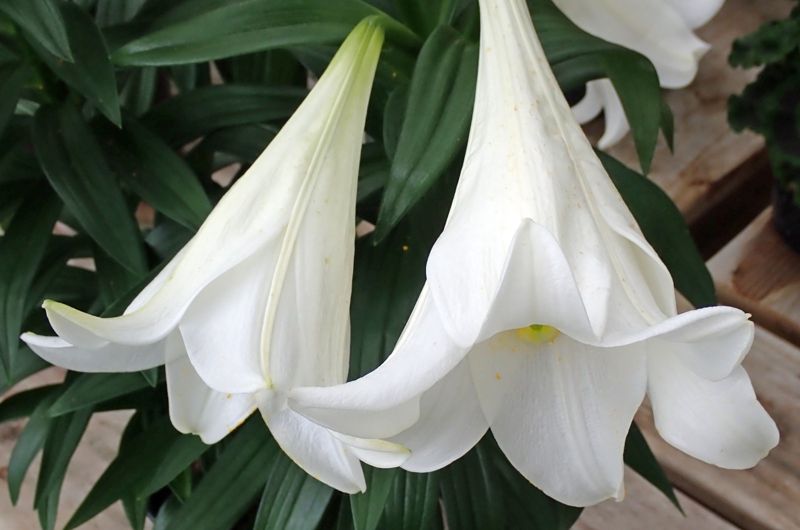
True lilies (Lilium) produce some of the most spectacular and fragrant flowers in the garden, with elegant trumpet, turk's cap, and star-shaped blooms. Oriental lilies are intensely fragrant, Asiatic lilies bloom earliest, and species lilies add wild grace. Lily bulbs have been eaten in East Asian cuisine for thousands of years and are still a common ingredient in Chinese cooking.
Growing Conditions
How to Grow Lily
Lily (Lilium spp.) is a forb/herb that grows to about 6 feet tall and 12 inches wide.
To grow lily, give it partial sun to partial shade. It is hardy across USDA hardiness zones 7–11. Plant it in rich, well-drained, humusy soil (no standing water), at a slightly acidic pH of 5.5–6.5. It does best with even, moderate watering.
Exact sowing, transplanting, and harvest months shift by climate zone — the planting calendar below lays them out for cool through hot regions. Its flowers appear from June through July, offering high value to pollinators. It feeds two tables at once: yours and the pollinators’.
Companion Planting & Soil
Lily grows well alongside hosta, fern, astilbe, and low-growing annuals.
Good Companions
Planting Calendar
When to sow, transplant, and harvest by growing zone.
| Zone | Action | Months | Notes |
|---|---|---|---|
| Cold (1-2) | Transplant | Apr — May | Plant bulbs in spring 6-8" deep; or fall planting 4 weeks before ground freezes |
| Cold (1-2) | Transplant | Sep — Oct | Fall planting preferred; mulch heavily |
| Cold (1-2) | Bloom | Jun — Aug | Asiatic June-July; Oriental July-August; stake tall varieties |
| Cool (3-4) | Transplant | Mar — Apr | Plant in spring; Asiatic bloom first, then Oriental later in summer |
| Cool (3-4) | Transplant | Sep — Oct | Fall planting; good drainage essential — bulbs rot in wet soil |
| Cool (3-4) | Bloom | Jun — Aug | Succession bloom from Asiatic to Oriental types |
| Moderate (5-7) | Transplant | Mar — Apr | Plant in spring or fall; Asiatic lilies are easiest; Oriental are most fragrant |
| Moderate (5-7) | Bloom | May — Aug | Bloom early to late summer by type; toxic to cats |
| Warm (8-9) | Transplant | Oct — Nov | Plant in fall; mulch to keep roots cool; Asiatic types most heat tolerant |
| Warm (8-9) | Bloom | Apr — Jul | Spring through summer bloom; afternoon shade helps |
| Hot (10+) | Transplant | Nov — Dec | Plant in fall; choose Asiatic or LA hybrids — Orientals may not get enough chill |
| Hot (10+) | Bloom | Mar — Jun | Spring/early summer bloom; protect from afternoon sun |
Uses
In the Kitchen
In the kitchen: bulbs of a few specific species (L. lancifolium, L. brownii) are cooked in Chinese cuisine.
Beyond the Garden
Lily earns its keep past the plate, too: spectacular fragrant cut flowers; long-blooming perennial garden focal point; naturalizing in woodland edges and cottage gardens.
Safety Notes
Do not eat garden lilies. Only a few specific Lilium species are grown as food, as cultivated vegetables, and ornamental hybrids are not those plants. The dried 'golden needle' buds in hot and sour soup are daylily (Hemerocallis) buds, not true lily. Every part of a true lily is also lethally toxic to cats, including the pollen.
The Field Library
Books from the Futurespore shelf that go deeper on plants like this one.
- The Forager's Harvest identification, harvest windows, and preparation from someone who eats what he teaches
- Gaia's Garden home-scale permaculture — guilds, food forests, and beds that tend themselves
These are Bookshop.org affiliate links — they support independent bookstores and earn Futurespore a small commission at no extra cost to you. Browse the full Futurespore Bookshelf.