 User:Justinc / CC BY-SA 2.5
Lentil
Lens culinaris
Overview
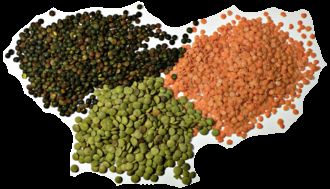
One of humanity's first cultivated crops, lentils have been feeding civilizations for over 10,000 years since the Fertile Crescent. These tiny but mighty legumes are one of the fastest-cooking pulses, needing no soaking and ready in 20-30 minutes. Red, green, black, and French (Puy) lentils each have distinct textures and culinary applications.
Growing Conditions
How to Grow Lentil
Lentil (Lens culinaris) is an annual graminoid that grows to about 1.5 feet tall and 10 feet wide.
To grow lentil, give it full sun. It is hardy across USDA hardiness zones 7–11. Plant it in well-drained, sandy or loamy soil; drought-tolerant, at a slightly acidic pH of 6–7. It does best with dry, sharply drained conditions.
Exact sowing, transplanting, and harvest months shift by climate zone — the planting calendar below lays them out for cool through hot regions. Its flowers appear from April through July, offering high value to pollinators. Settle it in its first year, and drought becomes its problem to solve, not yours.
Companion Planting & Soil
Lentil grows well alongside barley, oats, flax, and mustard — but keep it clear of onion and garlic.
Good Companions
Avoid Planting Near
Planting Calendar
When to sow, transplant, and harvest by growing zone.
| Zone | Action | Months | Notes |
|---|---|---|---|
| Cold (1-2) | Direct Sow | Apr — May | Direct sow 2-3 weeks before last frost; tolerates frost; 80-110 days |
| Cold (1-2) | Harvest | Jul — Aug | Harvest when pods are dry and rattle; pull whole plant and hang to dry |
| Cool (3-4) | Direct Sow | Mar — Apr | Sow in early spring; cool-season crop; short bushy plants |
| Cool (3-4) | Harvest | Jun — Jul | Cut plants when lower pods are brown; dry on tarp; thresh gently |
| Moderate (5-7) | Direct Sow | Feb — Mar | Sow in late winter; needs dry weather during pod maturation |
| Moderate (5-7) | Harvest | May — Jun | Harvest before summer rain; needs dry cure |
| Warm (8-9) | Direct Sow | Oct — Nov | Fall sow for winter/spring crop; cool weather preferred |
| Warm (8-9) | Harvest | Feb — Apr | Spring harvest from fall sowing |
| Hot (10+) | Direct Sow | Oct — Nov | Fall sow; cannot tolerate heat or humidity |
| Hot (10+) | Harvest | Jan — Mar | Winter/early spring harvest |
Uses
In the Kitchen
In the kitchen, lentil turns up in more than one form: dal (lentil stew) in Indian cuisine; soups, salads, and stews across global cuisines; french lentils hold shape beautifully in salads.
Medicinal & Folk Use
In herbal and folk tradition, it has been valued in several ways: high in folate, iron, and plant protein; fiber-rich for cardiovascular and digestive health; low glycemic index for blood sugar management. These are traditional uses, not medical advice.
Beyond the Garden
Lentil earns its keep past the plate, too: nitrogen-fixing crop rotation legume; drought-tolerant food security crop.
The Field Library
Books from the Futurespore shelf that go deeper on plants like this one.
- The Modern Herbal Dispensatory a working reference for tinctures, salves, and doses once you get serious
- The Forager's Harvest identification, harvest windows, and preparation from someone who eats what he teaches
- Gaia's Garden home-scale permaculture — guilds, food forests, and beds that tend themselves
These are Bookshop.org affiliate links — they support independent bookstores and earn Futurespore a small commission at no extra cost to you. Browse the full Futurespore Bookshelf.