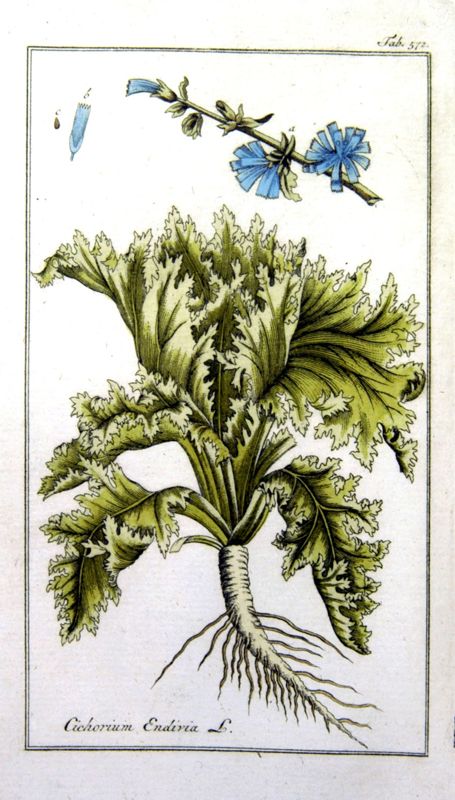
 Oceancetaceen - Alice Chodura / Public domain · Source
Endive
Cichorium endivia
Overview
A slightly bitter salad green in the chicory family that adds sophisticated flavor and crisp texture to salads and cooked dishes. Belgian endive is grown in the dark to produce its pale, elongated chicons, while curly endive (frisée) is grown in the garden like lettuce. The characteristic bitterness of endive stimulates digestion and pairs beautifully with rich, creamy, and sweet ingredients.
Growing Conditions
How to Grow Endive
Endive (Cichorium endivia) is an annual forb/herb that grows to about 12 inches tall and 12 inches wide.
To grow endive, give it full sun, though it tolerates a little shade. It is hardy across USDA hardiness zones 3–10. Plant it in rich, moist, well-drained soil, at a slightly acidic pH of 5.5–7. It does best with even, moderate watering.
Exact sowing, transplanting, and harvest months shift by climate zone — the planting calendar below lays them out for cool through hot regions. Its blue flowers appear from June through September, offering high value to pollinators. A generous plant — a harvest for you, and forage for the pollinators.
Companion Planting & Soil
Endive grows well alongside carrot, radish, onion, and chive.
Good Companions
Planting Calendar
When to sow, transplant, and harvest by growing zone.
| Zone | Action | Months | Notes |
|---|---|---|---|
| Cold (1-2) | Start Indoors | Mar — Apr | Start indoors 8 weeks before last frost |
| Cold (1-2) | Transplant | May — Jun | Transplant after last frost |
| Cold (1-2) | Harvest | Jul — Aug | Harvest at 12-14" across; blanch for milder flavor |
| Cool (3-4) | Direct Sow | Apr — May | Direct sow in spring; prefers cool weather |
| Cool (3-4) | Direct Sow | Jul — Aug | Sow midsummer for fall harvest |
| Cool (3-4) | Harvest | Jun — Jul | Spring harvest |
| Cool (3-4) | Harvest | Sep — Oct | Fall harvest |
| Moderate (5-7) | Direct Sow | Mar — Apr | Spring sowing |
| Moderate (5-7) | Direct Sow | Aug — Sep | Fall crop; blanch by tying leaves 2-3 weeks before harvest |
| Moderate (5-7) | Harvest | May — Jun | Spring harvest |
| Moderate (5-7) | Harvest | Oct — Nov | Fall harvest |
| Warm (8-9) | Direct Sow | Sep — Oct | Fall sowing; grow as cool-season crop |
| Warm (8-9) | Harvest | Nov — Jan (wraps) | Fall/winter harvest |
| Hot (10+) | Direct Sow | Oct — Dec | Cool-season crop only |
| Hot (10+) | Harvest | Dec — Mar (wraps) | Cool-season harvest |
Uses
In the Kitchen
In the kitchen, endive turns up in more than one form: frisée salads with warm dressings and poached eggs; belgian endive leaves as elegant appetizer boats; braised or grilled as a warm side dish.
Medicinal & Folk Use
In herbal and folk tradition, it has been valued in several ways: bitter compounds stimulate digestion and bile production; inulin fiber supports gut microbiome health; traditional digestive aperitif and appetite stimulant. These are traditional uses, not medical advice.
Beyond the Garden
Endive earns its keep past the plate, too: elegant presentation green for upscale dining.
The Field Library
Books from the Futurespore shelf that go deeper on plants like this one.
- Medicinal Herbs: A Beginner's Guide the friendliest on-ramp to growing and using healing herbs at home
- The Forager's Harvest identification, harvest windows, and preparation from someone who eats what he teaches
- Gaia's Garden home-scale permaculture — guilds, food forests, and beds that tend themselves
These are Bookshop.org affiliate links — they support independent bookstores and earn Futurespore a small commission at no extra cost to you. Browse the full Futurespore Bookshelf.