 Uoaei1 / CC BY-SA 4.0 · Source
Lungwort
Pulmonaria officinalis
Overview
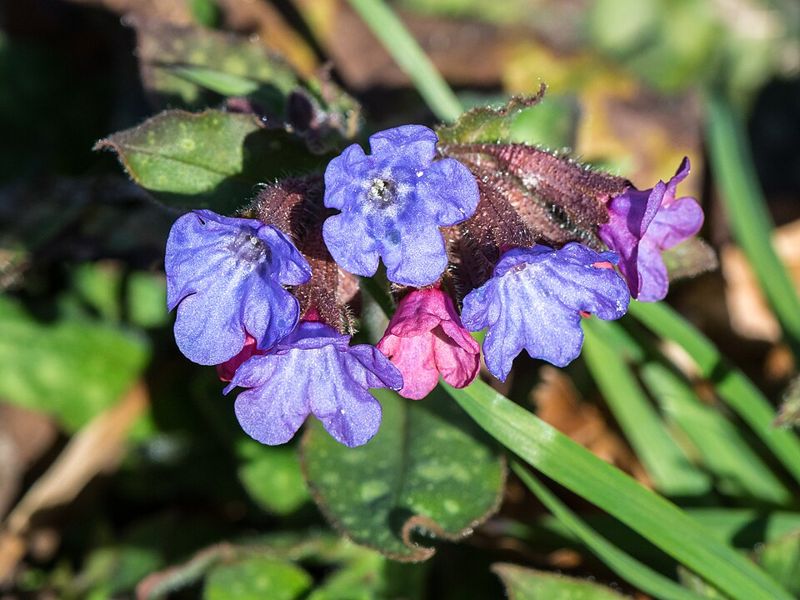
A low-growing Eurasian woodland perennial with distinctive silver-mottled leaves and clusters of early-spring flowers that open pink and age to blue — both colors often appearing on the same plant at once. Named for the leaves' resemblance to diseased lung tissue under the historical Doctrine of Signatures, lungwort has been cultivated in European herb gardens for centuries. Its true modern value is ecological: among the earliest reliable nectar sources for emerging queen bumblebees, who would otherwise face a hungry month between snowmelt and the first tree blooms. Non-invasive, an excellent supplement where native early-shade bloomers are sparse.
Mentioned in The Mycelial Grimoire
Posts on the Grimoire that reference Lungwort.
Growing Conditions
How to Grow Lungwort
Lungwort (Pulmonaria officinalis) is a perennial forb/herb that grows to about 12 inches tall and 1.5 feet wide.
To grow lungwort, give it partial sun to partial shade. It is hardy across USDA hardiness zones 3–8. Plant it in humus-rich, moist, well-drained shade-garden soil, at a slightly acidic pH of 6–7.5. It does best with even, moderate watering.
Exact sowing, transplanting, and harvest months shift by climate zone — the planting calendar below lays them out for cool through hot regions. Its pink-blue flowers appear from March through May, offering high value to pollinators. A plant worth learning slowly, the way it has been used for generations.
Companion Planting & Soil
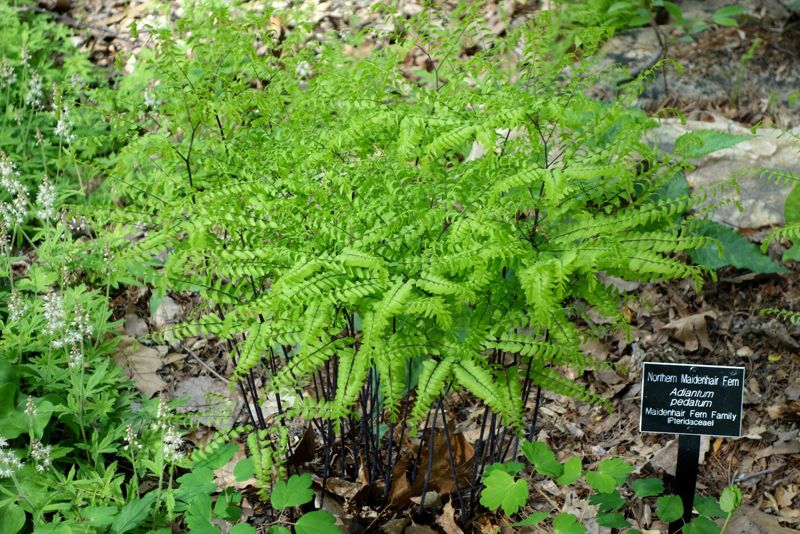
Lungwort grows well alongside hosta, virginia bluebells, ferns, hellebores, and bleeding heart.
Good Companions
Planting Calendar
When to sow, transplant, and harvest by growing zone.
| Zone | Action | Months | Notes |
|---|---|---|---|
| Cold (1-2) | Transplant | Apr — May | Plant in early spring or fall; prefers part to full shade |
| Cold (1-2) | Bloom | Apr — May | Very early bloom — feeds first emerging queen bumblebees |
| Cool (3-4) | Transplant | Mar — May | Plant after soil thaws; rich humus, shaded location |
| Cool (3-4) | Bloom | Apr — May | Pink buds open and age to blue on the same plant |
| Moderate (5-7) | Transplant | Mar — Apr | Plant in early spring; tucks beautifully under deciduous trees |
| Moderate (5-7) | Bloom | Mar — May | Among the earliest spring blooms; bumblebees rely on it |
| Moderate (5-7) | Divide | Sep — Oct | Divide every 4–5 years in early fall when foliage tires |
| Warm (8-9) | Transplant | Nov — Feb (wraps) | Plant in winter — too hot in summer for establishment |
| Warm (8-9) | Bloom | Feb — Apr | Late winter to spring bloom; finished before summer heat |
Uses
Medicinal & Folk Use
In herbal and folk tradition, it has been valued in several ways: traditional respiratory tonic (limited modern evidence); historical wound-poultice in European folk medicine. These are traditional uses, not medical advice.
Beyond the Garden
Lungwort earns its keep past the plate, too: premier early-spring pollinator support; shade-tolerant ground cover under deciduous trees; spotted-leaf ornamental foliage.
Safety Notes
Contains small amounts of pyrrolizidine alkaloids, which can be hepatotoxic with prolonged or high-dose internal use. Brief use only, and supervised by a qualified herbalist. Not native to North America (Eurasian origin) but non-invasive in cultivated gardens.
The Field Library
Books from the Futurespore shelf that go deeper on plants like this one.
- The Modern Herbal Dispensatory a working reference for tinctures, salves, and doses once you get serious
- Gaia's Garden home-scale permaculture — guilds, food forests, and beds that tend themselves
These are Bookshop.org affiliate links — they support independent bookstores and earn Futurespore a small commission at no extra cost to you. Browse the full Futurespore Bookshelf.