 Unknown authorUnknown author / Public domain · Source
Watermelon
Citrullus lanatus
Overview
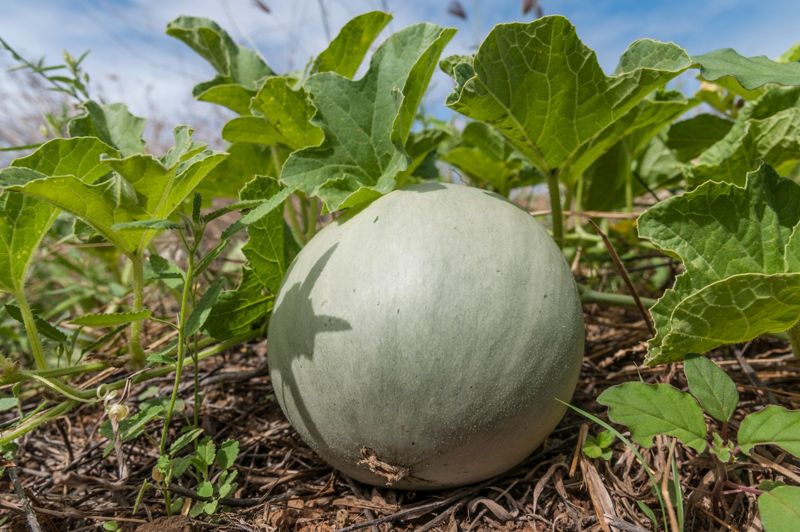
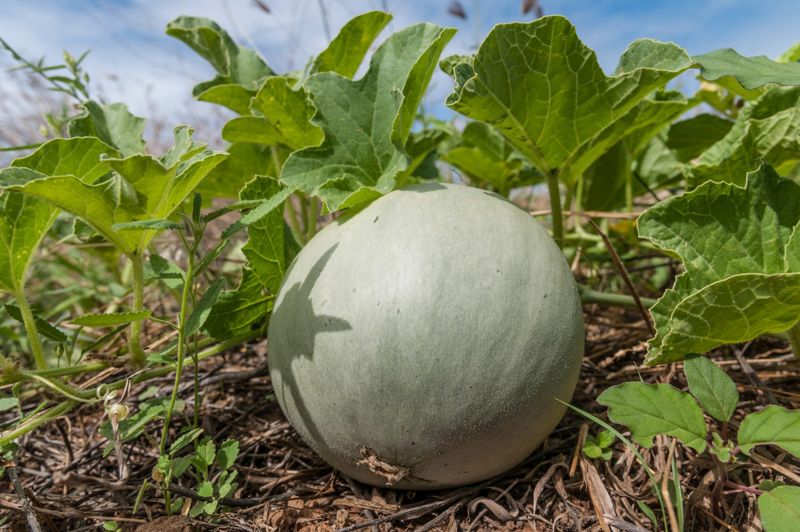
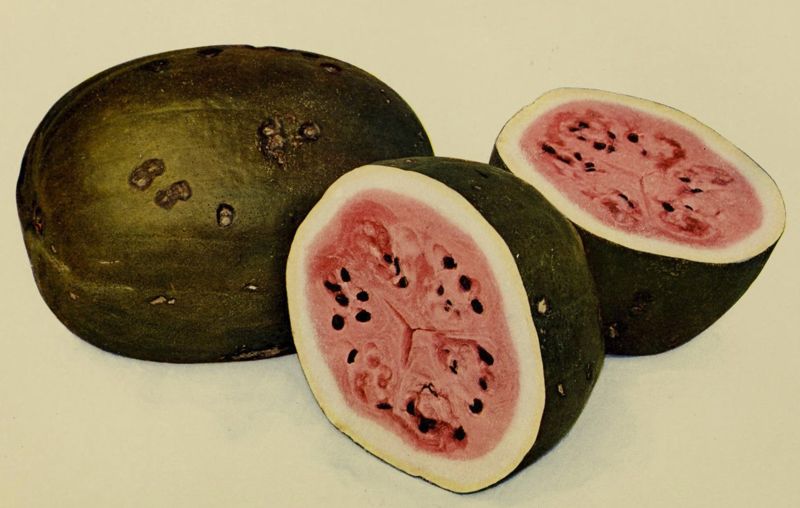
The quintessential summer fruit, watermelon originated in Africa and has been cultivated for over 5,000 years — seeds were found in the tomb of Pharaoh Tutankhamun. Modern varieties range from personal-sized icebox types to 200-pound giants, with flesh in red, yellow, orange, and even green. The entire fruit is edible — rind can be pickled, and seeds are nutritious when roasted.
Growing Conditions
How to Grow Watermelon
Watermelon (Citrullus lanatus) is a forb/herb that grows to about 1.5 feet tall and 7 feet wide.
To grow watermelon, give it full sun. It is hardy across USDA hardiness zones 8–11. Plant it in sandy, well-drained loam with plenty of organic matter and warmth, at a slightly acidic pH of 6–6.8. It does best with even, moderate watering.
Exact sowing, transplanting, and harvest months shift by climate zone — the planting calendar below lays them out for cool through hot regions. Its flowers appear from May through August, offering high value to pollinators. It is a plant for the low-water garden — patient through heat, slow to complain.
Companion Planting & Soil
Watermelon grows well alongside corn, sunflower, radish, marigold, and nasturtium — but keep it clear of potato and cucumber.
Good Companions
Avoid Planting Near
Planting Calendar
When to sow, transplant, and harvest by growing zone.
| Zone | Action | Months | Notes |
|---|---|---|---|
| Cold (1-2) | Start Indoors | Apr — May | Start 3-4 weeks before last frost; short-season varieties |
| Cold (1-2) | Transplant | Jun — Jun | Transplant on black plastic for warmth |
| Cold (1-2) | Harvest | Aug — Sep | Harvest when tendril nearest fruit turns brown |
| Cool (3-4) | Start Indoors | Apr — Apr | Start indoors for head start |
| Cool (3-4) | Transplant | May — Jun | Transplant after soil reaches 70°F |
| Cool (3-4) | Harvest | Aug — Sep | Check ground spot — yellow when ripe |
| Moderate (5-7) | Direct Sow | May — Jun | Direct sow when soil warm |
| Moderate (5-7) | Harvest | Jul — Sep | Thump test: hollow sound = ripe |
| Warm (8-9) | Direct Sow | Mar — May | Direct sow in spring |
| Warm (8-9) | Harvest | Jun — Aug | Summer harvest |
| Hot (10+) | Direct Sow | Feb — Apr | Direct sow early spring |
| Hot (10+) | Harvest | May — Jul | Early summer harvest |
Uses
In the Kitchen
In the kitchen, watermelon turns up in more than one form: fresh sliced — the iconic summer fruit; rind pickled as a Southern delicacy; juiced, frozen into popsicles, and blended into agua fresca.
Medicinal & Folk Use
In herbal and folk tradition, it has been valued in several ways: rich in lycopene — one of the highest food sources; citrulline amino acid supports blood flow and exercise recovery; high water content supports hydration. These are traditional uses, not medical advice.
Beyond the Garden
Watermelon earns its keep past the plate, too: seeds roasted as a nutritious, protein-rich snack; competitive giant watermelon growing at county fairs.
The Field Library
Books from the Futurespore shelf that go deeper on plants like this one.
- The Modern Herbal Dispensatory a working reference for tinctures, salves, and doses once you get serious
- Northeast Foraging region-tuned wild food guidance with clear lookalike warnings
- Braiding Sweetgrass reframes growing and gathering as a relationship of reciprocity
These are Bookshop.org affiliate links — they support independent bookstores and earn Futurespore a small commission at no extra cost to you. Browse the full Futurespore Bookshelf.