 Oceancetaceen - Alice Chodura / Public domain · Source
Jerusalem artichoke
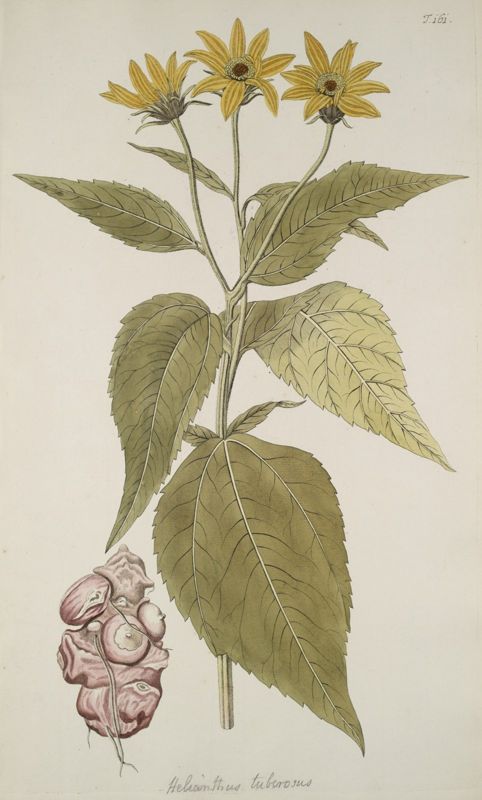
Helianthus tuberosus
Overview
Neither from Jerusalem nor an artichoke, this native North American sunflower relative produces knobby, nutty-sweet tubers that taste like a cross between artichoke heart and sunflower seed. Also called sunchoke, it was a staple food for many Native American peoples and can be incredibly productive — a single plant may yield 5-10 pounds of tubers. Be warned: it spreads aggressively and is nearly impossible to remove once established.
Growing Conditions
How to Grow Jerusalem artichoke
Jerusalem artichoke (Helianthus tuberosus) is a forb/herb that grows to about 10 feet tall and 2 feet wide.
To grow jerusalem artichoke, give it full sun. It is hardy across USDA hardiness zones 3a–8. Plant it in adaptable; produces in nearly any soil condition, at a slightly acidic pH of 5.8–7. It does best with dry, sharply drained conditions.
Exact sowing, transplanting, and harvest months shift by climate zone — the planting calendar below lays them out for cool through hot regions. Its yellow flowers appear from August through September, offering high value to pollinators. A generous plant — a harvest for you, and forage for the pollinators.
Companion Planting & Soil
Jerusalem artichoke grows well alongside corn, bean, and sunflower.
Good Companions
Planting Calendar
When to sow, transplant, and harvest by growing zone.
| Zone | Action | Months | Notes |
|---|---|---|---|
| Cold (1-2) | Transplant | Apr — May | Plant tubers 4" deep in early spring; extremely cold hardy; spreads aggressively |
| Cold (1-2) | Harvest | Oct — Nov | Dig after first hard frost sweetens tubers; leave some to regrow |
| Cool (3-4) | Transplant | Mar — Apr | Plant tubers in spring; contain — will take over a garden bed |
| Cool (3-4) | Harvest | Oct — Dec | Harvest after frost; tubers keep better in ground than in fridge |
| Moderate (5-7) | Transplant | Feb — Mar | Plant in late winter; grows 6-10 feet tall; attractive sunflower-like blooms |
| Moderate (5-7) | Harvest | Oct — Feb (wraps) | Dig as needed through winter; flavor improves with cold |
| Warm (8-9) | Transplant | Jan — Feb | Plant in winter; grows in almost any soil |
| Warm (8-9) | Harvest | Nov — Feb (wraps) | Harvest in fall/winter; store in damp sand |
| Hot (10+) | Transplant | Nov — Dec | Plant in fall; tolerates heat; invasive grower |
| Hot (10+) | Harvest | Nov — Feb (wraps) | Harvest during cool months; knobby tubers with nutty flavor |
Uses
In the Kitchen
In the kitchen, jerusalem artichoke turns up in more than one form: roasted until caramelized and nutty; sliced thin and eaten raw in salads; pureed into creamy soups.
Medicinal & Folk Use
In herbal and folk tradition, it has been valued in several ways: extremely high in inulin, a prebiotic fiber for gut health; low glycemic index despite sweet flavor, useful for blood sugar management; rich in iron and potassium. These are traditional uses, not medical advice.
Beyond the Garden
Jerusalem artichoke earns its keep past the plate, too: tall sunflower-like plants create a living privacy screen; edible permaculture groundcover (caution: aggressive spreader).
The Field Library
Books from the Futurespore shelf that go deeper on plants like this one.
- Medicinal Herbs: A Beginner's Guide the friendliest on-ramp to growing and using healing herbs at home
- The Forager's Harvest identification, harvest windows, and preparation from someone who eats what he teaches
- Gaia's Garden home-scale permaculture — guilds, food forests, and beds that tend themselves
These are Bookshop.org affiliate links — they support independent bookstores and earn Futurespore a small commission at no extra cost to you. Browse the full Futurespore Bookshelf.