 Self, en:User:Jengod / Public domain · Source
Radish
Raphanus sativus
Overview
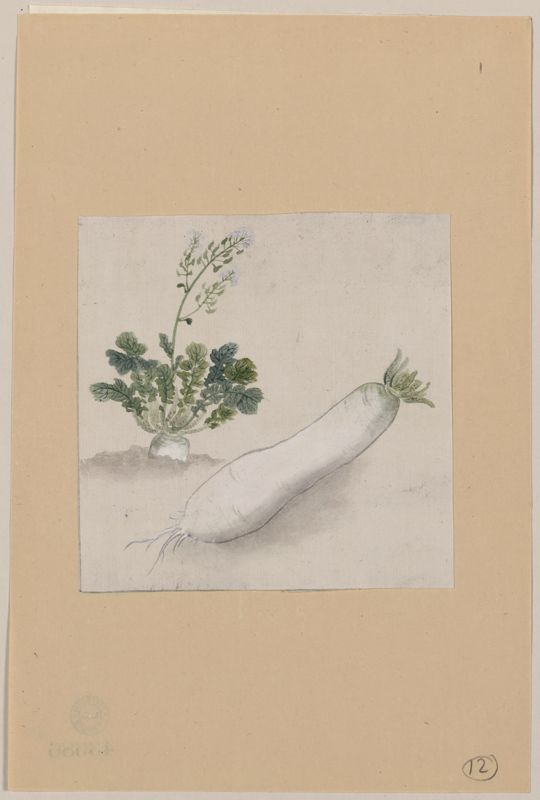
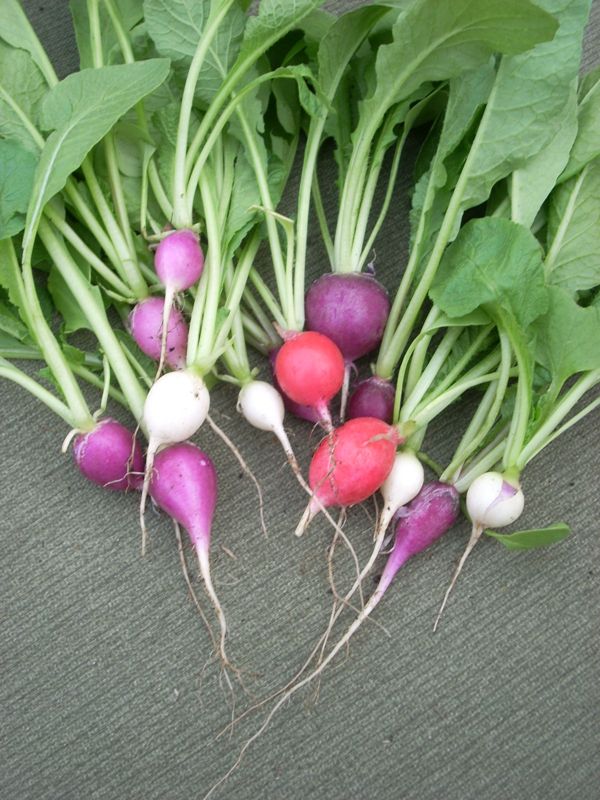
The fastest vegetable from seed to table, some radish varieties are ready to harvest in just 21 days. This makes them the perfect crop for impatient gardeners, children's gardens, and interplanting between slower-growing vegetables. Beyond the familiar small red globe, radishes come in an astonishing variety — from watermelon radishes with green exteriors and hot-pink flesh to giant daikon and black Spanish storage types.
Mentioned in The Mycelial Grimoire
Posts on the Grimoire that reference Radish.
Growing Conditions
How to Grow Radish
Radish (Raphanus sativus) is a forb/herb that grows to about 2.5 feet tall and 7 inches wide.
To grow radish, give it partial sun to partial shade. It is hardy across USDA hardiness zones 5–10. Plant it in loose, well-drained, sandy loam free of rocks, at a slightly acidic pH of 6–7. It does best with even, moderate watering.
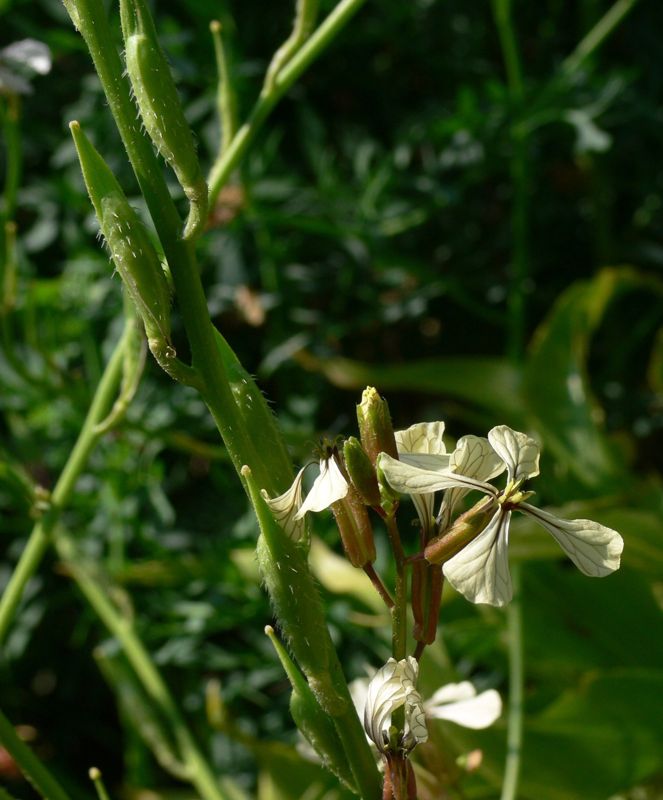
Exact sowing, transplanting, and harvest months shift by climate zone — the planting calendar below lays them out for cool through hot regions. Its flowers appear from April through April, offering high value to pollinators. A generous plant — a harvest for you, and forage for the pollinators.
Companion Planting & Soil
Radish grows well alongside carrot, lettuce, pea, spinach, and cucumber — but keep it clear of hyssop.
Good Companions
Avoid Planting Near
Planting Calendar
When to sow, transplant, and harvest by growing zone.
| Zone | Action | Months | Notes |
|---|---|---|---|
| Cold (1-2) | Direct Sow | May — Jul | Direct sow; succession plant every 2 weeks |
| Cool (3-4) | Direct Sow | Apr — May | Spring sowing; succession plant biweekly |
| Cool (3-4) | Direct Sow | Aug — Sep | Fall sowing |
| Cool (3-4) | Harvest | May — Jun | Pull when 1" diameter |
| Moderate (5-7) | Direct Sow | Mar — May | Spring sowing |
| Moderate (5-7) | Direct Sow | Aug — Oct | Fall sowing — best quality |
| Moderate (5-7) | Harvest | Apr — Jun | Harvest promptly at maturity |
| Warm (8-9) | Direct Sow | Feb — Mar | Cool-season crop; sow early spring |
| Warm (8-9) | Direct Sow | Sep — Nov | Fall through early winter |
| Warm (8-9) | Harvest | Mar — Apr | Harvest before heat |
| Hot (10+) | Direct Sow | Oct — Feb (wraps) | Cool-season only |
| Hot (10+) | Harvest | Nov — Mar (wraps) | Winter harvest |
Uses
In the Kitchen
In the kitchen, radish turns up in more than one form: raw with butter and salt — the French classic; roasted for a mild, sweet side dish; pickled for tacos and bánh mì.
Medicinal & Folk Use
In herbal and folk tradition, it has been valued in several ways: rich in vitamin C and glucosinolates; traditional digestive stimulant; contains compounds that support liver detoxification. These are traditional uses, not medical advice.
Beyond the Garden
Radish earns its keep past the plate, too: fastest-growing vegetable for succession planting; row markers sown with slow-germinating seeds like carrots.
The Field Library
Books from the Futurespore shelf that go deeper on plants like this one.
- Northeast Foraging region-tuned wild food guidance with clear lookalike warnings
- Braiding Sweetgrass reframes growing and gathering as a relationship of reciprocity
These are Bookshop.org affiliate links — they support independent bookstores and earn Futurespore a small commission at no extra cost to you. Browse the full Futurespore Bookshelf.