Overview
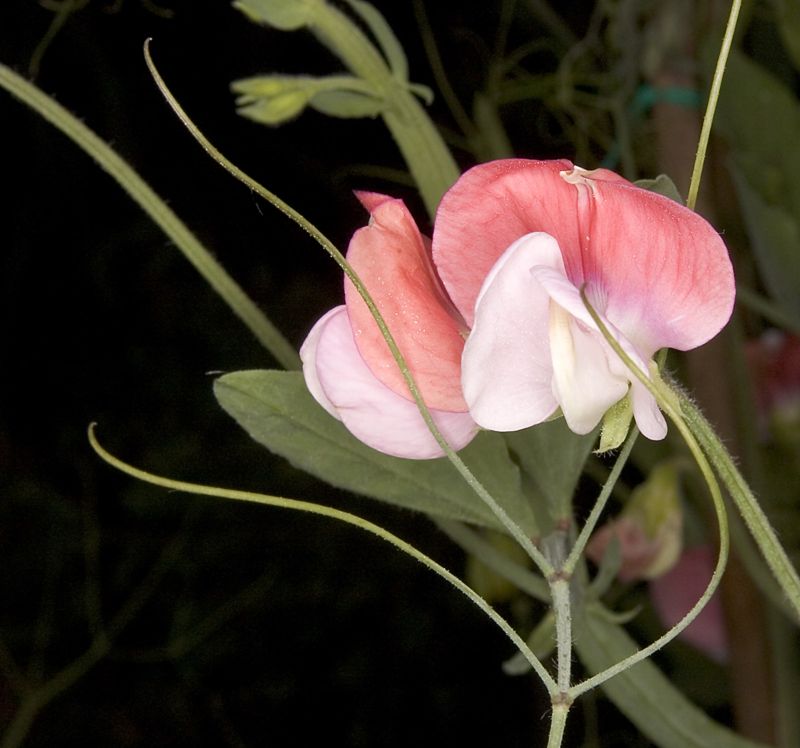
Climbing annuals that produce some of the most intensely fragrant flowers in the garden, sweet peas have been bred since the 17th century for their exquisite scent and ruffled blooms. They come in an artist's palette of pastels and bicolors, and the more you cut them, the more they bloom. Despite the name, sweet peas are NOT edible — they contain toxic amino acids and should never be eaten.
Mentioned in The Mycelial Grimoire
Posts on the Grimoire that reference Sweet pea.
How to Grow Sweet pea
Plant it in rich, deep, well-drained, slightly alkaline soil with plenty of compost, at a near-neutral pH of 7–7.5.
Exact sowing, transplanting, and harvest months shift by climate zone — the planting calendar below lays them out for cool through hot regions. It keeps its own chemistry; read the safety notes before any part reaches a plate.
Companion Planting & Soil
Sweet pea grows well alongside rose, snapdragon, and stock.
Good Companions
Planting Calendar
When to sow, transplant, and harvest by growing zone.
| Zone | Action | Months | Notes |
|---|---|---|---|
| Cold (1-2) | Direct Sow | May — May | Direct sow as early as soil is workable; nick or soak seeds overnight |
| Cold (1-2) | Harvest | Jun — Aug | Pick flowers daily to extend bloom; fragrant cut flower |
| Cool (3-4) | Direct Sow | Mar — Apr | Sow early spring; soak seeds 24 hours before planting |
| Cool (3-4) | Harvest | May — Jul | Harvest frequently; stops blooming if pods form |
| Moderate (5-7) | Direct Sow | Feb — Mar | Sow in late winter; provide trellis or netting for climbing |
| Moderate (5-7) | Harvest | Apr — Jun | Pick daily for longest bloom; dies in summer heat |
| Warm (8-9) | Direct Sow | Oct — Nov | Fall sow for spring bloom; needs cool temps below 65°F |
| Warm (8-9) | Harvest | Feb — Apr | Spring bloom from fall sowing; harvest before heat |
| Hot (10+) | Direct Sow | Nov — Dec | Sow in late fall; blooms late winter/early spring |
| Hot (10+) | Harvest | Jan — Mar | Winter/early spring bloom; very fragrant |
Uses
Beyond the Garden
Sweet pea earns its keep past the plate, too: exceptional fragrant cut flower — cutting encourages more blooms; classic cottage garden climbing annual; cool-season vertical interest on trellises and obelisks.
Safety Notes
Despite the name, sweet peas are not food. The seeds contain lathyrogens — eaten repeatedly they cause lathyrism, an irreversible paralysis. The danger is the name itself: keep the pods away from children, and never plant sweet peas where they could tangle into a snap-pea harvest.
The Field Library
Books from the Futurespore shelf that go deeper on plants like this one.
- The Resilient Gardener growing staple food through drought, flood, and hard seasons
- Braiding Sweetgrass reframes growing and gathering as a relationship of reciprocity
These are Bookshop.org affiliate links — they support independent bookstores and earn Futurespore a small commission at no extra cost to you. Browse the full Futurespore Bookshelf.