 Earth100 / CC BY-SA 3.0 · Source
Sweet potato
Ipomoea batatas
Overview
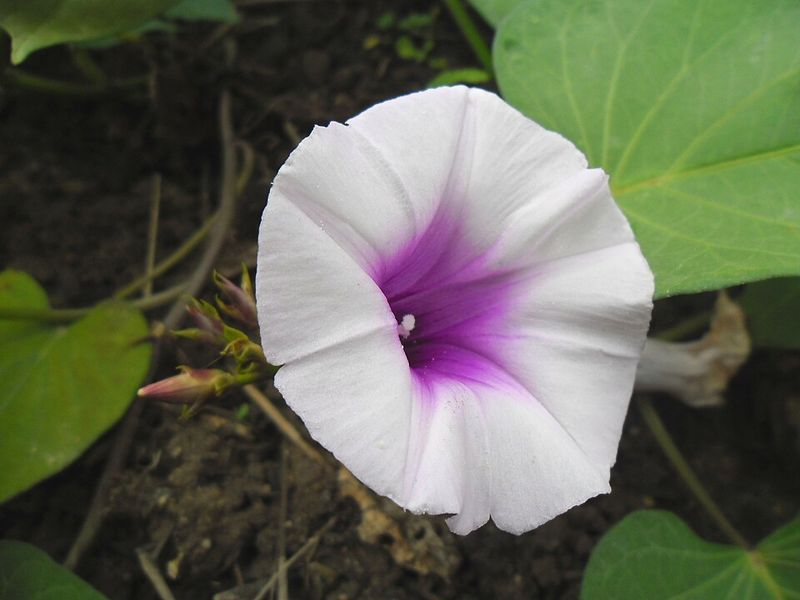
A tropical vine that produces one of the world's most nutritious root vegetables, sweet potatoes are the fourth most important food crop globally. Despite their name, they are unrelated to regular potatoes — they're in the morning glory family. Orange-fleshed varieties are exceptionally rich in beta-carotene, while purple types contain powerful anthocyanins.
Mentioned in The Mycelial Grimoire
Posts on the Grimoire that reference Sweet potato.
Growing Conditions
How to Grow Sweet potato
Sweet potato (Ipomoea batatas) is a perennial vine that grows to about 1.5 feet tall and 5 feet wide.
To grow sweet potato, give it full sun. It is hardy across USDA hardiness zones 8–11. Plant it in loose, well-drained, sandy loam; heavy soil causes misshapen roots, at a slightly acidic pH of 5.5–6.5. It does best with even, moderate watering.
Exact sowing, transplanting, and harvest months shift by climate zone — the planting calendar below lays them out for cool through hot regions. Its flowers appear from May through October, offering high value to pollinators. It feeds two tables at once: yours and the pollinators’.
Companion Planting & Soil
Sweet potato grows well alongside bean, corn, dill, thyme, and marigold — but keep it clear of squash and sunflower.
Good Companions
Avoid Planting Near
Planting Calendar
When to sow, transplant, and harvest by growing zone.
| Zone | Action | Months | Notes |
|---|---|---|---|
| Cold (1-2) | Transplant | Jun — Jun | Plant slips 2 weeks after last frost; needs 100+ days |
| Cold (1-2) | Harvest | Sep — Oct | Harvest before first frost; cure 10 days |
| Cool (3-4) | Transplant | May — Jun | Plant slips after soil warms to 65°F |
| Cool (3-4) | Harvest | Sep — Oct | Harvest before frost |
| Moderate (5-7) | Transplant | May — Jun | Plant slips when soil warm |
| Moderate (5-7) | Harvest | Sep — Oct | Harvest when leaves yellow |
| Warm (8-9) | Transplant | Apr — May | Plant slips in spring |
| Warm (8-9) | Harvest | Aug — Oct | Harvest 100-120 days after planting |
| Hot (10+) | Transplant | Mar — Apr | Plant slips; can do two crops |
| Hot (10+) | Harvest | Jul — Sep | Harvest at 100 days; cure in warm spot |
Uses
In the Kitchen
In the kitchen, sweet potato turns up in more than one form: baked, roasted, or mashed as a versatile side dish; fries and chips; pies, casseroles, and sweet potato gnocchi.
Medicinal & Folk Use
In herbal and folk tradition, it has been valued in several ways: orange varieties exceptionally rich in beta-carotene; purple varieties high in anthocyanins; complex carbohydrates provide sustained energy. These are traditional uses, not medical advice.
Beyond the Garden
Sweet potato earns its keep past the plate, too: ornamental trailing vine for containers (ornamental varieties); leaves are nutritious and edible as a cooked green.
Safety Notes
Sweet potato leaves are edible when cooked. Sprouted or green-skinned tubers may contain mild toxins — trim before eating.
The Field Library
Books from the Futurespore shelf that go deeper on plants like this one.
- Northeast Foraging region-tuned wild food guidance with clear lookalike warnings
- Braiding Sweetgrass reframes growing and gathering as a relationship of reciprocity
These are Bookshop.org affiliate links — they support independent bookstores and earn Futurespore a small commission at no extra cost to you. Browse the full Futurespore Bookshelf.