 Steve Buissinne / CC0 · Source
Zucchini
Cucurbita pepo var. cylindrica
Overview
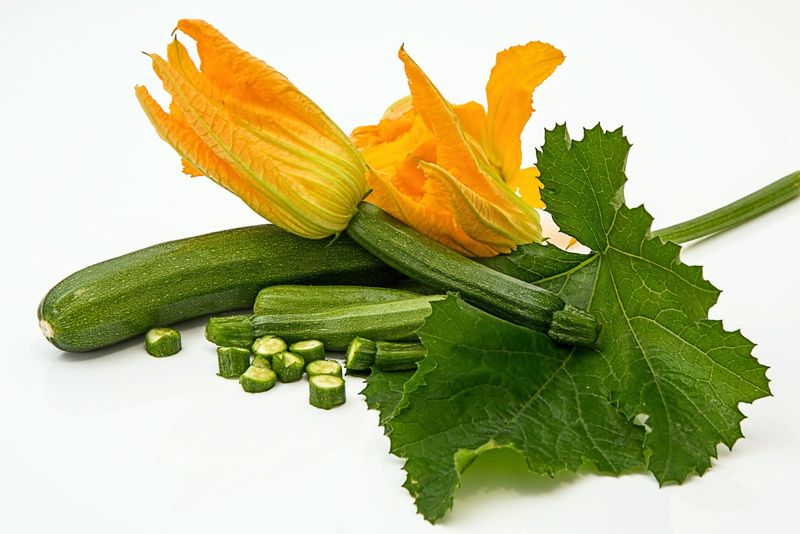
The most prolific vegetable in the garden — a running joke among gardeners is that the only time people lock their cars in summer is to prevent neighbors from leaving zucchini on the back seat. This summer squash can produce a harvestable fruit every 1-2 days at peak season. Beyond the standard green, varieties include golden, striped, and round types, and the large orange flowers are a delicacy.
Growing Conditions
How to Grow Zucchini
Zucchini (Cucurbita pepo var. cylindrica) is an annual vine that grows to about 2 feet tall and 4 feet wide.
To grow zucchini, give it full sun. It is hardy across USDA hardiness zones 3–11. Plant it in rich, well-drained, loamy soil with plenty of compost, at a slightly acidic pH of 6–7.5. It does best with even, moderate watering.
Exact sowing, transplanting, and harvest months shift by climate zone — the planting calendar below lays them out for cool through hot regions. Its flowers appear from May through August, offering moderate value to pollinators. One season is all it asks — sow it, tend it, and let it go.
Companion Planting & Soil
Zucchini grows well alongside corn, bean, nasturtium, marigold, and radish — but keep it clear of potato.
Good Companions
Avoid Planting Near
Planting Calendar
When to sow, transplant, and harvest by growing zone.
| Zone | Action | Months | Notes |
|---|---|---|---|
| Cold (1-2) | Direct Sow | Jun — Jun | Direct sow after last frost; 1" deep |
| Cold (1-2) | Harvest | Jul — Sep | Harvest at 6-8" for best flavor; check daily |
| Cool (3-4) | Direct Sow | May — Jun | Direct sow after frost danger |
| Cool (3-4) | Harvest | Jul — Sep | Harvest every 1-2 days at peak |
| Moderate (5-7) | Direct Sow | Apr — Jun | Direct sow after last frost |
| Moderate (5-7) | Harvest | Jun — Oct | Very prolific; harvest small |
| Warm (8-9) | Direct Sow | Mar — Apr | Spring sowing |
| Warm (8-9) | Direct Sow | Aug — Sep | Fall sowing |
| Warm (8-9) | Harvest | May — Jun | Spring harvest |
| Hot (10+) | Direct Sow | Feb — Mar | Early spring; also Sep for fall |
| Hot (10+) | Harvest | Apr — May | Spring harvest |
Uses
In the Kitchen
In the kitchen, zucchini turns up in more than one form: grilled, sautéed, or roasted as a side dish; spiralized into zoodles as a pasta substitute; flowers stuffed with ricotta and fried — an Italian delicacy.
Medicinal & Folk Use
In herbal and folk tradition, it has been valued in several ways: low-calorie, high-water-content vegetable; good source of vitamin A, vitamin C, and manganese; potassium-rich for heart and muscle health. These are traditional uses, not medical advice.
Beyond the Garden
Zucchini earns its keep past the plate, too: enormous flowers attract pollinators; most productive vegetable per square foot of garden space.
Safety Notes
Extremely bitter zucchini may contain toxic cucurbitacins; discard if bitter.
The Field Library
Books from the Futurespore shelf that go deeper on plants like this one.
- The Forager's Harvest identification, harvest windows, and preparation from someone who eats what he teaches
- Gaia's Garden home-scale permaculture — guilds, food forests, and beds that tend themselves
These are Bookshop.org affiliate links — they support independent bookstores and earn Futurespore a small commission at no extra cost to you. Browse the full Futurespore Bookshelf.