Overview
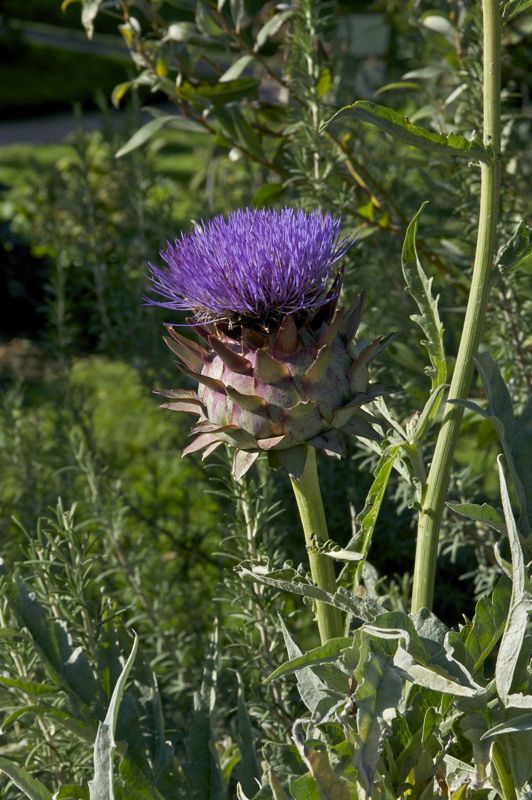
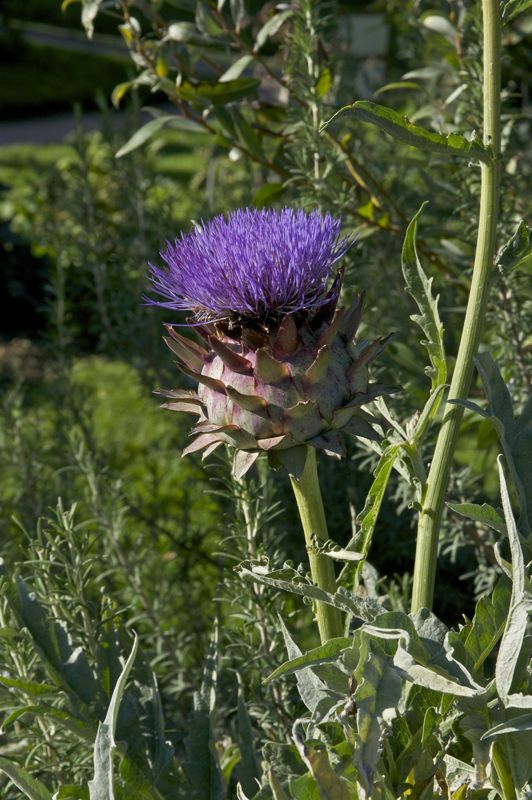
The globe artichoke is actually a giant thistle bud, cultivated since ancient Rome for its tender heart and fleshy petal bases. A dramatic architectural plant that can reach five feet tall, artichokes are perennial in mild climates and produce stunning purple thistle flowers if left unharvested. They are a Mediterranean garden classic that thrives in cool, foggy coastal conditions.
Growing Conditions
How to Grow Artichoke
Artichoke (Cynara cardunculus var. scolymus) is a perennial forb/herb that grows to about 5 feet tall and 3 feet wide.
To grow artichoke, give it full sun. It is hardy across USDA hardiness zones 7–11. Plant it in deep, fertile, well-drained soil rich in organic matter, at a near-neutral pH of 6.5–8. It does best with even, moderate watering.
Exact sowing, transplanting, and harvest months shift by climate zone — the planting calendar below lays them out for cool through hot regions. Its flowers appear from June through September, offering high value to pollinators. Food and forage in one stand — plant it where both you and the pollinators can reach.
Companion Planting & Soil
Artichoke grows well alongside sunflower, tarragon, pea, and cabbage.
Good Companions
Planting Calendar
When to sow, transplant, and harvest by growing zone.
| Zone | Action | Months | Notes |
|---|---|---|---|
| Cold (1-2) | Start Indoors | Jan — Feb | Start indoors 8-10 weeks early; vernalize seedlings at 35-50°F for 10 days |
| Cold (1-2) | Transplant | May — Jun | Transplant after frost; grow as annual; vernalization triggers budding |
| Cold (1-2) | Harvest | Jul — Aug | Harvest buds before scales open; cut 3" below bud |
| Cool (3-4) | Start Indoors | Dec — Jan (wraps) | Start indoors early; cold-expose seedlings to trigger bud formation |
| Cool (3-4) | Transplant | Apr — May | Transplant in spring; may perennialize with heavy mulch in zone 6+ |
| Cool (3-4) | Harvest | Jun — Aug | Harvest when buds are tight and firm |
| Moderate (5-7) | Transplant | Mar — Apr | Transplant in spring; perennial in zones 7+; space 4 feet apart |
| Moderate (5-7) | Harvest | May — Jul | Harvest central bud first; side buds follow |
| Moderate (5-7) | Divide | Mar — Apr | Divide rooted offshoots every 3-4 years in early spring |
| Warm (8-9) | Transplant | Sep — Oct | Plant in fall; grows through winter; perennial in zones 8-9 |
| Warm (8-9) | Harvest | Mar — May | Spring harvest from fall-planted crowns |
| Warm (8-9) | Divide | Sep — Oct | Divide in fall when planting |
| Hot (10+) | Transplant | Sep — Oct | Fall planting; may need afternoon shade in extreme heat |
| Hot (10+) | Harvest | Feb — May | Late winter through spring harvest |
Uses
In the Kitchen
In the kitchen, artichoke turns up in more than one form: steamed or grilled whole with dipping sauces; hearts marinated in olive oil and herbs; added to pasta, pizza, and Mediterranean dishes.
Medicinal & Folk Use
In herbal and folk tradition, it has been valued in several ways: cynarin compound supports liver function and bile production; high in prebiotic fiber (inulin) for gut health; traditional digestive bitter and appetite stimulant. These are traditional uses, not medical advice.
Beyond the Garden
Artichoke earns its keep past the plate, too: dramatic ornamental garden architecture; dried flower heads used in arrangements; attracts beneficial insects when left to bloom.
Safety Notes
Only the heart and base of leaves are edible; the choke (fuzzy center) is inedible.
The Field Library
Books from the Futurespore shelf that go deeper on plants like this one.
- Northeast Foraging region-tuned wild food guidance with clear lookalike warnings
- Braiding Sweetgrass reframes growing and gathering as a relationship of reciprocity
These are Bookshop.org affiliate links — they support independent bookstores and earn Futurespore a small commission at no extra cost to you. Browse the full Futurespore Bookshelf.