Cardoon
Cynara cardunculus
Overview
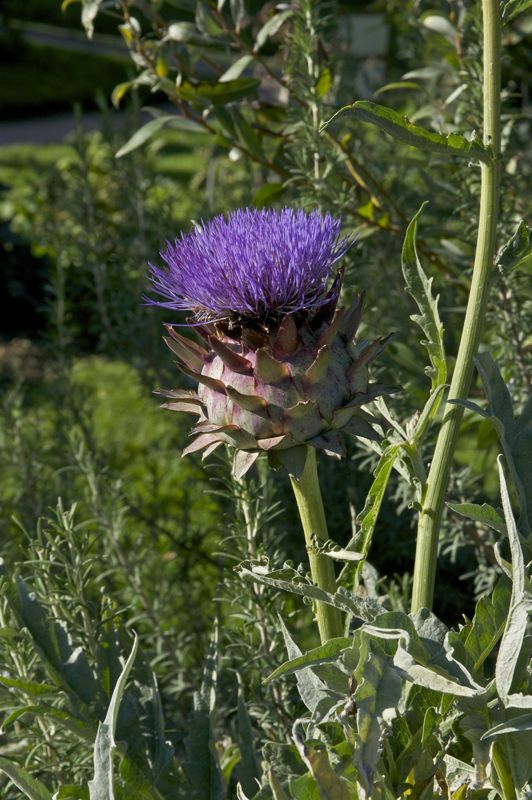
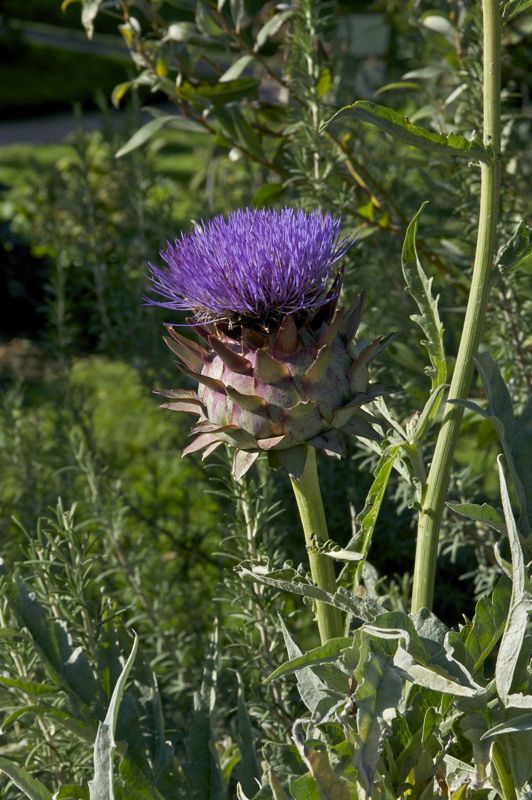
The wild ancestor of the artichoke, cardoon is a dramatic thistle-like perennial grown for its thick, celery-like leaf stalks rather than its flower buds. A staple of Mediterranean and Argentine cuisine, the stalks are blanched to reduce bitterness and then braised, battered, or gratinéed. Its massive silvery foliage and towering purple thistle flowers make it one of the most architectural plants in the edible garden.
Growing Conditions
How to Grow Cardoon
Cardoon (Cynara cardunculus) is a forb/herb that grows to about 7 feet tall and 3 feet wide.
To grow cardoon, give it full sun. It is hardy across USDA hardiness zones 6–10. Plant it in deep, fertile, well-drained soil, at a slightly acidic pH of 6–7.5. It does best with even, moderate watering.
Exact sowing, transplanting, and harvest months shift by climate zone — the planting calendar below lays them out for cool through hot regions. Its flowers appear from June through September, offering high value to pollinators. It is a plant for the low-water garden — patient through heat, slow to complain.
Companion Planting & Soil
Cardoon grows well alongside artichoke, tarragon, and sunflower.
Good Companions
Planting Calendar
When to sow, transplant, and harvest by growing zone.
| Zone | Action | Months | Notes |
|---|---|---|---|
| Cold (1-2) | Start Indoors | Feb — Mar | Start indoors 6-8 weeks before last frost; grow as annual |
| Cold (1-2) | Transplant | May — Jun | Transplant after frost; blanch stalks 3-4 weeks before harvest |
| Cold (1-2) | Harvest | Aug — Sep | Blanch stalks by wrapping in cardboard 3-4 weeks before harvest; eat stalks not buds |
| Cool (3-4) | Start Indoors | Jan — Feb | Start indoors; needs long growing season |
| Cool (3-4) | Transplant | Apr — May | Transplant in spring; grows 4-6 feet tall and wide |
| Cool (3-4) | Harvest | Jul — Sep | Blanch stems; harvest inner stalks; peel and cook |
| Moderate (5-7) | Transplant | Mar — Apr | Transplant in spring; perennial in zones 7+; impressive ornamental |
| Moderate (5-7) | Harvest | Jul — Oct | Harvest blanched stalks in fall; pare away fibrous outer layer |
| Moderate (5-7) | Divide | Mar — Apr | Divide established clumps every 3-4 years in spring |
| Warm (8-9) | Transplant | Sep — Oct | Plant in fall; perennial in zones 8-9 |
| Warm (8-9) | Harvest | Feb — Apr | Harvest spring stalks; blanch to reduce bitterness |
| Hot (10+) | Transplant | Sep — Oct | Fall planting; evergreen perennial in zone 10 |
| Hot (10+) | Harvest | Jan — Mar | Late winter/early spring harvest |
Uses
In the Kitchen
In the kitchen, cardoon turns up in more than one form: blanched stalks braised in broth or cream; battered and fried as fritters; traditional ingredient in Argentine and Italian holiday dishes.
Medicinal & Folk Use
In herbal and folk tradition, it has been valued in several ways: contains cynarin for liver and gallbladder support; traditional digestive bitter; leaf extract studied for cholesterol-lowering properties. These are traditional uses, not medical advice.
Beyond the Garden
Cardoon earns its keep past the plate, too: dramatic ornamental garden architecture; thistle flowers attract pollinators and are used in dried arrangements.
The Field Library
Books from the Futurespore shelf that go deeper on plants like this one.
- The Modern Herbal Dispensatory a working reference for tinctures, salves, and doses once you get serious
- Northeast Foraging region-tuned wild food guidance with clear lookalike warnings
- Braiding Sweetgrass reframes growing and gathering as a relationship of reciprocity
These are Bookshop.org affiliate links — they support independent bookstores and earn Futurespore a small commission at no extra cost to you. Browse the full Futurespore Bookshelf.