 W.carter / CC0 · Source
Asparagus
Asparagus officinalis
Overview
A long-lived perennial vegetable that can produce spears for 20 years or more from a single planting. Asparagus crowns send up their first harvestable spears in their third year, rewarding patient gardeners with one of spring's most prized delicacies. The feathery ferns that develop after harvest are beautiful in their own right and nourish the roots for next year's crop.
Mentioned in The Mycelial Grimoire
Posts on the Grimoire that reference Asparagus.
Growing Conditions
How to Grow Asparagus
Asparagus (Asparagus officinalis) is a perennial forb/herb that grows to about 5 feet tall and 1.5 feet wide.
To grow asparagus, give it full sun. It is hardy across USDA hardiness zones 3–8. Plant it in deep, well-drained sandy loam rich in organic matter, at a near-neutral pH of 6.5–7.5. It does best with even, moderate watering.
Exact sowing, transplanting, and harvest months shift by climate zone — the planting calendar below lays them out for cool through hot regions. A generous plant — a harvest for you, and forage for the pollinators.
Companion Planting & Soil
Asparagus grows well alongside tomato, parsley, basil, marigold, and nasturtium — but keep it clear of onion, garlic, and potato.
Good Companions
Avoid Planting Near
Planting Calendar
When to sow, transplant, and harvest by growing zone.
| Zone | Action | Months | Notes |
|---|---|---|---|
| Cold (1-2) | Transplant | May — May | Plant crowns in spring; 6-8" deep trench |
| Cold (1-2) | Harvest | May — Jun | Harvest spears for 2-4 weeks (skip first 2 years) |
| Cool (3-4) | Transplant | Apr — May | Plant crowns when soil workable |
| Cool (3-4) | Harvest | Apr — May | Harvest 4-6 weeks after established |
| Moderate (5-7) | Transplant | Mar — Apr | Plant crowns in early spring |
| Moderate (5-7) | Harvest | Mar — May | Harvest when spears 6-8" tall |
| Warm (8-9) | Transplant | Feb — Mar | Plant crowns in late winter |
| Warm (8-9) | Harvest | Feb — Apr | Spring harvest window |
| Hot (10+) | Transplant | Jan — Feb | Plant crowns in winter |
| Hot (10+) | Harvest | Jan — Mar | Early spring harvest |
Uses
In the Kitchen
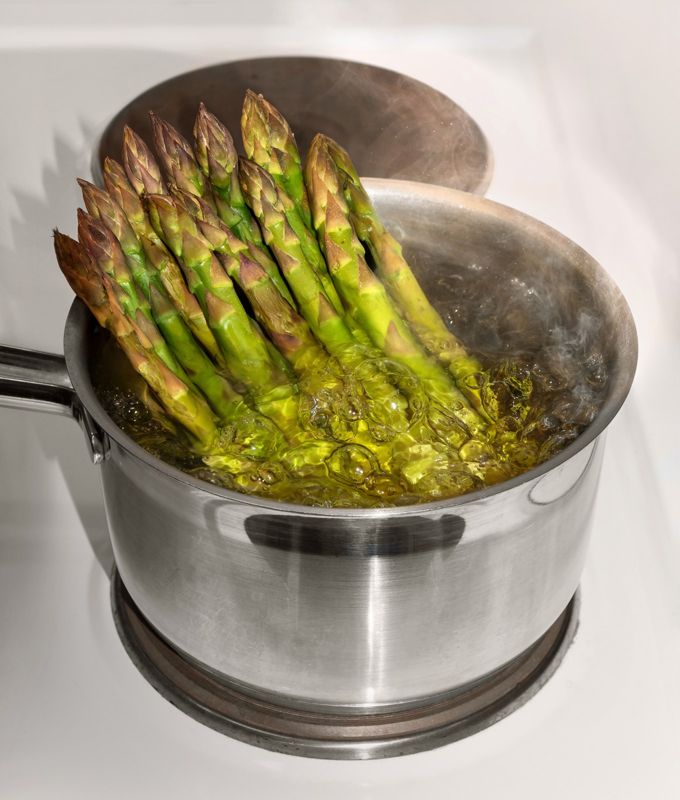
In the kitchen, asparagus turns up in more than one form: grilled, roasted, or steamed as a side dish; shaved raw into salads and risotto; blanched and pickled for preserving.
Medicinal & Folk Use
In herbal and folk tradition, it has been valued in several ways: natural diuretic supporting kidney function; rich in folate, essential during pregnancy; contains asparagine, an amino acid that supports nervous system health. These are traditional uses, not medical advice.
Beyond the Garden
Asparagus earns its keep past the plate, too: ornamental fern-like foliage in perennial borders; cut ferns used in floral arrangements.
Safety Notes
Spears are safe cooked or raw. Red berries on mature plants are mildly toxic — do not eat. May cause allergic dermatitis in some handlers.
The Field Library
Books from the Futurespore shelf that go deeper on plants like this one.
- Medicinal Herbs: A Beginner's Guide the friendliest on-ramp to growing and using healing herbs at home
- The Forager's Harvest identification, harvest windows, and preparation from someone who eats what he teaches
- Gaia's Garden home-scale permaculture — guilds, food forests, and beds that tend themselves
These are Bookshop.org affiliate links — they support independent bookstores and earn Futurespore a small commission at no extra cost to you. Browse the full Futurespore Bookshelf.