Overview
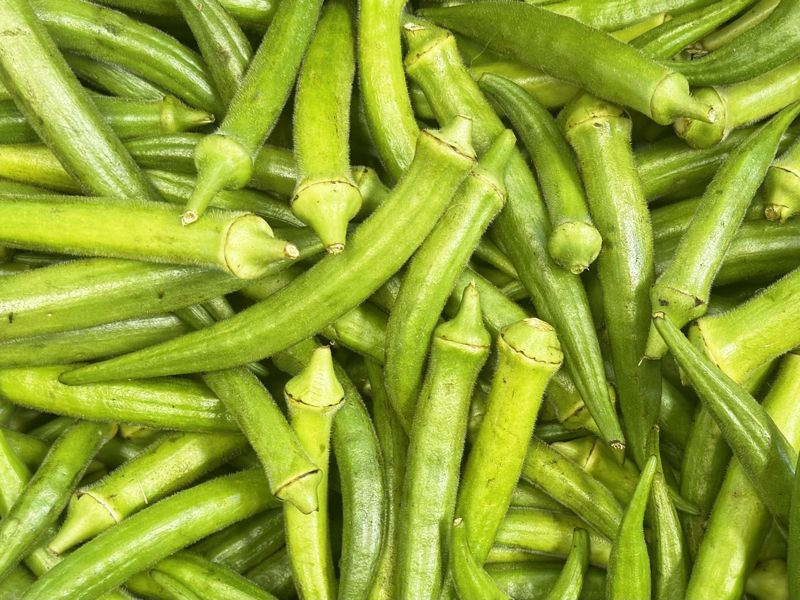
A tropical mallow-family vegetable that thrives in summer heat and is beloved across the Southern US, Africa, India, and the Caribbean. Its mucilaginous pods are famous for thickening gumbo, but when grilled, roasted, or pickled, okra develops a delightful flavor without the slippery texture. The plants are stunning, with hibiscus-like yellow flowers and attractive pods that make them ornamental as well as edible.
Growing Conditions
How to Grow Okra
Okra (Abelmoschus esculentus) is a forb/herb that grows to about 3 feet tall and 4 feet wide.
To grow okra, give it full sun. It is hardy across USDA hardiness zones 5–11. Plant it in rich, well-drained, warm soil with plenty of organic matter, at a slightly acidic pH of 6–7. It does best with even, moderate watering.
Exact sowing, transplanting, and harvest months shift by climate zone — the planting calendar below lays them out for cool through hot regions. Its flowers appear from May through September, offering high value to pollinators. Let a few flowers go by unpicked; the bees will thank you, and so will next season.
Companion Planting & Soil
Okra grows well alongside pepper, eggplant, melon, basil, and marigold.
Good Companions
Planting Calendar
When to sow, transplant, and harvest by growing zone.
| Zone | Action | Months | Notes |
|---|---|---|---|
| Cold (1-2) | Start Indoors | Apr — May | Start indoors 4-6 weeks before last frost; soak seeds overnight to speed germination |
| Cold (1-2) | Transplant | Jun — Jun | Transplant after soil reaches 65°F; grow as annual; short-season varieties only |
| Cold (1-2) | Harvest | Jul — Sep | Pick pods at 2-3" long every 1-2 days; overripe pods become tough and woody |
| Cool (3-4) | Start Indoors | Mar — Apr | Start indoors 6 weeks early; needs warm soil to thrive |
| Cool (3-4) | Transplant | May — Jun | Transplant when nights stay above 55°F |
| Cool (3-4) | Harvest | Jul — Sep | Harvest every other day; wear gloves — spines irritate skin |
| Moderate (5-7) | Direct Sow | May — Jun | Direct sow when soil is 65°F+; soak seeds 12 hours before planting |
| Moderate (5-7) | Harvest | Jun — Oct | Pick young pods daily; cut — do not pull — from stem |
| Warm (8-9) | Direct Sow | Mar — May | Direct sow in spring; succession plant every 3-4 weeks |
| Warm (8-9) | Harvest | May — Oct | Prolific in heat; harvest daily at 2-4 inches |
| Hot (10+) | Direct Sow | Feb — Apr | Sow in early spring; thrives in extreme heat |
| Hot (10+) | Harvest | Apr — Nov | Long harvest season; cut main stem to 2 feet in midsummer to rejuvenate |
Uses
In the Kitchen
In the kitchen, okra turns up in more than one form: fried, pickled, or grilled as a side dish; essential in gumbo for thickening; stewed with tomatoes in Middle Eastern and Indian cuisine.
Medicinal & Folk Use
In herbal and folk tradition, it has been valued in several ways: mucilage soothes the digestive tract; high in vitamin C and folate; fiber-rich for blood sugar management. These are traditional uses, not medical advice.
Beyond the Garden
Okra earns its keep past the plate, too: ornamental with beautiful hibiscus-like flowers; dried pods used in craft arrangements.
Safety Notes
The hairs on the seed pods can be an irritant to some people and gloves should be worn when harvesting. These hairs can be easily removed by washing.
The Field Library
Books from the Futurespore shelf that go deeper on plants like this one.
- Medicinal Herbs: A Beginner's Guide the friendliest on-ramp to growing and using healing herbs at home
- Edible Wild Plants a photographic guide organized by season — good for checking an ID twice in the field
- The Resilient Gardener growing staple food through drought, flood, and hard seasons
These are Bookshop.org affiliate links — they support independent bookstores and earn Futurespore a small commission at no extra cost to you. Browse the full Futurespore Bookshelf.