 Begoniaceae.reddit / CC0 · Source
Begonia
Begonia spp.
Overview
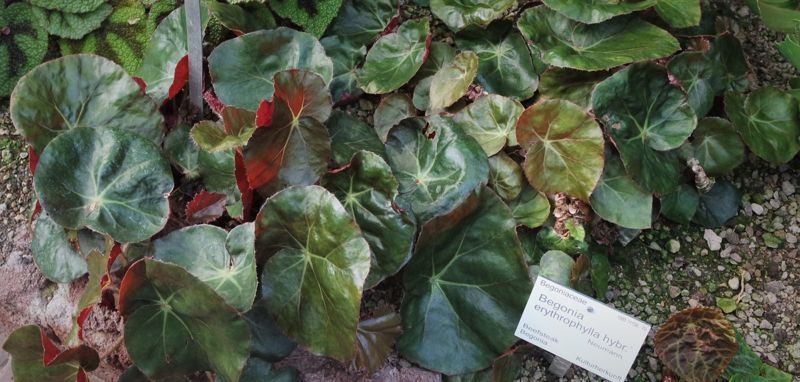
A vast genus of tropical and subtropical plants with over 2,000 species, valued for their stunning foliage and delicate blooms. Begonias range from tiny ground-hugging species to towering cane types, with leaves in every pattern imaginable — spotted, spiraled, metallic, and deeply veined. They are among the most popular shade-garden plants worldwide.
Growing Conditions
How to Grow Begonia
Begonia (Begonia spp.) is a forb/herb that grows to about 3 feet tall and 12 inches wide.
To grow begonia, give it partial sun to partial shade. It is hardy across USDA hardiness zones 6–9. Plant it in light, humus-rich, well-drained soil or potting mix, at a slightly acidic pH of 5.5–6.5. It does best with even, moderate watering.
Exact sowing, transplanting, and harvest months shift by climate zone — the planting calendar below lays them out for cool through hot regions. A plant worth learning slowly, the way it has been used for generations.
Companion Planting & Soil
Begonia grows well alongside fern, impatiens, hosta, and coleus.
Good Companions
Planting Calendar
When to sow, transplant, and harvest by growing zone.
| Zone | Action | Months | Notes |
|---|---|---|---|
| Cold (1-2) | Start Indoors | Jan — Feb | Start indoors 12-16 weeks early; dust-like seeds need light; very slow |
| Cold (1-2) | Transplant | Jun — Jun | Transplant after all frost; sun or shade; annual |
| Cold (1-2) | Bloom | Jun — Sep | Continuous bloom from planting to frost; no deadheading |
| Cool (3-4) | Transplant | May — Jun | Transplant after last frost; bronze-leaf types handle more sun |
| Cool (3-4) | Bloom | Jun — Oct | Self-cleaning; very tidy border plant |
| Moderate (5-7) | Transplant | Apr — May | Transplant in spring; wax begonias need no deadheading |
| Moderate (5-7) | Bloom | May — Oct | Bloom spring through fall; excellent in containers |
| Warm (8-9) | Transplant | Mar — Apr | Plant in spring; tolerates sun if watered; shade in afternoon |
| Warm (8-9) | Bloom | Mar — Nov | Nearly year-round bloom with protection |
| Hot (10+) | Transplant | Feb — Mar | Plant early; shade essential in hot zones; keep evenly moist |
| Hot (10+) | Bloom | Feb — Nov | Long bloom season; dig tuberous types before frost |
Uses
Medicinal & Folk Use
In herbal and folk tradition, it has been valued in several ways: some species used traditionally for skin irritation and inflammation; begonia grandis used in Chinese herbal medicine; leaf poultices applied to minor wounds in folk medicine. These are traditional uses, not medical advice.
Beyond the Garden
Begonia earns its keep past the plate, too: premier shade container and bedding plant; houseplant for low-light interiors; collector species with extraordinary leaf patterns.
The Field Library
Books from the Futurespore shelf that go deeper on plants like this one.
- Medicinal Herbs: A Beginner's Guide the friendliest on-ramp to growing and using healing herbs at home
- Gaia's Garden home-scale permaculture — guilds, food forests, and beds that tend themselves
These are Bookshop.org affiliate links — they support independent bookstores and earn Futurespore a small commission at no extra cost to you. Browse the full Futurespore Bookshelf.